Bariatric Surgery Cost in Michigan: Detroit, Ann Arbor & Grand Rapids (2026)
{ if eq .Lang "zh" }{ else }{ end }$14,500. That’s the low end of what a gastric sleeve costs in Michigan — well below the national average — and it’s available at legitimate, MBSAQIP-accredited programs. Michigan’s density of large health systems, combined with the state’s Medicaid expansion under the Healthy Michigan Plan, has made it one of the genuinely accessible bariatric markets in the US.
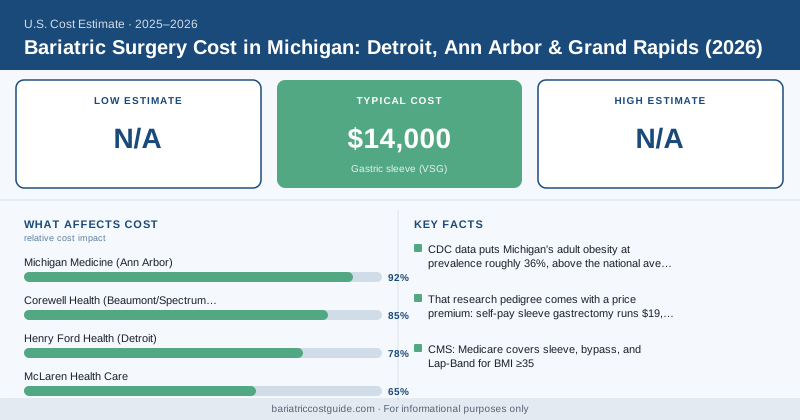
The state has a problem, though: obesity rates are high. CDC data puts Michigan’s adult obesity prevalence at roughly 36%, above the national average of 33%. That means surgical demand stays elevated — and programs stay busy, which translates to experienced surgeons and competitive pricing for self-pay patients.
Michigan Bariatric Surgery Prices (2026)
| Procedure | Detroit Metro | Ann Arbor | Grand Rapids | National Average |
|---|---|---|---|---|
| Gastric sleeve (VSG) | $14,500 – $24,000 | $16,000 – $26,000 | $14,000 – $23,000 | $14,000 – $23,000 |
| Gastric bypass (Roux-en-Y) | $18,000 – $27,500 | $19,500 – $29,000 | $17,500 – $27,000 | $18,000 – $28,000 |
| Duodenal switch | $23,000 – $33,000 | $25,000 – $36,000 | $22,500 – $32,000 | $22,000 – $35,000 |
| Mini gastric bypass | $16,500 – $24,500 | $18,000 – $26,000 | $16,000 – $23,500 | $17,000 – $25,000 |
| Revision surgery | $21,000 – $35,000 | $23,000 – $37,000 | $20,500 – $34,000 | $20,000 – $35,000 |
Detroit and Grand Rapids are the most price-competitive markets. Ann Arbor runs higher because Michigan Medicine — the University of Michigan’s health system — commands an academic premium. For patients who qualify for surgery at Michigan Medicine but don’t need the academic tertiary-care infrastructure, comparable accredited programs in Detroit or Grand Rapids can save $3,000–$6,000 on the same procedure.
Major Bariatric Programs in Michigan
Michigan Medicine (Ann Arbor) The University of Michigan’s Bariatric Surgery Program is one of the most research-active in the country. Michigan Medicine helped found the Michigan Bariatric Surgery Collaborative (MBSC) — a statewide quality consortium that has published landmark safety and outcomes data cited by the ASMBS. That research pedigree comes with a price premium: self-pay sleeve gastrectomy runs $19,000–$26,000. For complex patients, those with prior abdominal surgeries, or anyone needing duodenal switch, Michigan Medicine’s depth of subspecialty support is hard to match in the state.
Corewell Health (Beaumont/Spectrum merger) The 2022 merger of Beaumont Health and Spectrum Health into Corewell Health created one of Michigan’s largest health systems, with bariatric programs in metro Detroit (Corewell Health East, formerly Beaumont) and Grand Rapids (Corewell Health West, formerly Spectrum). Self-pay sleeve pricing runs $14,500–$23,000 depending on location and campus. Corewell is in-network with most major Michigan commercial insurers — Blue Cross Blue Shield of Michigan, Priority Health, and HAP being the biggest.
Henry Ford Health (Detroit) Henry Ford’s Weight Management Institute at Henry Ford Hospital is a high-volume, MBSAQIP-accredited Center of Excellence in Detroit. Henry Ford has historically been a major Medicaid provider in southeast Michigan, meaning its program is experienced with the Healthy Michigan Plan approval process. Self-pay pricing is competitive: roughly $15,000–$22,000 for sleeve. Henry Ford also has satellite bariatric clinics in suburban metro Detroit locations, making initial consultations accessible without traveling downtown.
McLaren Health Care McLaren operates bariatric programs across multiple Michigan markets including Flint, Bay City, Port Huron, and Macomb Township. For patients in mid-Michigan who want to avoid the drive to Detroit or Ann Arbor, McLaren is a solid accredited alternative. Self-pay sleeve pricing at McLaren facilities tends to run $14,000–$21,000.
Michigan Medicaid (Healthy Michigan Plan) Coverage
Michigan’s Medicaid expansion — branded the Healthy Michigan Plan — covers bariatric surgery for eligible members. Standard criteria:
- BMI ≥ 40 (severe obesity), or
- BMI ≥ 35 with at least one qualifying comorbidity (type 2 diabetes, severe obstructive sleep apnea, hypertension, hyperlipidemia)
- Documented medically supervised weight management attempts (typically 3–6 months)
- Psychological evaluation clearance
- Medical clearance from primary care provider
The Healthy Michigan Plan has been in effect since April 2014. Michigan had one of the stronger early expansions, and bariatric coverage has been a consistent benefit. BCBS of Michigan administers Healthy Michigan Plan benefits for a large portion of the enrolled population.
Michigan Bariatric Surgery Collaborative (MBSC)
Self-Pay Strategies for Michigan Patients
Get quotes from both Detroit and Grand Rapids. The two metros are 2.5 hours apart but pricing differences can be significant — especially at independent accredited surgery centers versus large academic systems. Grand Rapids independent programs are among the most price-competitive in the state.
Ask about the all-inclusive package. Several Michigan programs offer all-inclusive self-pay pricing that bundles surgery, anesthesia, pre-op testing, and follow-up visits. Henry Ford and several Corewell campuses offer these packages. The bundled price is almost always better than paying line-item facility fees.
Check Blue Cross Blue Shield of Michigan’s network carefully. BCBSM is Michigan’s dominant insurer, and its network is wide. If you have commercial BCBS coverage and your BMI qualifies, you’re likely covered — but pre-authorization requires documentation of prior weight loss attempts. Many Michigan employers offer BCBS plans that include bariatric coverage; check your specific plan documents before assuming exclusion.
Financing Options for Michigan Patients
If you don’t qualify for Healthy Michigan Plan and don’t have commercial coverage, self-pay financing is common. CareCredit and Prosper Healthcare Lending are both accepted at most major Michigan bariatric programs. Interest-free promotional periods (typically 12–24 months) are available for qualified applicants.
Several Michigan programs also offer in-house payment plans — particularly Henry Ford Health and some Corewell facilities. Ask during your consultation.
For more on financing strategies, see our guide on bariatric surgery financing options.
Bottom Line for Michigan Patients
Michigan is one of the better-positioned states for bariatric surgery access. The MBSC quality infrastructure means safety data is actually meaningful here. Healthy Michigan Plan covers qualifying patients. And the self-pay market — particularly in Detroit and Grand Rapids — is competitive enough that cash-pay patients have real options under $20,000.
The cost range is real: $14,500 to $29,000 depending on procedure, hospital, and payer. Don’t anchor on any single quote. Get at least three, compare what’s included, and verify accreditation status before signing anything.
Learn more about what insurance typically covers and how to navigate the surgery without insurance if you’re self-pay.
{ if eq .Lang "zh" }Disclaimer: BariatricCostGuide provides cost data for educational purposes only. We are not a medical provider, insurance company, or financial advisor. All costs are estimates based on published data and vary by location, facility, surgeon, insurance plan, and individual health factors. Consult a board-certified bariatric surgeon and your insurance carrier for personalized medical and cost advice.