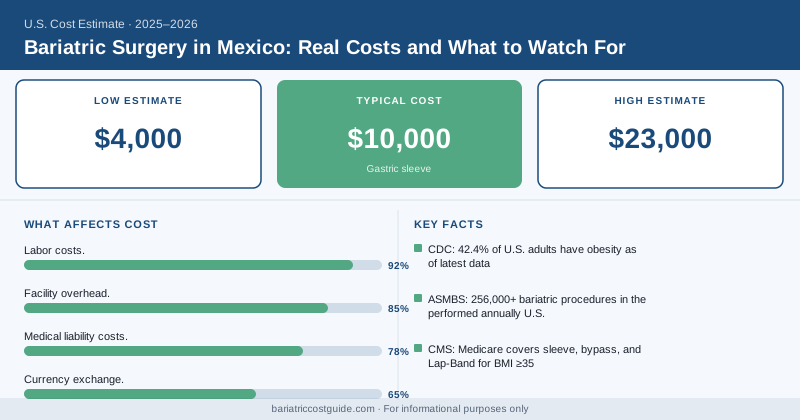
Bariatric Surgery in Mexico: Real Costs and What to Watch For
{ if eq .Lang "zh" }{ else }{ end }Every year, tens of thousands of Americans cross the border for bariatric surgery. The $10,000+ savings versus U.S. prices are real. So are the risks when patients choose the wrong facility.
Mexico has become the world’s largest medical tourism destination for bariatric surgery, driven primarily by U.S. patients priced out of domestic surgery. Cities like Tijuana, Monterrey, and Mexicali have developed mature bariatric surgery industries with some facilities that genuinely match U.S. accreditation standards — and others that absolutely don’t.
What Bariatric Surgery Actually Costs in Mexico
| Procedure | U.S. Self-Pay | Mexico Price | Savings |
|---|---|---|---|
| Gastric sleeve | $10,000 – $23,000 | $4,000 – $8,000 | $6,000 – $15,000 |
| Gastric bypass (RYGB) | $15,000 – $35,000 | $6,000 – $10,000 | $9,000 – $25,000 |
| Duodenal switch / SADI-S | $20,000 – $40,000 | $8,000 – $15,000 | $12,000 – $25,000 |
| Revision surgery | $18,000 – $35,000 | $8,000 – $14,000 | $10,000 – $21,000 |
Why Mexico Is So Much Cheaper
The price difference isn’t about quality shortcuts — it’s mostly structural:
Labor costs. Mexican surgeons, nurses, and support staff earn significantly less than U.S. counterparts. A skilled Mexican bariatric surgeon with U.S. fellowship training still earns a fraction of U.S. surgical salaries.
Facility overhead. Hospital operating and administrative costs in Mexico are a fraction of U.S. costs. MBSAQIP accreditation infrastructure doesn’t exist in Mexico, reducing administrative overhead.
Medical liability costs. Malpractice insurance costs are dramatically lower in Mexico, reducing practice overhead for surgeons.
Currency exchange. While prices are often quoted in U.S. dollars by programs catering to U.S. patients, underlying costs in pesos make it structurally cheaper.
Vetting a Mexican Bariatric Facility: What Actually Matters
This is where most patients go wrong — they book based on price and Facebook group recommendations without verifying the things that actually predict safety outcomes.
CAHOBC or international accreditation. The Centro de Alta Hospitalaria y Cirugía Bariátrica (CAHOBC) is Mexico’s bariatric-specific accreditation body. Alternatively, look for Joint Commission International (JCI) accreditation — the gold standard for international hospital quality. Facilities with neither accreditation are higher risk.
Board-certified bariatric surgeon. Mexican surgeons certified by the Consejo Mexicano de Cirugía General (CMCG) who have also done fellowship training in bariatric surgery are the standard to look for. Many surgeons operating on U.S. patients at top Mexican facilities have done additional training in the U.S.
U.S. patient volume. High-volume programs treating 500+ U.S. patients annually have developed systems for coordinating pre-op workup, communication, and emergency coordination with U.S. physicians. Lower-volume programs haven’t.
Clear complications protocol. Ask explicitly: what happens if I have a complication post-surgery? Do you have a relationship with a U.S. bariatric program for follow-up? Will you provide my records in English? High-quality facilities answer these questions readily.
Reputable Cities and Facilities: What to Look For
Tijuana is the most common destination for U.S. patients, with dozens of bariatric programs of varying quality. It’s 30 minutes from San Diego — a major advantage for emergency follow-up. Look for CAHOBC-accredited or JCI-accredited facilities. Programs like Obesity Control Center (OCC) have treated tens of thousands of U.S. patients.
Monterrey is Mexico’s wealthiest city with sophisticated private hospitals that rival U.S. quality at fraction the cost. TecSalud and other systems here maintain higher quality baselines overall.
Mexicali is another popular border city with shorter drive time from parts of California and Arizona. Same vetting rules apply.
Avoid small clinics, facilities that don’t provide complete pre-op workup, and programs that resist answering questions about surgeon credentials and complication protocols.
The Actual Risk: When Things Go Wrong
The complication rate at reputable Mexican facilities is comparable to U.S. accredited centers: 1–3% for major complications. The risk isn’t higher-than-U.S. complication rates; it’s what happens when complications occur.
A bariatric leak requiring reoperation in Mexico can mean: an emergency flight home, care at a U.S. hospital from physicians unfamiliar with your procedure, and a bill of $50,000–$150,000 that your U.S. insurance may not cover (some policies explicitly exclude treatment outside the U.S.).
Most complications, if they happen, manifest in the first 2–4 weeks after surgery — while you’re likely back in the U.S. Have a plan before you go: identify a U.S. bariatric surgeon willing to see you if complications arise, and understand your travel insurance and health insurance coverage for international medical care.
Travel Logistics and Additional Costs
Mexico surgery programs typically include hotel coordination, airport pickup, and sometimes even a pre-op visit with the surgeon. Budget for:
- Flights: $200–$600 round trip depending on origin city
- Hotel (2–5 nights): $75–$200/night; many programs have affiliated hotels
- Travel medical insurance: $100–$300 for a comprehensive policy; worth every dollar
- Companion travel: Strongly recommended — budget travel for one companion
Total additional travel costs beyond surgery: $800–$2,500. Even adding that, the savings versus U.S. self-pay remain substantial.
The Bottom Line
Bariatric surgery in Mexico costs $4,000–$10,000 for procedures that run $15,000–$35,000 in the U.S. — real, substantial savings that make surgery financially accessible for self-pay patients. The risk is real but manageable: choose CAHOBC or JCI-accredited facilities, verify surgeon credentials, have a U.S. follow-up plan, and get travel insurance. The patients who’ve had bad experiences generally chose on price alone without vetting facility quality. The ones who’ve had good experiences did their homework.
{ if eq .Lang "zh" }Disclaimer: BariatricCostGuide provides cost data for educational purposes only. We are not a medical provider, insurance company, or financial advisor. All costs are estimates based on published data and vary by location, facility, surgeon, insurance plan, and individual health factors. Consult a board-certified bariatric surgeon and your insurance carrier for personalized medical and cost advice.