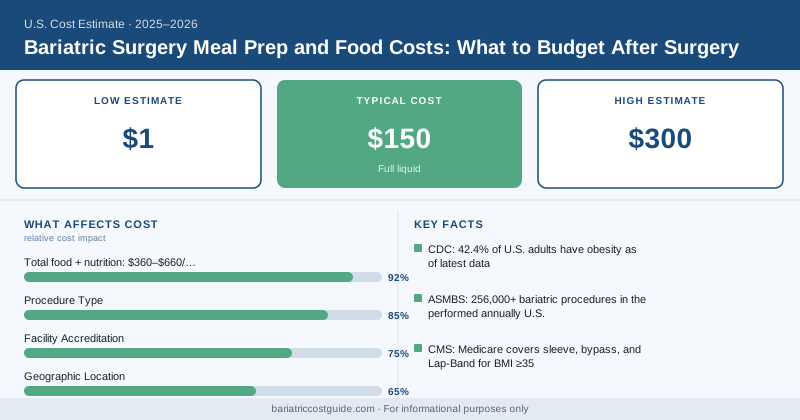
Bariatric Surgery Meal Prep and Food Costs: What to Budget After Surgery
{ if eq .Lang "zh" }{ else }{ end }You’ll eat less. You’d think that means you’ll spend less on food. Wrong.
The first year after bariatric surgery, your food spending often increases before it decreases. Protein supplements, specialized soft foods, bariatric-approved snacks, and the inevitable trial-and-error of figuring out what your new stomach can tolerate — it adds up. Most patients spend $150–$350/month on food and nutrition products in the first 6 months post-op, compared to whatever they were spending before.
Here’s what the actual cost looks like, stage by stage.
Phases of Post-Bariatric Eating — and Their Costs
After gastric bypass or sleeve gastrectomy, you progress through defined dietary stages. Each stage has different food requirements and associated costs.
| Dietary Phase | Timeframe | What You Eat | Monthly Food Cost |
|---|---|---|---|
| Full liquid | Weeks 1–2 | Protein shakes, broths, sugar-free liquids | $150 – $300 |
| Pureed/soft foods | Weeks 3–6 | Strained proteins, soft eggs, Greek yogurt, cottage cheese | $200 – $350 |
| Soft solids | Weeks 6–8 | Soft chicken, fish, well-cooked vegetables | $200 – $300 |
| Regular foods (modified) | Months 2–3+ | Normal bariatric diet: high protein, low sugar | $150 – $250 |
| Long-term maintenance | 6 months+ | Standard healthy eating, supplemented protein | $100 – $200 |
Protein Supplements: The Biggest Early Cost
Your protein target after bariatric surgery is typically 60–80 grams per day for sleeve patients, 80–100+ grams for bypass patients — and in the early weeks, almost all of it has to come from shakes because solid protein is too difficult to eat in adequate quantities.
A quality whey or plant-based protein powder runs $1.00–$2.50 per serving (25–30g protein). If you need 3 servings daily, that’s $3–$7.50/day, or $90–$225/month on protein supplements alone.
Ready-to-drink (RTD) shakes are more convenient but more expensive: Premier Protein, Fairlife, and similar RTD shakes run $1.50–$3.50 each. Three per day = $135–$315/month.
Compare Protein Cost Per Gram — Not Sticker Price
A $40 container of powder with 50 servings at 25g protein each = 1,250g protein total = $0.032/gram. A $3.00 RTD shake with 30g protein = $0.10/gram — more than 3× the cost.
Over 6 months, the difference between powder and RTD shakes can be $600–$900. Buy the powder, use a shaker bottle, and save the RTDs for travel and convenience situations.
What Eating Less Doesn’t Save You
Here’s the paradox: smaller portions mean less total food — but not proportionally less spending. You’re eating 4–6 small meals or snacks per day instead of 2–3 larger ones. Each meal needs to be high-protein. Cheap high-carb foods that used to fill you up (bread, pasta, rice, chips) are either off-limits or nutritionally wasteful given your tiny portion size.
You end up buying more expensive, protein-dense options:
- Greek yogurt (full-fat, no sugar): $0.75–$1.50 per 5.3oz container
- Cottage cheese: $0.40–$0.80 per half-cup serving
- String cheese and part-skim mozzarella: $0.60–$1.20 per stick
- Deli turkey and chicken breast: $1.00–$2.50 per 2oz serving
- Jerky (low-sugar): $1.50–$3.50 per serving
These unit costs are higher than pasta, bread, and cereal. Your food spending per calorie goes up even as your total calories go down.
Restaurant Costs: The Portion Problem
Restaurant meals become a financial puzzle after bariatric surgery. You’re paying $12–$20 for an entree you’ll eat one-quarter of — and you can’t always take the rest home or finish it later because many patients find reheated protein harder to tolerate.
Practical strategies that limit the cost waste:
- Order appetizers or side dishes instead of entrees
- Share an entree with a dining companion
- Eat off the senior or kids’ menu (yes, you’re allowed)
- Identify restaurants with small-plate or tapas formats
Some patients find that social eating becomes a non-trivial ongoing cost — spending $15 for a meal you take 4 bites of, repeatedly, across business lunches and family dinners. Mentally budget for this as a social/lifestyle cost of the surgery.
Long-Term Grocery Budget Changes
After month 6, most patients settle into a relatively stable eating pattern. Here’s what the long-term grocery cost shift typically looks like:
| Category | Before Surgery | 6+ Months After Surgery | Change |
|---|---|---|---|
| Total grocery spend/month | $400 – $600 | $250 – $400 | Down 30–40% |
| Protein supplements | $0 – $20 | $50 – $120 | Up (permanent) |
| Specialty bariatric foods | $0 | $20 – $50 | Up (permanent) |
| Dining out frequency | Regular | Reduced | Spending down |
| Net monthly food cost change | — | — | Down $50–$150 |
Most patients save $50–$150/month on total food costs in the long run — because they’re simply eating less. But that savings is partially offset by the permanent protein supplement cost and the premium pricing of high-protein whole foods.
The Hidden Cost: Wasted Food During Adjustment
In the first 3–6 months, you’ll buy things you can’t eat yet, experiment with foods that don’t agree with your new stomach, and throw away meals you couldn’t finish. Budget a “waste buffer” of $30–$60/month for this phase — it’s real, and every post-bariatric patient experiences it.
Food intolerances are common early post-op: red meat, raw vegetables, bread, rice, and pasta are frequent culprits. You may buy something, try it, feel sick, and not be able to eat it for weeks. That’s normal. Buy small quantities when testing new foods post-op.
Practical Budget for Your First Year
Rough monthly food and nutrition budget for a typical bariatric patient in year 1:
- Protein supplements: $80–$150
- Bariatric vitamins (overlap with food budget for some patients): $50–$100
- High-protein groceries: $200–$350
- Specialty bariatric products (portion containers, protein bars, recovery foods): $30–$60
- Total food + nutrition: $360–$660/month
By year 2, once you’ve graduated from the supplement-heavy early phase and your eating has normalized, that number usually drops to $250–$400/month — comparable to or below what many Americans spend on groceries, just with a much higher protein density.
{ if eq .Lang "zh" }Disclaimer: BariatricCostGuide provides cost data for educational purposes only. We are not a medical provider, insurance company, or financial advisor. All costs are estimates based on published data and vary by location, facility, surgeon, insurance plan, and individual health factors. Consult a board-certified bariatric surgeon and your insurance carrier for personalized medical and cost advice.