Bariatric Surgery Cost in Louisiana: New Orleans, Baton Rouge & Shreveport (2026)
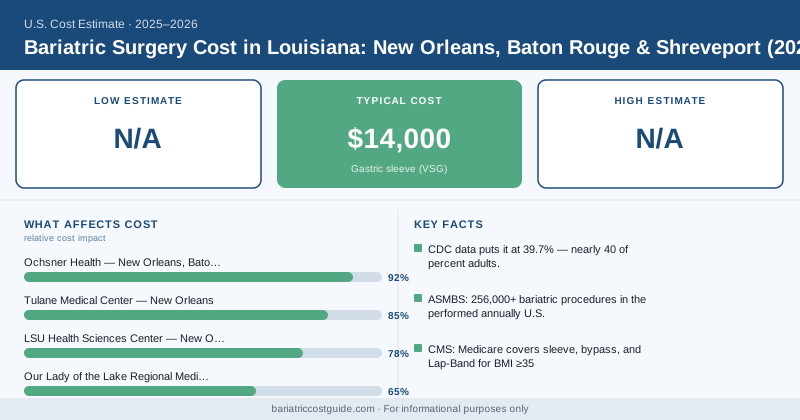
{ if eq .Lang "zh" }{ else }{ end }Louisiana has the highest adult obesity rate in the United States. CDC data puts it at 39.7% — nearly 40 percent of adults. That’s not an abstraction for the healthcare system: it means Louisiana hospitals have invested heavily in bariatric surgical capacity, and the surgical volumes here are among the highest in the country per capita. More surgical volume means more experienced surgeons, better team coordination, and — for self-pay patients — real price competition.
New Orleans and Baton Rouge are the two main markets, each with distinct hospital landscapes. New Orleans is dominated by Ochsner with academic alternatives at Tulane and LSU. Baton Rouge has Ochsner presence plus strong regional competitors like Our Lady of the Lake. Shreveport operates as the hub for northwest Louisiana, with Willis-Knighton and LSU Health Shreveport as the main players.
Louisiana Bariatric Surgery Prices (2026)
| Procedure | New Orleans | Baton Rouge | National Average |
|---|---|---|---|
| Gastric sleeve (VSG) | $15,000 – $22,000 | $15,000 – $21,500 | $14,000 – $23,000 |
| Gastric bypass (Roux-en-Y) | $18,000 – $27,000 | $18,000 – $26,500 | $18,000 – $28,000 |
| Duodenal switch | $23,000 – $33,000 | $22,000 – $32,000 | $22,000 – $35,000 |
| Mini gastric bypass | $17,000 – $24,000 | $16,500 – $23,500 | $17,000 – $25,000 |
| Revision surgery | $21,000 – $35,000 | $20,500 – $34,000 | $20,000 – $35,000 |
Louisiana’s bariatric surgery prices are below national averages on most procedures — a direct result of high surgical volume meeting a competitive multi-system market. Baton Rouge actually skews slightly cheaper than New Orleans for most procedures, likely reflecting lower facility overhead outside of the urban New Orleans market.
Louisiana's Heat, Humidity, and Post-Op Recovery
Major Bariatric Programs in Louisiana
Ochsner Health — New Orleans, Baton Rouge, and statewide Ochsner is Louisiana’s dominant health system, operating 40+ hospitals and clinics statewide. Its bariatric surgery program is centered at Ochsner Medical Center in Jefferson (Greater New Orleans) and at Ochsner Medical Center – Baton Rouge. Both locations are MBSAQIP-accredited. Ochsner’s scale gives it the strongest insurer contracting position of any Louisiana system — it’s in-network with virtually every major commercial plan in the state. For Healthy Louisiana Medicaid patients, Ochsner is one of the most consistently contracted bariatric providers. Self-pay sleeve at Ochsner runs approximately $16,000–$22,000 all-inclusive.
Tulane Medical Center — New Orleans Tulane University Medical Center’s weight loss surgery program operates within the academic medical center complex in downtown New Orleans. As an academic program with residency and fellowship training, Tulane takes on complex cases and revision surgeries that community programs refer out. Self-pay prices at Tulane run slightly higher than Ochsner ($18,000–$25,000 for sleeve) — but for patients with complex histories or prior surgical complications, the academic oversight is worth it.
LSU Health Sciences Center — New Orleans and Shreveport LSU Health operates programs at both its New Orleans and Shreveport campuses. The LSU Health New Orleans program is tied to University Medical Center New Orleans (UMC) — one of the primary safety-net hospitals in Louisiana and a significant provider for Medicaid and uninsured patients. LSU Health Shreveport is the main academic bariatric option for northwest Louisiana. Both programs are MBSAQIP-accredited.
Our Lady of the Lake Regional Medical Center — Baton Rouge Our Lady of the Lake (part of the Franciscan Missionaries of Our Lady health system) is Baton Rouge’s major independent competitor to Ochsner. Its bariatric program is MBSAQIP-accredited and well-regarded. For patients in Baton Rouge with Franciscan-affiliated insurance or who prefer a Catholic health system, OLOL is a strong option. Self-pay sleeve pricing is competitive with Ochsner.
Willis-Knighton Health System — Shreveport Willis-Knighton is Shreveport’s largest health system and the primary bariatric surgery provider for northwest Louisiana patients. Its Bariatric Surgery Center of Excellence is MBSAQIP-accredited and handles strong surgical volumes for its market size.
Healthy Louisiana (State Medicaid) Coverage
Louisiana Medicaid — marketed as Healthy Louisiana — covers bariatric surgery through its managed care organization network. Standard medical necessity criteria:
- BMI ≥ 40 (Class III obesity), or
- BMI ≥ 35 with at least one qualifying comorbidity (type 2 diabetes, severe hypertension, sleep apnea, hyperlipidemia, coronary artery disease, or GERD)
- Documentation of prior medically supervised weight loss attempts (typically 3–6 months)
- Psychological evaluation and behavioral health clearance
- Pre-authorization required before scheduling
Healthy Louisiana is administered through five MCOs: Aetna Better Health of Louisiana, AmeriHealth Caritas Louisiana, Healthy Blue (BCBS), Humana Healthy Horizons, and UnitedHealthcare Community Plan. Each MCO manages its own prior authorization process. The full insurance coverage guide has a detailed walkthrough of the prior authorization steps common to all Medicaid managed care programs.
Louisiana’s high obesity rate creates higher Medicaid bariatric surgery utilization than most states — which means programs like Ochsner, OLOL, and LSU Health have extensive experience navigating Medicaid authorization. Your bariatric coordinator at any of these programs handles these requests routinely.
Commercial Insurance in Louisiana
Louisiana’s commercial market is dominated by Blue Cross Blue Shield of Louisiana (BCBSLA), which has an unusually large market share compared to other states. Aetna, United Healthcare, Cigna, and Humana fill out the rest of the market.
BCBS Louisiana: BCBSLA covers gastric sleeve, gastric bypass, and duodenal switch with standard criteria. Louisiana BCBS is known for requiring thorough documentation — expect 6 months of medically supervised weight loss records and a detailed letter of medical necessity from your primary care physician. Many Louisiana surgeons have staff specifically dedicated to BCBSLA authorization.
Aetna: Standard national criteria apply. Aetna’s Louisiana network includes Ochsner and most major systems.
UnitedHealthcare: Often requires procedures at a UHC-designated Center of Excellence. Ochsner Medical Center is typically a UHC-designated center in New Orleans.
Self-Pay Tips for Louisiana
Louisiana’s combination of high surgical volume and competitive multi-system markets makes it a genuinely good state for self-pay bariatric surgery.
Baton Rouge is slightly cheaper than New Orleans. For self-pay patients with flexibility on location, Our Lady of the Lake and Ochsner Baton Rouge both price slightly lower than their New Orleans counterparts. The difference is modest ($1,000–$2,000) but real.
Get competing quotes from Ochsner and OLOL in Baton Rouge. These two systems compete directly for self-pay bariatric patients. Some patients report that mentioning you’re comparing quotes prompts a conversation about available self-pay pricing.
LSU Health programs offer affordable options for lower-income patients. LSU Health New Orleans (at UMC) and LSU Health Shreveport have sliding scale and charity care programs for patients who don’t qualify for Medicaid but can’t afford market-rate self-pay pricing. Ask specifically about financial assistance.
For those financing out of pocket, bariatric surgery financing options like CareCredit or medical lending make Louisiana’s already-competitive prices even more accessible.
Bottom Line
Louisiana’s high obesity rate has created a robust, high-volume bariatric surgery market with competitive pricing. Ochsner dominates statewide with broad insurance contracting and consistent self-pay rates. Tulane and LSU Health handle the complex cases. Baton Rouge’s Our Lady of the Lake is the strongest competitor to Ochsner for central Louisiana patients. Healthy Louisiana Medicaid covers qualifying patients through five MCOs. For self-pay patients, Louisiana is one of the better-priced markets in the South — and the high surgical volume means you’ll find experienced teams at every major accredited program.
{ if eq .Lang "zh" }Disclaimer: BariatricCostGuide provides cost data for educational purposes only. We are not a medical provider, insurance company, or financial advisor. All costs are estimates based on published data and vary by location, facility, surgeon, insurance plan, and individual health factors. Consult a board-certified bariatric surgeon and your insurance carrier for personalized medical and cost advice.