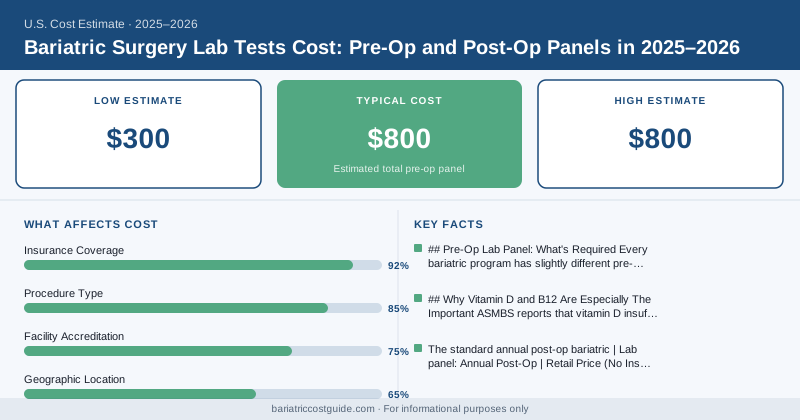
Bariatric Surgery Lab Tests Cost: Pre-Op and Post-Op Panels in 2025–2026
{ if eq .Lang "zh" }{ else }{ end }Before your surgeon will schedule you for bariatric surgery, you’ll need a complete blood panel. Before your insurance will approve the procedure, they’ll often require documented labs showing your metabolic status. And after surgery, you’ll need annual monitoring for the rest of your life.
Here’s a precise look at what’s tested, what it costs, and how to manage these expenses.
Pre-Op Lab Panel: What’s Required
Every bariatric program has slightly different pre-op lab requirements, but the standard comprehensive pre-operative panel typically includes:
| Lab Test | Why It’s Done | Retail Price (No Insurance) |
|---|---|---|
| Complete blood count (CBC) | Rule out anemia, infection, clotting issues | $20 – $50 |
| Comprehensive metabolic panel (CMP) | Liver, kidney, electrolytes, glucose | $25 – $60 |
| HbA1c | Document diabetes status | $20 – $45 |
| Fasting lipid panel | Cardiovascular risk assessment | $20 – $45 |
| Thyroid function (TSH) | Rule out thyroid as weight factor | $25 – $60 |
| Iron studies (ferritin, serum iron, TIBC) | Baseline iron status | $40 – $90 |
| Vitamin B12 | Baseline B12 (common deficiency post-op) | $20 – $45 |
| Vitamin D (25-OH) | Extremely common deficiency in obesity | $30 – $75 |
| Folate | Baseline; critical for women of childbearing age | $20 – $45 |
| Thiamine (B1) | Baseline; neurological risk post-bypass | $40 – $90 |
| Zinc | Baseline; common deficiency in obesity | $35 – $80 |
| Albumin/prealbumin | Nutritional status | $20 – $50 |
| Urinalysis | General health screening | $10 – $30 |
| PT/INR (coagulation) | Clotting assessment for surgery | $20 – $45 |
| Estimated total pre-op panel | — | $300 – $800 |
With insurance, this panel is typically covered as pre-operative testing, and you’d pay the lab copay or coinsurance — often $20–$75 total.
Why Vitamin D and B12 Are Especially Important
The ASMBS reports that vitamin D insufficiency (25-OH D below 30 ng/mL) is present in 40–65% of bariatric surgery candidates before they even have surgery. That’s not a post-op problem — it’s a pre-existing one that surgery will worsen if not addressed.
B12 deficiency is present in about 15–20% of sleeve gastrectomy patients by 2 years post-op, and up to 30% of Roux-en-Y bypass patients. The intrinsic factor and terminal ileum absorption changes that come with bypass make B12 monitoring particularly important.
Finding and correcting these deficiencies before surgery matters because:
- Deficiencies affect your nutritional status going into the operation
- Some deficiencies (particularly D and iron) need to be corrected pre-op to reduce surgical risk
- Insurance authorization may be delayed if labs show uncorrected deficiencies
Additional Pre-Op Tests That Generate Separate Bills
Beyond blood work, bariatric pre-op evaluation commonly includes tests that add to your cost:
| Additional Pre-Op Test | When Required | Typical Cost (No Insurance) |
|---|---|---|
| Electrocardiogram (EKG) | Most patients over 40 or with cardiac history | $100 – $300 |
| Chest X-ray | Some programs require it | $100 – $250 |
| Upper endoscopy (EGD) | To assess esophagus/stomach anatomy; required by some programs | $1,000 – $2,500 |
| Cardiac clearance (echo, stress test) | For patients with cardiac risk factors | $500 – $3,000 |
| Pulmonary function tests | For patients with significant lung disease | $300 – $600 |
| H. pylori testing (blood or breath) | Some programs screen for H. pylori pre-op | $50 – $150 |
Not all programs require all of these. The upper endoscopy (EGD) is particularly variable — some programs do it routinely, others only in patients with GERD symptoms or hiatal hernia history.
Annual Post-Op Labs: What You’ll Monitor Forever
After surgery, the ASMBS recommends indefinite annual nutritional monitoring. The standard annual post-op bariatric panel:
| Annual Post-Op Lab | Retail Price (No Insurance) |
|---|---|
| CBC | $20 – $50 |
| CMP | $25 – $60 |
| Iron studies (ferritin, iron, TIBC) | $40 – $90 |
| B12 | $20 – $45 |
| Folate | $20 – $45 |
| Vitamin D (25-OH) | $30 – $75 |
| Thiamine (B1) | $40 – $90 |
| PTH | $30 – $70 |
| Zinc | $35 – $80 |
| Annual panel total (no insurance) | $260 – $605 |
With insurance, annual post-op monitoring labs are typically covered as medically necessary — and you’d pay your standard lab cost-share, usually $20–$75 per annual draw.
How to Reduce Lab Costs Without Skipping Tests
If you don’t have insurance coverage for labs, or your out-of-pocket is high, several options exist:
Direct-to-consumer labs: Services like LabCorp Patient, Quest MySonora (formerly Sonora Quest), and Any Lab Test Now offer cash-pay lab pricing at 50–70% below retail. A comprehensive bariatric panel through these services typically runs $100–$200.
GoodRx for labs: GoodRx has a lab testing offering that provides discounts at participating Quest and LabCorp locations.
Community health center labs: FQHCs offer sliding-scale pricing for lab work — often $20–$50 for a comprehensive panel for qualifying patients.
Building Your Lab Monitoring Calendar
Here’s a practical schedule based on ASMBS recommendations:
- 3 months post-op: CBC, CMP, iron, B12, D, folate, thiamine
- 6 months post-op: Same panel
- 12 months post-op: Full panel + zinc, PTH, copper (especially for DS patients)
- 18 months post-op: Core panel (CBC, iron, B12, D)
- 24 months post-op: Full comprehensive panel
- Annually thereafter: Full comprehensive panel
Enter these into your calendar with reminders at least 2–3 months before the due date. Procrastinating on labs is how subtle deficiencies turn into serious medical problems.
The Bottom Line
Pre-op bariatric labs cost $300–$800 without insurance for the comprehensive panel, plus $100–$2,500 for additional testing your program requires (EKG, EGD, etc.). Annual post-op labs run $260–$605 uninsured. With insurance, your cost-share is typically $20–$75 per lab draw. Use direct-to-consumer lab services if you’re self-pay — they offer the same tests at 50–70% less than hospital or physician-ordered retail pricing.
{ if eq .Lang "zh" }Disclaimer: BariatricCostGuide provides cost data for educational purposes only. We are not a medical provider, insurance company, or financial advisor. All costs are estimates based on published data and vary by location, facility, surgeon, insurance plan, and individual health factors. Consult a board-certified bariatric surgeon and your insurance carrier for personalized medical and cost advice.