Bariatric Surgery vs. Joint Replacement: BMI Requirements, Costs & Sequencing
{ if eq .Lang "zh" }{ else }{ end }Marcus, 58, needed a knee replacement. His orthopedic surgeon told him they wouldn’t operate until his BMI dropped from 48 to under 40. He’d been told this at two different hospitals. His knee pain had gotten bad enough that he’d stopped walking his dog and given up golf. His options: lose 60 pounds somehow, pay for surgery abroad where the BMI cutoff didn’t apply, or live with the pain.
His primary care doctor referred him to a bariatric program. Eighteen months later, after a gastric sleeve, he’d lost 74 pounds, brought his BMI to 37, and got his knee replacement. Total time from starting the bariatric process to walking pain-free: about two years.
This sequence — bariatric surgery first, then joint replacement — is becoming a formal clinical pathway at many orthopedic and bariatric programs. Here’s what the financial picture looks like.
The BMI Requirement Reality
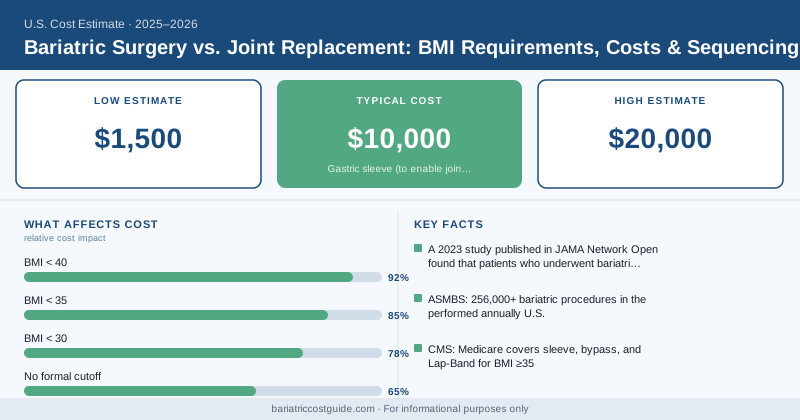
Many orthopedic surgeons and hospital systems have BMI cutoffs for elective joint replacement surgery. The cutoffs vary:
- BMI < 40: The most common cutoff for knee and hip replacement at major orthopedic programs
- BMI < 35: Required at some programs, particularly for bilateral procedures
- BMI < 30: Required at a minority of institutions, particularly academic centers focused on optimal outcomes
- No formal cutoff: Some surgeons operate above BMI 40 on a case-by-case basis
These aren’t arbitrary rules. The evidence supporting them is substantial. A 2019 analysis in The Journal of Bone and Joint Surgery found that patients with BMI above 40 undergoing total knee arthroplasty had significantly higher rates of wound complications, periprosthetic joint infection (PJI), implant failure, and need for revision surgery. At BMI 50+, the complication rate for joint replacement is roughly 2–3x that of normal-weight patients.
Joint replacement at high BMI also produces inferior functional outcomes. The mechanical load on implants in heavier patients accelerates wear and loosening — shortening the lifespan of the prosthetic joint.
The Cost of Both Procedures
Understanding the full financial picture requires looking at both surgeries.
| Procedure | Self-Pay Cost | Insured Out-of-Pocket |
|---|---|---|
| Gastric sleeve (to enable joint replacement) | $10,000 – $20,000 | $1,500 – $6,000 |
| Gastric bypass | $15,000 – $35,000 | $2,500 – $8,000 |
| Total knee replacement | $25,000 – $50,000 | $2,000 – $8,000 |
| Total hip replacement | $25,000 – $45,000 | $2,000 – $7,500 |
| Bilateral knee replacement (both knees) | $50,000 – $90,000 | $4,000 – $12,000 |
| Joint revision surgery (replacement of prior implant) | $40,000 – $80,000 | $5,000 – $15,000 |
These are US hospital costs. Most patients with private insurance or Medicare pay the out-of-pocket column, which is driven by your deductible and out-of-pocket maximum. Medicare covers both bariatric surgery (at qualifying BMI and comorbidities) and joint replacement — often making the combined sequence more accessible for patients over 65.
How Bariatric Surgery Reduces Joint Replacement Risk
Weight loss before joint replacement doesn’t just help you qualify. It measurably improves your surgical outcomes.
A 2023 study published in JAMA Network Open found that patients who underwent bariatric surgery before total knee arthroplasty had a 29% lower rate of prosthetic joint infection and a 23% lower rate of 90-day readmission compared to obese patients who had joint replacement without prior bariatric surgery.
The American Academy of Orthopaedic Surgeons (AAOS) 2023 clinical guidelines note that weight loss prior to joint replacement is associated with:
- Lower perioperative infection risk
- Reduced implant loosening rates over 10 years
- Better functional recovery and range of motion
- Lower rates of needing revision surgery within 5 years
Revision surgery is expensive. The average cost of revising a failed knee replacement runs $40,000–$80,000. Avoiding one revision surgery more than covers the cost of prior bariatric surgery.
The Insurance Coverage Question
Will your insurance cover bariatric surgery specifically to enable joint replacement? It depends.
Scenario 1: You meet independent bariatric surgery criteria (BMI ≥35 with comorbidities) If you qualify on your own merits — BMI ≥35 with hypertension, diabetes, or sleep apnea — your bariatric surgery coverage is determined by your bariatric insurance policy. The fact that you also want a knee replacement is a motivating factor but not the coverage basis.
Scenario 2: Your only indication is enabling joint replacement This is more complex. Some insurers cover “pre-surgical weight loss” if documented as medically necessary by both the orthopedic surgeon and the bariatric program. Others don’t. Medicare increasingly supports this pathway, as evidence shows the total cost of care (bariatric surgery + joint replacement) can be lower than joint replacement alone followed by a revision.
Building the Insurance Case for Sequential Surgery
If you’re pursuing bariatric surgery specifically to qualify for joint replacement, document everything:
- Get a written letter from your orthopedic surgeon stating they require BMI reduction before proceeding with joint replacement
- Have your bariatric surgeon frame the bariatric referral as treatment of obesity-related musculoskeletal disease (a recognized comorbidity)
- Include your functional impairment documentation — pain scores, limited ambulation, inability to perform activities of daily living
- Note the cost-savings argument: one bariatric surgery + one joint replacement versus joint replacement plus likely revision at high BMI
Insurance case managers respond to documented medical necessity. A well-prepared appeal that includes both surgeons’ documentation and the cost-benefit analysis has a higher approval rate than a simple prior authorization request.
The Timing Question: How Long to Wait Between Surgeries?
Most orthopedic and bariatric programs recommend waiting 12–18 months after bariatric surgery before proceeding to joint replacement. Here’s why:
- Weight stabilization: Joint implants are sized to your body. If significant weight loss continues after implant placement, the joint mechanics change.
- Nutritional status: The post-bariatric period involves micronutrient volatility. Bone surgery during active nutritional adjustment carries healing risks.
- Immune function: Rapid weight loss has transient effects on immune competence. Stable weight reduces infection risk.
For patients in significant pain during the waiting period, orthopedic surgeons may offer injections (corticosteroid or hyaluronic acid), physical therapy, or bracing to manage symptoms while weight loss progresses.
The 10-Year Savings Math
Let’s model what the sequential approach actually costs versus the alternatives.
Option A: Joint replacement at high BMI now
- Total knee replacement (insured, $5,000 OOP): $5,000
- Revision at 7 years due to high-BMI implant failure (insured, $8,000 OOP): $8,000
- Ongoing medication for obesity-related conditions: $3,000/year × 10 years = $30,000
- Total 10-year cost: approximately $43,000
Option B: Bariatric surgery first, then joint replacement
- Bariatric surgery (insured, $3,500 OOP): $3,500
- Total knee replacement 18 months later (insured, $5,000 OOP): $5,000
- Reduced revision risk (estimated savings): $8,000
- Obesity medication reduction after bariatric surgery: saves $1,500–$2,500/year
- Total 10-year cost: approximately $8,500–$10,000
The 10-year savings from sequential surgery often exceed $30,000 for patients on chronic medications who also avoid a costly joint revision.
Finding Programs That Coordinate Both
The best outcomes come from programs where the bariatric and orthopedic teams communicate. Ask your orthopedic surgeon whether they have a formal relationship with a bariatric program, and ask your bariatric surgeon whether they have experience with pre-arthroplasty weight loss cases.
Academic medical centers and large health systems (Cleveland Clinic, Mayo, HSS, hospital groups with both departments) are most likely to have coordinated pathways. Community hospitals may have the surgeons but not the coordination infrastructure.
For a full breakdown of bariatric surgery procedure costs, see gastric sleeve cost and gastric bypass cost. For insurance navigation, see bariatric surgery insurance coverage.
{ if eq .Lang "zh" }Disclaimer: BariatricCostGuide provides cost data for educational purposes only. We are not a medical provider, insurance company, or financial advisor. All costs are estimates based on published data and vary by location, facility, surgeon, insurance plan, and individual health factors. Consult a board-certified bariatric surgeon and your insurance carrier for personalized medical and cost advice.