Bariatric Surgery Insurance Denial Appeal: 45% Success Rate & How to Win
{ if eq .Lang "zh" }{ else }{ end }42% of bariatric surgery prior authorization requests get denied on the first submission. That number probably just made your stomach drop. But here’s the other number: approximately 45% of those denials are overturned when the patient appeals with complete documentation and a strong medical necessity letter. A first denial is often just the beginning of the conversation, not the end of it.
Why Insurers Deny Bariatric Claims
Understanding the denial reason is the first step to overturning it. Common denial categories:
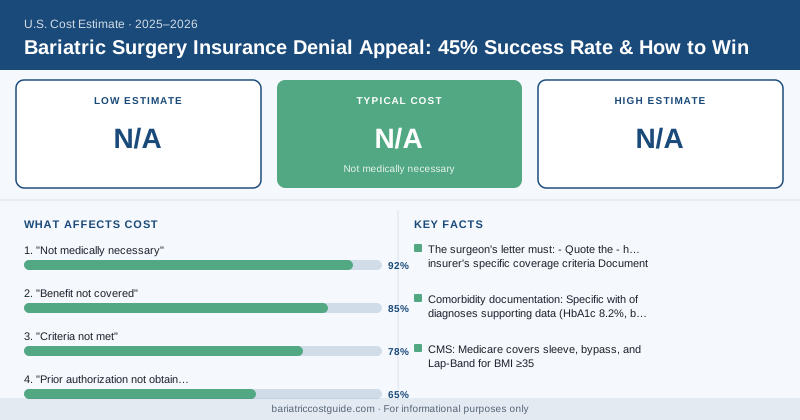
1. “Not medically necessary” — The insurer claims your clinical picture doesn’t meet their criteria. This is often the most appealable denial because it’s a clinical judgment, not an exclusion.
2. “Benefit not covered” — Your plan excludes bariatric surgery. This is the hardest to appeal because it’s a plan design decision, not a clinical one. (See our employer plan guide for options.)
3. “Criteria not met” — You missed a specific requirement: incomplete supervised diet documentation, missing psychological evaluation, BMI below threshold.
4. “Prior authorization not obtained” — Surgery happened without prior approval. Appeals here are difficult; authorization must be in place before surgery.
5. “Investigational or experimental” — Sometimes used for newer procedures like endoscopic sleeve gastroplasty.
| Denial Type | Appealable? | Success Likelihood |
|---|---|---|
| Not medically necessary | Yes — strong | High with documentation |
| Criteria not met (fixable) | Yes | High if criteria can be met |
| Plan exclusion (ERISA) | Limited | Low |
| Prior auth not obtained | Yes | Low-moderate |
| Investigational procedure | Yes | Moderate |
Step 1: Get the Denial Letter and Read Every Word
Your insurer must provide a written denial with:
- Specific reason(s) for denial
- Reference to the plan’s coverage criteria
- Instructions for appeal
- Deadlines for filing
The denial letter tells you exactly what you need to fix. Read it carefully, and have your surgeon’s office read it too. Each stated reason must be addressed directly in your appeal.
Step 2: Internal Appeal
The internal appeal is your first formal challenge. Under the Affordable Care Act, fully insured plans must allow at least one internal appeal before external review. ERISA self-funded plans have similar requirements under federal regulation.
Timeline to file: Usually 180 days from the denial date for clinical denials; check your denial letter for the specific deadline.
What a winning internal appeal includes:
Appeal Package Checklist
- Cover letter summarizing your case and addressing each denial reason point-by-point
- Updated medical necessity letter from your surgeon (addressing specific denial reasons)
- Complete supervised diet records with physician signatures
- Comorbidity documentation: current lab values, diagnostic reports
- Clinical literature: peer-reviewed studies supporting surgery for your profile
- Psychological evaluation
- Any new information not in the original submission
The medical necessity letter is your most important document. A generic letter won’t cut it. The surgeon’s letter must:
- Quote the insurer’s specific coverage criteria
- Document how the patient meets each criterion with clinical data
- Address each stated denial reason with counter-evidence
- Reference ASMBS guidelines, NIH Consensus Statement, and relevant outcome studies
- Be signed by the surgeon, not a coordinator
The ASMBS 2022 guidelines note that bariatric surgery reduces type 2 diabetes remission in 60–80% of patients and produces sustained 25–35% excess weight loss in properly selected candidates — the kind of outcome evidence that shifts a reviewer’s position.
Step 3: Peer-to-Peer Review
If you haven’t done peer-to-peer yet, request it with your internal appeal. This is a phone call between your surgeon and the insurer’s medical reviewer.
Request peer-to-peer immediately upon receiving the denial — most insurers have short windows (10–30 days). Your surgeon’s office can request it; you authorize them to do so.
What makes peer-to-peer calls effective:
- Your surgeon presents clinical nuance that paperwork doesn’t capture
- Direct conversation allows the reviewer to ask clarifying questions
- Surgeon can reference specific literature and guidelines
- Tone is physician-to-physician (collegial), not adversarial
Bariatric surgery programs with high PA volume know how to run these calls. Ask your program how many peer-to-peer calls they handle per month — experience matters.
Step 4: External Independent Review
If your internal appeal is denied, you typically have the right to external independent review by a third-party organization not affiliated with your insurer.
Who can request external review: Under the ACA, members in fully insured plans have this right after exhausting internal appeals. ERISA self-funded plans are also required to offer external review under federal regulation.
Who conducts it: Independent Review Organizations (IROs) certified by your state or an accrediting body. They review the clinical evidence without any financial stake in the outcome.
Timeline: IROs must decide within 45 days for standard review; 72 hours for urgent cases.
Reversal rates: External review reverses insurer decisions approximately 40–50% of the time in cases involving clinical judgment (not coverage exclusions). A 2019 study in Health Affairs found external review is particularly effective for cases involving specialty procedures where generalist reviewers at insurers may lack expertise.
Step 5: State Insurance Commissioner Complaint
For fully insured plans, your state’s insurance commissioner has regulatory authority over your insurer. Filing a complaint is separate from and can run parallel to the formal appeal process.
When to use it:
- Insurer isn’t following required timelines
- You believe the denial was improper under your state’s insurance regulations
- You want to create a formal record of the dispute
This doesn’t replace the appeal process but can add pressure and creates a paper trail.
The Medical Necessity Letter: What to Include
Since the medical necessity letter is the linchpin of any appeal, here’s what it should contain:
- Patient demographics and clinical summary: BMI history over 2+ years, weight trend, age
- Comorbidity documentation: Specific diagnoses with supporting data (HbA1c of 8.2%, blood pressure of 150/95 on two medications, AHI of 28 on sleep study, etc.)
- History of conservative treatment: Every supervised diet, medication tried, results
- Direct response to denial reasons: Quote the denial, then present counter-evidence for each reason
- Outcome data: Surgery-specific literature (NEJM, JAMA, ASMBS guidelines)
- Statement of medical necessity: Clear statement that surgery is medically necessary and that delay poses health risks
Timeline Expectations for the Full Appeal Process
| Step | Typical Duration |
|---|---|
| Prepare and file internal appeal | 1–4 weeks |
| Insurer reviews internal appeal | 30–60 days |
| Peer-to-peer review (if applicable) | 1–2 weeks |
| Request and complete external review | 45 days after filing |
| State complaint (parallel) | 30–90 days |
| Total (internal + external) | 3–6 months |
When to Involve an Attorney
Most bariatric appeals don’t require an attorney. But if:
- Your plan is denying coverage that state law mandates be covered
- The insurer is acting in bad faith (not responding, violating timelines)
- You’re in an ERISA plan and have exhausted all administrative remedies
…an attorney who specializes in health insurance denials or ERISA litigation may be worth consulting. Many work on contingency for ERISA cases.
Don’t give up after a first denial. The appeal process exists specifically because denials are often wrong, and the 45% overturn rate tells you these aren’t hopeless fights.
{ if eq .Lang "zh" }Disclaimer: BariatricCostGuide provides cost data for educational purposes only. We are not a medical provider, insurance company, or financial advisor. All costs are estimates based on published data and vary by location, facility, surgeon, insurance plan, and individual health factors. Consult a board-certified bariatric surgeon and your insurance carrier for personalized medical and cost advice.