Bariatric Surgery Insurance Checklist: Step-by-Step to Get Coverage Approved
{ if eq .Lang "zh" }{ else }{ end }Most bariatric surgery coverage denials aren’t about medical necessity. They’re about paperwork — wrong documentation, missing forms, or steps completed in the wrong order. Insurers have specific requirements, and not meeting them exactly is grounds for denial even when you clearly qualify clinically.
This checklist walks through every step in the right order.
Step 1: Verify Your Benefits Before Anything Else
Before you make a single appointment, call your insurance member services line and ask these specific questions:
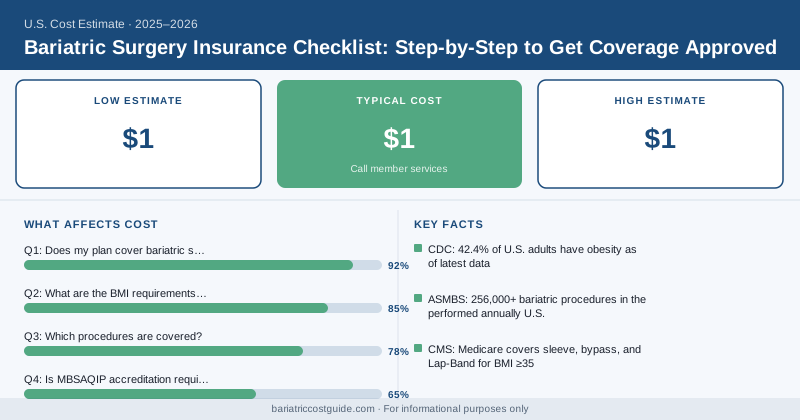
Q1: Does my plan cover bariatric surgery? Get a yes or no. Don’t accept vague answers. If they say “it depends,” ask what it depends on and document their answer.
Q2: What are the BMI requirements for coverage? Standard is BMI ≥ 40, or BMI ≥ 35 with a qualifying comorbidity. Some plans require BMI ≥ 40 with a comorbidity. Know your plan’s specific threshold before proceeding.
Q3: Which procedures are covered? Not all plans cover all procedures. Gastric sleeve, gastric bypass, and duodenal switch may be treated differently. Lap-Band coverage has become rare on newer policies.
Q4: Is MBSAQIP accreditation required? Most major commercial plans require this. If yes, you need to choose an accredited facility — no exceptions.
Q5: What is the prior authorization process? Who submits it (your doctor, the facility, or you)? What’s the timeline? What’s the appeal process if denied?
Document everything: Get the representative’s name, employee ID (if they’ll give it), and the date/time of your call. Request a reference number for the call if possible. You may need this documentation later.
| Verification Step | Action Required | Timeline |
|---|---|---|
| Call member services | Document benefits + PA process | Day 1 |
| Obtain plan documents | Read Evidence of Coverage, section on bariatric surgery | Days 1–3 |
| Confirm MBSAQIP requirement | If yes, find accredited program near you | Days 1–7 |
| Confirm in-network facilities | Verify your chosen program is in-network | Days 1–7 |
| Check out-of-pocket maximum | Know your maximum cost exposure for the benefit year | Day 1 |
Step 2: Get a Referral and Schedule the Bariatric Consultation
Your primary care physician (PCP) needs to be involved from the start — not just for the referral, but because their documentation becomes part of your insurance record.
At your PCP visit:
- Ask for a referral to a bariatric surgery program (if your plan requires referrals)
- Have your PCP document obesity as a diagnosis in your chart (ICD-10 E66.xx)
- Have comorbidities documented: type 2 diabetes, hypertension, sleep apnea, dyslipidemia — anything relevant
- Ask your PCP to document that conservative weight loss measures have been attempted
At the bariatric surgery consultation:
- Confirm the program is MBSAQIP-accredited (verify independently — don’t just take their word)
- Confirm the facility and your specific surgeon are in-network with your insurance
- Ask whether they handle prior authorization or whether you’re responsible for submitting it
- Get a timeline: how long does their typical insurance approval process take?
Step 3: Complete the 6-Month Supervised Weight Loss Requirement
Many commercial plans and some Medicaid programs require 3–6 months of documented supervised weight loss attempts before approving bariatric surgery. This requirement is controversial — many clinical societies argue it delays effective treatment — but it remains a common policy requirement.
What qualifies as documented supervised weight loss:
- Physician-supervised visits for weight management (dietitian involvement required by most plans)
- Structured dietary counseling with written dietary records
- Exercise documentation (pedometer logs, gym attendance, physical therapy for mobility limitations)
- Behavioral health visit for obesity management
What doesn’t count:
- Weight loss you achieved on your own before starting the supervised program
- A commercial weight loss program like Noom or WW without physician supervision documented in medical records
- Weight loss after taking GLP-1 medications without physician oversight
Starting the clock: You can only start the clock once you’re enrolled in a physician-supervised program. If you started seeing a dietitian two years ago for general nutrition, that may or may not count — check with your insurer whether prior supervised weight management visits count toward the requirement.
Making the 6-Month Program Work For You
The supervised weight loss requirement isn’t just a bureaucratic hurdle — it’s valuable preparation for surgery. Use it strategically:
Build your documentation simultaneously. Every visit should generate a chart note documenting your weight, dietary efforts, and progress. After 6 months, request these records to include in your PA submission.
Document comorbidity management. If you have diabetes or hypertension, have your PCP document A1C, blood pressure readings, and medication requirements at each visit. This data supports the “failed medical management” argument in your PA appeal if needed.
Use this time for pre-op evaluation. Many of the required pre-op tests (lab work, sleep study, cardiology clearance) can be completed during the 6-month period — getting them done early saves time after PA approval.
Get your psychological evaluation scheduled early. Psychological evaluation has a long wait time at many programs. Scheduling it during the 6-month window prevents it from delaying your surgery date after PA approval.
Step 4: Complete Required Pre-Op Testing
Before your insurance will approve surgery, and before your program will schedule surgery, you need:
Medical testing (completed during or after the 6-month program):
- Comprehensive lab panel (CBC, metabolic panel, thyroid, HbA1c, vitamin levels)
- Cardiology clearance (EKG required; echocardiogram if cardiac risk factors present)
- Pulmonary function test and sleep study (if sleep apnea screening indicates risk)
- Upper endoscopy (EGD) — required by most programs for bypass, increasingly required for sleeve
Non-medical evaluations:
- Psychological evaluation with a licensed mental health provider experienced in bariatric assessment
- Dietitian consultation documenting understanding of post-surgery nutritional requirements
- Some programs require smoking cessation (documented 6+ weeks before surgery)
Step 5: Submit the Prior Authorization
This is where most delays happen. Your bariatric program’s PA coordinator typically handles this — but verify they have all the documentation before they submit.
PA submission package should include:
- Letter of medical necessity from your surgeon
- 6-month supervised weight loss documentation (visit records, weight logs)
- BMI documentation (height/weight measurements with dates)
- Comorbidity diagnoses with supporting lab values (A1C, blood pressure logs)
- Failed conservative treatment documentation
- All required pre-op testing results
- Proof of MBSAQIP accreditation for the facility
Timeline expectations: Most insurers respond to PA requests within 14–30 days. If you don’t hear within 14 days, have your bariatric coordinator follow up directly.
Step 6: What to Do If Coverage Is Denied
Denial on first submission is common — approximately 30–40% of bariatric PA requests are denied initially. Don’t treat a denial as final.
Step 1 after denial: Request a written statement of the specific denial reason (required by federal law). Common denial reasons:
- Documentation incomplete (most common — usually fixable)
- BMI threshold not met (requires measurement dispute or clinical escalation)
- 6-month supervised requirement not complete or not documented adequately
- Procedure excluded from plan (requires plan document review or employer escalation)
Step 2: File a formal appeal within your plan’s appeal window (typically 60–180 days from denial notice). Include:
- Written response addressing each denial reason specifically
- Additional supporting clinical documentation
- If BMI was questioned, have your physician re-document with witnessed measurements
Step 3: If internal appeal fails, request external review (required by ACA for most plans). An independent reviewer — not your insurer — evaluates medical necessity. External review outcomes favor the patient in approximately 35–40% of cases.
Step 7: Verify Benefits Before Surgery Day
Approximately 2–4 weeks before your scheduled surgery:
- Call member services again. Verify your PA is still active and your out-of-pocket accumulator is accurate.
- Confirm in-network status for the facility, your surgeon, the anesthesiology group, and any assistant surgeons.
- Understand your cost-sharing: What is your deductible? Your coinsurance? Your out-of-pocket maximum? How much have you already paid toward these in the current benefit year?
- Ask about pre-certification requirements: Some plans require a separate pre-certification call 24–72 hours before the procedure.
The Full Checklist at a Glance
- Verify benefits and BMI requirements (call member services)
- Get PCP referral with documented obesity and comorbidities
- Schedule bariatric consultation with MBSAQIP-accredited program
- Complete 6-month supervised weight loss with documented visits
- Complete all required pre-op testing and evaluations
- Submit prior authorization with complete documentation package
- Appeal if denied — don’t accept first denial as final
- Receive written PA approval before scheduling surgery
- Re-verify benefits 2–4 weeks before surgery day
Bottom Line
Getting bariatric surgery covered comes down to documentation, documentation, documentation. Insurers deny coverage for administrative reasons far more often than clinical reasons. Following this checklist in order — starting with benefit verification before committing to any program — prevents the most common costly mistakes. If you’re denied, appeal: the 30–40% initial denial rate drops substantially after a complete appeal with proper documentation.
{ if eq .Lang "zh" }Disclaimer: BariatricCostGuide provides cost data for educational purposes only. We are not a medical provider, insurance company, or financial advisor. All costs are estimates based on published data and vary by location, facility, surgeon, insurance plan, and individual health factors. Consult a board-certified bariatric surgeon and your insurance carrier for personalized medical and cost advice.