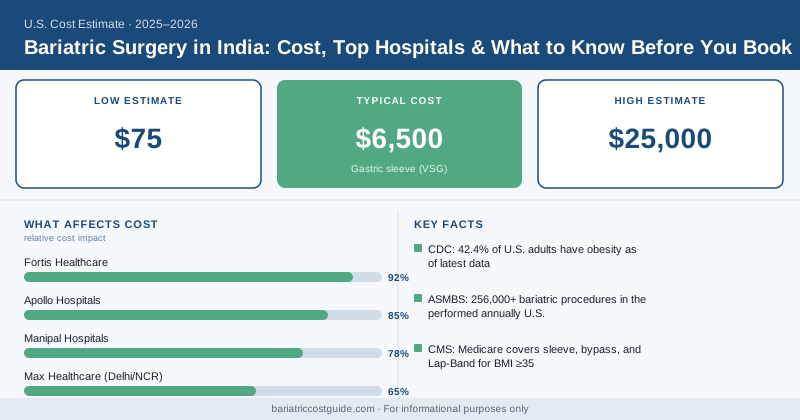
Bariatric Surgery in India: Cost, Top Hospitals & What to Know Before You Book
{ if eq .Lang "zh" }{ else }{ end }A gastric sleeve in Chicago: $23,000. The same procedure at Fortis Hospital in Mumbai: $5,500 — including the surgeon, anesthesia, hospital room, and most pre-op labs. That’s not a typo, and it’s not a backroom clinic. India is home to some of the world’s largest hospital systems, multiple JCI-accredited facilities, and surgeons who trained at US and UK programs. For the 250,000+ Americans who travel abroad for medical care each year (per the US Department of Commerce), India is increasingly on the shortlist.
Here’s what the costs actually look like and what you need to verify before booking a flight.
What Bariatric Surgery Costs in India
| Procedure | India Cost (All-in Estimate) | US Cash Price (Comparison) | Savings |
|---|---|---|---|
| Gastric sleeve (VSG) | $4,000–$6,500 | $18,000–$25,000 | ~75% |
| Gastric bypass (RYGB) | $5,500–$8,000 | $23,000–$35,000 | ~75–80% |
| Duodenal switch (SADI-S) | $6,500–$10,000 | $25,000–$40,000 | ~75% |
| Mini gastric bypass | $4,500–$7,000 | $20,000–$28,000 | ~75% |
| Revision surgery | $5,000–$9,000 | $25,000–$45,000 | ~70–80% |
“All-in” in India typically includes surgeon fee, anesthesia, hospital room (3–5 nights), standard pre-op labs and EKG, and post-discharge care while in-country. International flights, hotel for recovery, and travel insurance are extra — typically adding $1,500–$3,500 depending on your home city and how long you stay.
Your true out-of-pocket is typically $5,500–$11,500 total when you include travel. Still $12,000–$25,000 less than uninsured US pricing.
Top Hospitals for Bariatric Surgery in India
India’s private hospital sector is large and uneven — quality varies enormously. These are the names that consistently appear in medical tourism vetting:
Fortis Healthcare — Multi-city chain (Mumbai, Delhi, Bangalore, Chennai). Several Fortis hospitals hold NABH accreditation (India’s national standard) and a handful have JCI accreditation. High-volume bariatric programs; English-fluent staff standard at major locations.
Apollo Hospitals — One of India’s largest healthcare networks with facilities in Chennai, Hyderabad, Delhi, and Bangalore. Apollo Hospitals have been JCI-accredited since the early 2000s. Strong international patient services departments.
Manipal Hospitals — Bengaluru-based chain with major facilities across South India. Multiple NABH-accredited locations; international patient coordinators available. Known particularly for surgical excellence.
Max Healthcare (Delhi/NCR) — Growing chain with strong cardio and surgical programs. Max Super Speciality Hospital in Saket, Delhi has treated significant numbers of international bariatric patients.
Kokilaben Dhirubhai Ambani Hospital (Mumbai) — Newer facility with state-of-the-art equipment and JCI accreditation. Strong reputation for complex procedures.
JCI vs. NABH: What Accreditation Actually Means
JCI (Joint Commission International) is the gold standard for international hospitals — it’s the same accreditation body that certifies US hospitals, applied internationally. JCI accreditation means the facility has met rigorous standards for patient safety, infection control, and quality management.
NABH (National Accreditation Board for Hospitals) is India’s national accreditation body — broadly comparable to The Joint Commission’s US standards, though not identical. Most serious Indian private hospitals carry NABH; fewer carry JCI.
For medical tourism, prioritize JCI-accredited facilities. You can verify any hospital’s JCI status directly at jointcommissioninternational.org.
Travel and Logistics
Visa: US citizens need an Indian tourist or medical visa. India’s e-Medical Visa (online application) is designed for medical tourists — 60-day validity, extendable. Processing time: 3–5 business days online.
Recovery time in-country: Most bariatric surgeons in India recommend staying in-country for at least 7–10 days post-surgery before flying. Long-haul flights increase DVT (deep vein thrombosis) risk post-operatively; your surgeon will advise on compression stockings and low-molecular-weight heparin if needed.
Language: English is widely spoken at major private hospitals in Delhi, Mumbai, Bengaluru, Chennai, and Hyderabad. All international patient departments communicate in English; interpreter services are available for non-English-speaking patients.
Time difference: India Standard Time is 9.5–12.5 hours ahead of US time zones. Account for this in your communication and follow-up planning.
What to Verify Before Booking
Don’t book based on a website and a low price. Do this checklist:
1. Surgeon credentials. Ask for the bariatric surgeon’s CV — training institution, board certifications, case volume. India doesn’t have exact equivalents to ABOM or ACS MBSAQIP designation, but top surgeons will have credentials from recognized Indian boards (Indian College of Surgeons) or international training.
2. Hospital case volume. Ask specifically: how many bariatric procedures does this hospital/this surgeon perform annually? High-volume centers (200+ cases/year) have significantly lower complication rates. This holds in India as it does everywhere.
3. Pre-op evaluation protocol. A legitimate bariatric program will require labs, EKG, nutritional evaluation, and psychological screening even for international patients. If a hospital offers to “skip the paperwork” to move faster, that’s a red flag.
4. Complication management. Ask: if I have a complication in the first 30 days after returning home, what is the protocol? Reputable programs provide a liaison for coordinating with your US physician and have a clear re-visit policy.
5. Follow-up plan. Who manages your care when you’re back in the US? Some programs have US-based telemedicine follow-up; others leave you entirely on your own. Know this before you go.
India vs. Other Medical Tourism Destinations
| Destination | Typical Gastric Sleeve Cost | JCI Hospitals Available | English Widely Spoken | Travel Time from US East Coast |
|---|---|---|---|---|
| India | $4,000–$6,500 | Yes (select) | Yes (major cities) | 14–17 hours |
| Mexico | $4,000–$7,000 | Some | Mostly Spanish | 3–5 hours |
| Turkey | $3,500–$6,000 | Yes (Istanbul) | Limited | 10–12 hours |
| Thailand | $8,000–$12,000 | Yes (Bangkok) | Yes (major hospitals) | 17–22 hours |
| Colombia | $5,000–$8,000 | Yes (some) | Spanish | 5–7 hours |
India offers the most extreme price advantage compared to the US, but the 15–20 hour flight and jet lag are real recovery considerations. Mexico offers comparable savings with dramatically shorter travel. Thailand has some of the highest-quality international hospitals but at higher prices.
For most US patients, India makes the most economic sense when the surgical savings plus the improved quality at top-tier Indian hospitals justify the travel burden. If proximity and post-op access to US care are primary concerns, Mexico or Colombia may be more practical. See our general bariatric surgery abroad cost guide for the full comparison.
{ if eq .Lang "zh" }Disclaimer: BariatricCostGuide provides cost data for educational purposes only. We are not a medical provider, insurance company, or financial advisor. All costs are estimates based on published data and vary by location, facility, surgeon, insurance plan, and individual health factors. Consult a board-certified bariatric surgeon and your insurance carrier for personalized medical and cost advice.