Hernia Repair After Bariatric Surgery: What It Actually Costs
{ if eq .Lang "zh" }{ else }{ end }David needed hernia repair three years after his gastric bypass — a bulge near his original incision site that started as mild discomfort and gradually worsened until his surgeon confirmed an incisional hernia on imaging. His story is a common one: hernias are among the more frequent long-term complications following bariatric surgery, and unlike loose skin removal, insurance almost always covers the repair.
Hernia Repair Cost Breakdown
| Repair Type | Approach | Typical Self-Pay Cost |
|---|---|---|
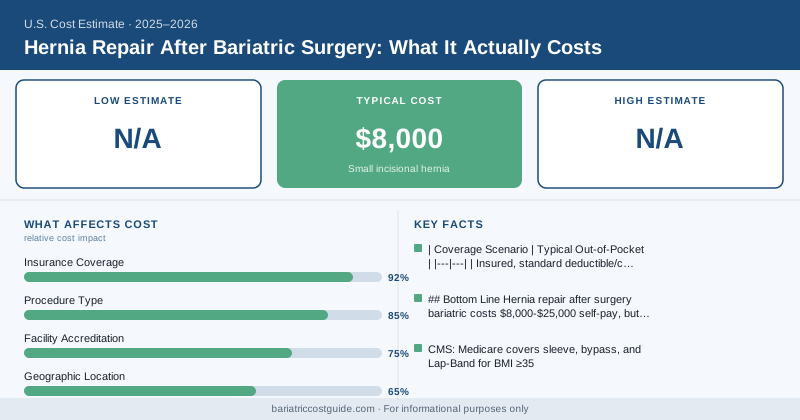
| Small incisional hernia | Laparoscopic, no mesh | $8,000 – $12,000 |
| Moderate incisional hernia | Laparoscopic with mesh | $10,000 – $16,000 |
| Large/complex incisional hernia | Open repair with mesh | $14,000 – $20,000 |
| Recurrent hernia repair | Open, extensive reconstruction | $16,000 – $25,000 |
Why Hernias Happen After Bariatric Surgery
Incisional hernias occur when abdominal wall tissue at a prior surgical incision site weakens and allows internal tissue to push through. Rates vary significantly by surgical approach: bariatric surgery literature generally reports 1-3% incisional hernia rates following laparoscopic procedures, but rates can climb to 10-20% following open bariatric surgery or in patients with a history of prior abdominal surgeries.
Risk factors that increase hernia likelihood include:
- Open (rather than laparoscopic) original bariatric procedure
- Rapid, significant weight loss placing repeated stress on healing tissue
- Prior abdominal surgeries at overlapping incision sites
- Smoking, which impairs wound healing
- Uncontrolled diabetes, which also slows healing
Why Mesh Reinforcement Changes the Cost and the Outcome
Insurance Coverage for Hernia Repair
Unlike body contouring for loose skin, hernia repair is almost universally classified as medically necessary rather than cosmetic, since an untreated hernia carries real risk of bowel obstruction or strangulation — a surgical emergency. Insured patients typically pay their standard deductible and coinsurance, generally $500-$3,000 out-of-pocket, rather than the full self-pay price.
| Coverage Scenario | Typical Out-of-Pocket |
|---|---|
| Insured, standard deductible/coinsurance | $500 – $3,000 |
| Medicaid, approved | $0 – $250 |
| Self-pay (no coverage) | $8,000 – $25,000 |
Warning Signs You Shouldn’t Ignore
- A visible or palpable bulge near a prior surgical incision, especially one that grows with straining or standing
- Persistent discomfort or aching around the incision site months or years after surgery
- Sudden severe pain, nausea, or vomiting near a known hernia — this combination can indicate strangulation and requires emergency care immediately
Reducing Your Hernia Risk
While not all hernias are preventable, patients can reduce risk by avoiding heavy lifting during the initial recovery window your surgeon specifies, maintaining stable blood sugar control if diabetic, avoiding smoking, and reporting any new abdominal bulge to your surgical team early rather than waiting to see if it resolves on its own.
Bottom Line
Hernia repair after bariatric surgery costs $8,000-$25,000 self-pay, but because it’s classified as medically necessary rather than cosmetic, most insured and Medicaid patients pay a small fraction of that through standard coverage. Don’t ignore a new bulge near your original incision site — early evaluation keeps this a scheduled, lower-risk repair rather than an emergency.
{ if eq .Lang "zh" }Disclaimer: BariatricCostGuide provides cost data for educational purposes only. We are not a medical provider, insurance company, or financial advisor. All costs are estimates based on published data and vary by location, facility, surgeon, insurance plan, and individual health factors. Consult a board-certified bariatric surgeon and your insurance carrier for personalized medical and cost advice.