Bariatric Surgery Grants: WLSFA, OAC Grants & Eligibility Requirements
{ if eq .Lang "zh" }{ else }{ end }Weight loss surgery grants exist. They don’t cover full surgery costs, they’re competitive, and they go to a small number of applicants — but for the right person, a $5,000 grant can be the difference between getting surgery this year and waiting another three. Here’s what’s actually available and what your real chances look like.
The Weight Loss Surgery Foundation of America (WLSFA)
The WLSFA is the largest dedicated grant organization for bariatric surgery in the United States. It’s a 501(c)(3) nonprofit that distributes grants to help individuals who cannot afford the full cost of weight loss surgery.
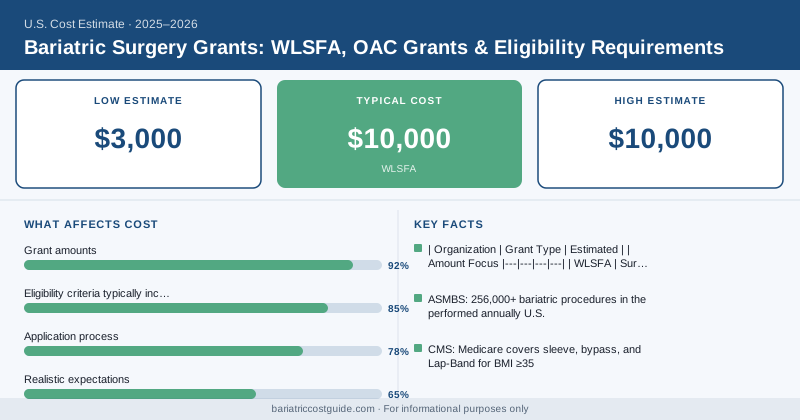
Grant amounts: The WLSFA’s flagship grant awards cover a partial contribution toward surgery costs — historically in the range of $3,000 to $10,000, though amounts vary based on available funding and individual circumstances. The WLSFA doesn’t cover the full cost of surgery; it’s designed to fill a funding gap.
Eligibility criteria typically include:
- U.S. resident
- BMI ≥ 40 or BMI ≥ 35 with comorbidities
- Financial need — grants prioritize applicants for whom surgery is financially out of reach
- No current insurance coverage for surgery
- Medical clearance from a physician
- Commitment to follow-up care
Application process:
- Submit an application through WLSFA.org (application cycles vary by year — check the current schedule)
- Include a personal statement explaining your medical history, financial situation, and why surgery is necessary
- Medical documentation may be required
- Selection is competitive; not all applicants receive grants
Realistic expectations: The WLSFA receives far more applications than it can fund. Their annual grant cycle is limited. Don’t make the WLSFA grant your only plan — pursue it simultaneously with other financing options.
| Organization | Grant Type | Estimated Amount | Focus |
|---|---|---|---|
| WLSFA | Surgery cost assistance | $3,000–$10,000 | Financial need, no insurance |
| OAC | Education and advocacy | Varies | Research, conferences |
| Local hospital foundations | Charity care | Varies | Uninsured, low-income |
| Community foundations | General medical | Varies | Local resident need |
Obesity Action Coalition (OAC)
The OAC is a nonprofit advocacy organization focused on obesity education and policy — not primarily a grant-distributing organization for individual surgery costs. However, the OAC offers resources that can help:
- Community education programs: The OAC provides resources about obesity treatment, including bariatric surgery, that help patients understand their options and navigate coverage
- Advocacy support: The OAC advocates for improved insurance coverage for obesity treatment, which benefits patients dealing with insurance denials
- Research and clinical trial information: The OAC can connect patients with clinical trials studying bariatric procedures, which may cover surgery costs for eligible participants
If you’re looking to the OAC for a direct financial grant to pay for surgery, manage expectations — their primary mission is advocacy and education, not individual surgery funding.
Hospital Foundation and Charity Care Programs
This is an underused resource that’s often more accessible than national grant programs.
How it works: Nonprofit hospitals are required to provide charity care to qualifying low-income patients as a condition of their tax-exempt status. Many hospitals also have foundations that fund medically necessary procedures for qualifying patients.
Who qualifies: Generally patients earning under 200–400% of the federal poverty level (this varies significantly by hospital). Some hospitals use a sliding scale up to 600% FPL.
How to apply:
- Call the bariatric program at your target hospital and ask about financial assistance programs
- Ask the billing or financial counseling department about charity care and foundation assistance
- Apply before scheduling surgery — the process can take 30–90 days
The advantage: Hospital charity care and foundation grants are local, less competitive nationally, and the hospital has a direct interest in helping you access care at their facility.
Ask Directly
Clinical Trials
If you meet clinical criteria for an ongoing bariatric surgery research study, your surgery costs may be covered in part or full by the research funding. These aren’t “grants” in the traditional sense — you’re participating in research — but the financial result can be similar.
Where to search:
- ClinicalTrials.gov — search “bariatric surgery” or “weight loss surgery” plus your city or state
- Your bariatric surgery program — ask specifically if they’re running any funded studies
- Academic medical centers — larger programs at teaching hospitals are more likely to have funded research
Participation may involve additional follow-up visits, data collection, and assignment to a specific procedure type. Read all consent documents carefully before enrolling.
Community Foundations and Local Nonprofits
Many U.S. communities have local community foundations that fund healthcare assistance for residents. These aren’t typically bariatric-surgery-specific, but “medically necessary surgical procedure” often qualifies under general healthcare grants.
How to find them:
- Search “[your county or city] community foundation”
- United Way chapters sometimes administer healthcare assistance funds
- Religious organizations occasionally fund medical care for community members
- Service organizations (Rotary, Lions, Kiwanis) may have emergency healthcare assistance programs
Employer Assistance Programs
Some employers offer Employee Assistance Programs (EAPs) or employer foundation assistance for major medical expenses. This isn’t exactly a “grant” but can function similarly. Ask your HR department or EAP coordinator about emergency medical financial assistance.
Additionally, a growing number of large employers are adding full bariatric surgery coverage to their benefits in recognition of the downstream healthcare cost savings. SHRM surveys show employer interest in comprehensive obesity benefits has increased significantly since 2020. See our employer benefits guide for details.
Crowdfunding as a Supplement
Crowdfunding platforms like GoFundMe can supplement traditional grants, particularly when combined with a compelling personal story. See our crowdfunding guide for realistic expectations and how to run an effective campaign.
Building a Multi-Source Funding Strategy
The most successful patients don’t rely on a single funding source. A realistic strategy:
- Check insurance coverage first — even partial coverage dramatically reduces out-of-pocket
- Apply for hospital charity care at your target facility
- Apply for WLSFA grant simultaneously
- Search ClinicalTrials.gov for eligible studies
- Max your HSA/FSA contributions
- Use a personal loan or payment plan for the remaining gap
- Consider crowdfunding to supplement
Grants are worth pursuing, but they should be one component of a broader financial plan, not the whole strategy.
{ if eq .Lang "zh" }Disclaimer: BariatricCostGuide provides cost data for educational purposes only. We are not a medical provider, insurance company, or financial advisor. All costs are estimates based on published data and vary by location, facility, surgeon, insurance plan, and individual health factors. Consult a board-certified bariatric surgeon and your insurance carrier for personalized medical and cost advice.