GERD After Bariatric Surgery: Cost Guide
{ if eq .Lang "zh" }{ else }{ end }Your surgeon mentioned GERD as a possible side effect. What they may not have emphasized: for a meaningful percentage of gastric sleeve patients, new or worsened acid reflux isn’t a minor inconvenience — it’s a persistent condition that requires ongoing treatment and, in some cases, revision surgery.
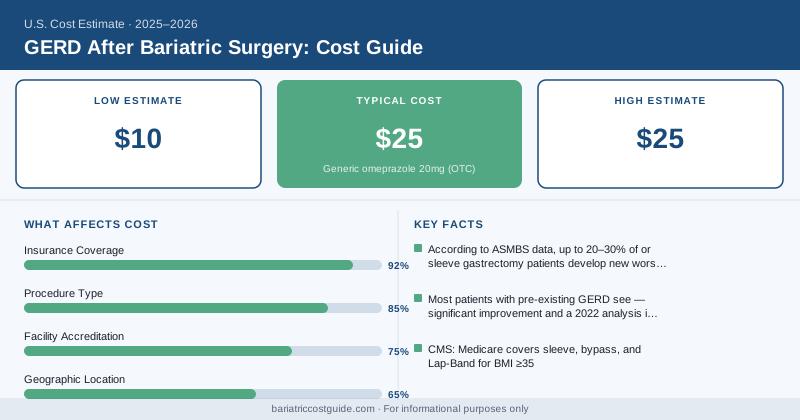
According to ASMBS data, up to 20–30% of sleeve gastrectomy patients develop new or worsened GERD after surgery, compared to gastric bypass, which actually tends to resolve pre-existing reflux in most patients. That difference in outcomes is one reason some surgeons now recommend bypass over sleeve for patients who already have reflux disease before surgery.
Understanding what GERD management actually costs — and what insurance will and won’t cover — can help you plan realistically.
Why Sleeve vs. Bypass Matters So Much Here
The anatomy explains the cost divergence.
After a sleeve gastrectomy, your stomach is tube-shaped and has less capacity to act as a pressure buffer. The lower esophageal sphincter is often under greater mechanical stress, and stomach acid has a shorter path upward. That’s a structural setup for reflux.
After Roux-en-Y gastric bypass, bile and acid are rerouted away from the esophagus. Most patients with pre-existing GERD see significant improvement — and a 2022 analysis in JAMA Surgery found that up to 60% of bypass patients who had pre-operative GERD reported complete symptom resolution within 12 months.
If you had a sleeve and now have GERD, your options range from inexpensive (medication) to significant (revision surgery). The path depends on severity.
Medications: The First Line and Its Real Cost
Most sleeve patients with post-op GERD start with proton pump inhibitors (PPIs). These are the most prescribed class of medication in post-bariatric management.
| Medication Option | Monthly Cost (Uninsured) |
|---|---|
| Generic omeprazole 20mg (OTC) | $10 – $25 |
| Generic omeprazole 40mg (prescription strength) | $15 – $40 |
| Brand-name PPIs (Nexium, Prilosec) | $30 – $80 |
| H2 blockers (famotidine, generic) | $10 – $30 |
| With insurance or GoodRx | $4 – $20/month |
PPIs are often covered by insurance when prescribed for GERD, especially with a post-surgical diagnosis code. If you’re paying out of pocket, GoodRx typically brings generic omeprazole under $10 at major pharmacy chains.
The catch: long-term PPI use (beyond 1–2 years) carries potential risks including B12 deficiency, magnesium depletion, and increased fracture risk — concerns that are especially relevant for post-bariatric patients who are already managing nutritional absorption. Your doctor may want to monitor labs annually if you’re on a PPI long-term.
Diagnostic Workup: What You’ll Need and What It Costs
If GERD symptoms are persistent or severe, your gastroenterologist will likely order diagnostic tests to assess esophageal damage and confirm the diagnosis.
| Diagnostic Test | Estimated Cost (Self-Pay) |
|---|---|
| Upper endoscopy (EGD) | $400 – $1,500 |
| 24-hour pH monitoring (Bravo capsule or probe) | $600 – $2,000 |
| Esophageal manometry | $500 – $1,800 |
| Gastroenterology consultation | $200 – $500 |
Upper endoscopy is typically covered by insurance when ordered for documented GERD symptoms, particularly in the post-bariatric context. The prior authorization process is usually straightforward with adequate symptom documentation.
pH monitoring is the gold standard for confirming acid exposure but is often reserved for patients who don’t respond to PPIs or who are being evaluated for procedural intervention.
When Medication Isn’t Enough: Revision Surgery Costs
For patients with severe, refractory GERD that doesn’t respond to PPIs, revision surgery is often the most effective long-term solution — and it’s also the most expensive path.
Sleeve-to-bypass conversion is the most commonly recommended revision for refractory post-sleeve GERD. It reroutes anatomy to eliminate acid exposure to the esophagus.
| Procedure | Estimated Cost |
|---|---|
| Sleeve-to-bypass revision (uninsured) | $12,000 – $20,000 |
| Sleeve-to-bypass (with insurance, after deductible) | $1,500 – $5,000 |
| LINX magnetic sphincter augmentation | $8,000 – $14,000 |
| Dietary/behavioral counseling (per visit) | $100 – $200 |
Insurance coverage for sleeve-to-bypass revision is variable but often achievable. Insurers typically require documented:
- Failure of at least two PPI trials
- Objective evidence of GERD (pH study, endoscopy)
- Physician documentation that the reflux is related to the prior bariatric procedure
The LINX procedure — a small magnetic ring implanted around the lower esophageal sphincter — is an option in some cases but is less commonly offered to post-bariatric patients because of anatomical considerations after sleeve surgery.
Does Insurance Cover Revision for GERD?
Lifestyle Adjustments That Reduce Costs
Before escalating to procedures, most gastroenterologists want patients to try structured behavioral changes. These don’t eliminate costs but can reduce medication dependence:
- Elevating the head of the bed 6–8 inches (one-time cost: $30–$100 for a wedge pillow)
- Avoiding eating within 2–3 hours of lying down
- Eliminating known triggers: coffee, fatty foods, citrus, chocolate, carbonated beverages
- Smaller, more frequent meals to reduce pouch distension
- Not drinking during meals (already standard post-bariatric advice)
For many sleeve patients, these adjustments combined with medication keep GERD manageable at under $500 a year.
What to Budget
Your actual annual cost depends heavily on severity:
- Mild GERD, medication only: $120–$600/year
- Moderate GERD with diagnostic workup + ongoing meds: $800–$2,500/year
- Severe/refractory with revision surgery: $10,000–$20,000 (one-time, largely or fully covered with insurance documentation)
If you’re on a sleeve and struggling with reflux that isn’t controlled with a standard PPI dose, don’t wait. Early evaluation — including an endoscopy to rule out esophageal damage — is far cheaper than treating complications that develop from years of unmanaged acid exposure.
{ if eq .Lang "zh" }Disclaimer: BariatricCostGuide provides cost data for educational purposes only. We are not a medical provider, insurance company, or financial advisor. All costs are estimates based on published data and vary by location, facility, surgeon, insurance plan, and individual health factors. Consult a board-certified bariatric surgeon and your insurance carrier for personalized medical and cost advice.