Gallbladder Removal After Bariatric Surgery: Costs, Risks & Prevention
{ if eq .Lang "zh" }{ else }{ end }Nobody schedules bariatric surgery expecting a second operation six months later. But for roughly 30–40% of patients who lose weight rapidly, that’s exactly what happens — a gallbladder attack that sends them back to the hospital for a cholecystectomy.
Rapid weight loss is one of the strongest known risk factors for gallstone formation. The mechanism is well understood: when you lose weight quickly, your liver excretes excess cholesterol into bile faster than it can be dissolved, leading to cholesterol crystal precipitation and stone formation. Bariatric surgery, which produces some of the most dramatic weight loss patterns seen in medicine, triggers this process in a significant percentage of patients.
Here’s what that second surgery will cost you — and what you can do to prevent it.
Why Bariatric Surgery Causes Gallstones
A 2022 study published in Obesity Surgery found that approximately 35% of gastric bypass patients who were not prescribed prophylactic medication developed symptomatic gallstones requiring cholecystectomy within the first two years post-op. The highest risk window is the first 6 months, when weight loss is most rapid.
Gastric sleeve patients have slightly lower rates than gastric bypass patients, but the risk is still meaningful — estimated at 20–30% for those with rapid early weight loss.
Key risk factors that raise your personal risk above the average:
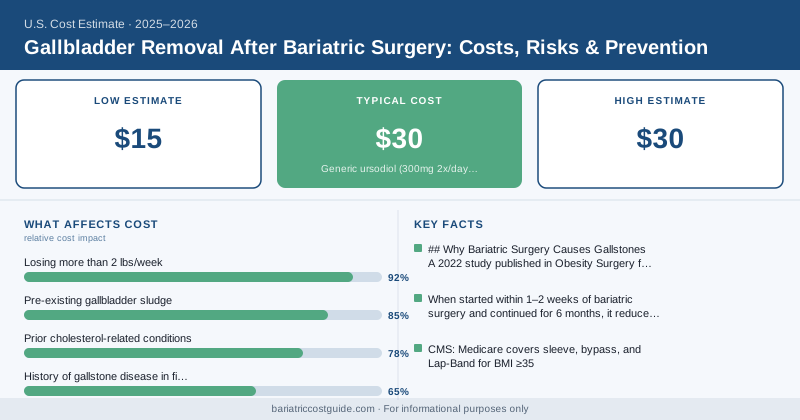
- Losing more than 2 lbs/week during the rapid weight loss phase
- Pre-existing gallbladder sludge (detected on pre-op ultrasound)
- Prior cholesterol-related conditions
- History of gallstone disease in first-degree relatives
- Diabetes (impairs gallbladder motility)
Prophylactic Cholecystectomy: Should You Remove It During Surgery?
Some surgeons remove the gallbladder during bariatric surgery as a preventive measure. This makes most sense if your pre-op ultrasound already shows gallstones or sludge. The add-on procedure typically adds $1,500–$3,500 to the total surgical cost and 15–30 minutes to operative time.
Most surgeons today don’t recommend routine prophylactic cholecystectomy for all patients — the evidence supports Ursodiol as equally effective and far less invasive. But if you already have asymptomatic stones, same-surgery removal is usually the right call.
Ursodiol: The $15/Month Prevention Option
Ursodiol (ursodeoxycholic acid, also sold as Actigall or Urso) is an oral medication that changes bile composition to discourage cholesterol stone formation. When started within 1–2 weeks of bariatric surgery and continued for 6 months, it reduces gallstone formation risk by approximately 60–80% according to multiple randomized trials.
| Ursodiol Option | Monthly Cost |
|---|---|
| Generic ursodiol (300mg 2x/day, most common dose) | $15 – $30 |
| Brand name Actigall | $60 – $120 |
| With insurance (Tier 1 generic) | $5 – $15 copay |
| 6-month prevention course total (generic) | $90 – $180 |
It’s one of the best-value interventions in all of post-bariatric care. A $90–$180 medication course vs. a $4,000–$12,000 surgery — the math is obvious. Yet not every bariatric program prescribes it routinely. Ask your surgeon before your operation whether Ursodiol is part of their standard post-op protocol.
Ask This Question at Your Pre-Op Appointment
“Do you routinely prescribe Ursodiol after surgery, and if not, why not?”
If the answer is “we only prescribe it if you develop symptoms,” push back. Symptomatic gallstones require surgery. The point of Ursodiol is to prevent you from reaching that point. Multiple professional guidelines — including from the ASMBS — support routine post-op Ursodiol for the first 6 months.
Cholecystectomy Cost: When You Need Surgery Anyway
If gallstones develop and cause symptoms (pain, nausea, vomiting, jaundice), you’ll need a laparoscopic cholecystectomy. This is a common, well-tolerated procedure — but it’s a real surgery with real costs.
| Cost Component | With Insurance | Without Insurance |
|---|---|---|
| Surgeon fee | $500 – $2,500 (after insurance) | $2,000 – $5,000 |
| Facility fee (outpatient) | $800 – $3,000 (after insurance) | $4,000 – $10,000 |
| Anesthesia | $300 – $800 (after insurance) | $1,000 – $2,500 |
| Pre-op labs and ultrasound | $100 – $400 | $400 – $1,200 |
| Total cholecystectomy | $1,700 – $6,700 | $7,400 – $18,700 |
Most insurance plans cover cholecystectomy for symptomatic gallstones without significant pushback — it’s a medical necessity with clear imaging evidence. Your out-of-pocket will depend primarily on your deductible and out-of-pocket maximum.
The complication that changes the math: acute cholecystitis (inflamed, infected gallbladder). If a stone causes inflammation, you may need an inpatient hospitalization — 2–4 days at $2,000–$6,000/day — before or instead of outpatient surgery. This can push total costs to $20,000–$40,000 even with insurance, hitting your annual out-of-pocket maximum.
ERCP: When a Stone Slips Into the Bile Duct
About 10–15% of patients with gallstones also have stones that migrate into the common bile duct (choledocholithiasis). These can cause jaundice, pancreatitis, and cholangitis — all serious. Treatment requires ERCP (endoscopic retrograde cholangiopancreatography) to extract the duct stone before cholecystectomy.
ERCP adds $3,000–$8,000 to total costs (often covered by insurance) and typically requires inpatient care. If you develop jaundice, fever, or severe abdominal pain after your bariatric surgery, go to the ER — don’t wait for a Monday morning call to your surgeon.
Total Financial Risk Without Prevention
If you skip Ursodiol and develop symptomatic gallstones requiring surgery:
- Routine outpatient cholecystectomy: $4,000–$12,000 total cost
- With acute cholecystitis (hospital admission): $15,000–$40,000
- With ERCP for duct stone: add $5,000–$12,000
- Recovery time off work: 1–2 weeks additional (see recovery costs)
Compare that to $90–$180 in Ursodiol. Prevention wins by a factor of 50 to 1.
What to Watch For
Gallstone symptoms you shouldn’t ignore after bariatric surgery:
- Right upper quadrant pain — especially 20–40 minutes after eating fatty foods
- Nausea and bloating after meals
- Referred shoulder pain (right shoulder or shoulder blade)
- Fever + abdominal pain — seek emergency care immediately
Post-bariatric patients sometimes dismiss these as “normal post-surgery discomfort” or attribute them to dumping syndrome. They’re not the same thing. Get an abdominal ultrasound if these symptoms develop — it’s a $150–$400 test that can catch a problem before it becomes an emergency.
{ if eq .Lang "zh" }Disclaimer: BariatricCostGuide provides cost data for educational purposes only. We are not a medical provider, insurance company, or financial advisor. All costs are estimates based on published data and vary by location, facility, surgeon, insurance plan, and individual health factors. Consult a board-certified bariatric surgeon and your insurance carrier for personalized medical and cost advice.