Bariatric Surgery for Women: Costs, PCOS, Pregnancy & Hormonal Changes
{ if eq .Lang "zh" }{ else }{ end }Eight out of ten bariatric surgery patients are women. That’s not a coincidence — obesity disproportionately affects women through a cascade of hormonal, metabolic, and reproductive consequences that surgery can dramatically reverse. Yet most cost guides treat bariatric surgery as gender-neutral. It isn’t.
Here’s what surgery actually costs and looks like for women, including the reproductive timeline you need to plan around.
What Women Pay for Bariatric Surgery in 2025–2026
The base surgical costs don’t differ by sex, but women often carry additional pre-op and post-op expenses that rarely appear in headline prices.
| Cost Category | Typical Range |
|---|---|
| Gastric sleeve (total, insured) | $1,500 – $6,000 out-of-pocket |
| Gastric sleeve (self-pay) | $9,000 – $18,000 |
| Gastric bypass (total, insured) | $2,000 – $7,500 out-of-pocket |
| Gastric bypass (self-pay) | $15,000 – $25,000 |
| Gynecologic evaluation (pre-op) | $200 – $600 |
| PCOS-related labs pre-op | $150 – $500 |
| Contraception (12–18 months post-op) | $0 – $1,200/year depending on method |
| Pregnancy monitoring post-bariatric | $500 – $2,000 additional OB costs |
| Nutrition counseling (ongoing post-op) | $75 – $200/session |
If you’re insured, your surgery cost depends heavily on your plan’s deductible and out-of-pocket maximum rather than the procedure itself. For self-pay women — especially those pursuing surgery for fertility or PCOS resolution — the full out-of-pocket hit is $9,000–$25,000 depending on procedure choice.
Why Women Dominate Bariatric Surgery
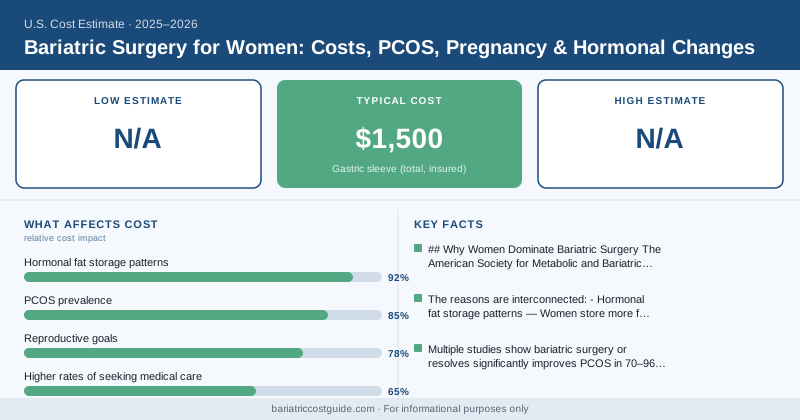
The American Society for Metabolic and Bariatric Surgery (ASMBS) reports that women account for approximately 80% of all bariatric procedures performed annually in the US. The reasons are interconnected:
- Hormonal fat storage patterns — Women store more fat in hormonally active depots (visceral and subcutaneous) that respond to the appetite hormone changes bariatric surgery produces
- PCOS prevalence — Polycystic ovary syndrome affects 6–12% of women of reproductive age (CDC), and the insulin resistance driving PCOS is directly addressed by bariatric surgery
- Reproductive goals — Women planning pregnancy have a concrete medical incentive to resolve obesity before conception
- Higher rates of seeking medical care — Women are more likely to pursue elective health interventions proactively
PCOS and Bariatric Surgery: What Resolution Looks Like
PCOS is one of the most compelling arguments for bariatric surgery in women under 45. The surgery doesn’t just treat a symptom — it targets the underlying insulin resistance that drives the entire syndrome.
PCOS Resolution Rates After Bariatric Surgery
Multiple studies show bariatric surgery resolves or significantly improves PCOS in 70–96% of patients. What “resolution” typically includes:
- Menstrual cycle regularization — Most women see regular cycles return within 3–6 months of surgery
- Androgen normalization — Testosterone and DHEA-S levels drop significantly as visceral fat decreases
- Insulin resistance improvement — Often precedes significant weight loss; begins within days of surgery
- Acne and hirsutism reduction — Follows androgen normalization, typically 3–12 months post-op
- Fertility restoration — Ovulation resumes in many women who previously required fertility treatment
A 2020 meta-analysis in Obesity Surgery found that 84% of women with PCOS experienced significant symptom improvement after gastric sleeve or gastric bypass.
If you’ve been spending $3,000–$15,000 per year on PCOS management — metformin, spironolactone, fertility workups, irregular-cycle monitoring — surgery may reduce or eliminate those ongoing costs entirely.
The Pregnancy Timeline: Why 12–18 Months Matters
This is the rule that catches women off guard. After bariatric surgery, your program will require you to avoid pregnancy for 12–18 months post-op. This isn’t arbitrary. During rapid weight loss, your body is:
- Mobilizing fat-stored nutrients (including fat-soluble vitamins A, D, E, K) in ways that can be teratogenic
- Absorbing calories and nutrients erratically as your gut adapts
- Experiencing hormonal flux that can affect fetal development
The ASMBS and most OB-GYN societies recommend a minimum of 12 months before attempting conception, with 18 months as the more conservative standard.
What this means for contraception costs:
Your post-op contraception needs to be reliable. Many programs require barrier methods combined with hormonal contraception during the restricted window. Important caveat: oral contraceptive pills may be poorly absorbed in the first year after gastric bypass due to malabsorption effects. Your surgeon and OB-GYN should coordinate on method selection — IUDs, implants, or barrier methods are often preferred over pills.
| Contraception Method | Annual Cost (approximate) |
|---|---|
| Combined oral contraceptive pill | $0 – $600 (insurance dependent) |
| IUD (hormonal or copper, inserted) | $0 – $1,300 total (lasts 3–10 years) |
| Implant (Nexplanon) | $0 – $800 total (lasts 3 years) |
| Barrier + spermicide | $100 – $400/year |
Hormonal Changes After Surgery
Weight loss surgery triggers hormonal shifts that affect nearly every system — and women feel this more profoundly than men.
What typically improves:
- Estrogen dominance patterns from excess adipose tissue normalize
- Elevated insulin and androgen levels fall
- Sleep apnea (common in women with PCOS) often resolves, improving cortisol and sleep hormone patterns
- Thyroid function can shift — your medication dose may need adjustment
What to watch for:
- Dumping syndrome (more common after bypass) is influenced by estrogen and progesterone cycling — some women report that symptoms worsen during the luteal phase
- Bone density loss accelerates in the first 1–2 years post-op; women already at higher osteoporosis risk must supplement aggressively with calcium citrate (not carbonate) and vitamin D3
- Hair loss at 3–6 months post-op is almost universal and is driven by the stress of rapid weight loss (telogen effluvium) — it resolves, but it’s distressing; ensure adequate protein (60–80g/day minimum) and zinc
Pregnancy After Bariatric Surgery: What the Research Shows
Women who become pregnant after bariatric surgery — after the recommended waiting period — generally have better outcomes than they would have at their pre-surgery weight. A landmark study in JAMA Surgery found that post-bariatric pregnancies had significantly lower rates of gestational diabetes, preeclampsia, and macrosomia compared to pregnancies in matched obese controls.
The trade-off: post-bariatric pregnancies require closer nutritional monitoring. You’ll need:
- More frequent OB visits (every 2–4 weeks starting in second trimester)
- Iron, folate, B12, calcium, and vitamin D labs each trimester
- Coordination between your OB and your bariatric program’s dietitian
Budget an additional $500–$2,000 above standard prenatal care costs for this enhanced monitoring.
Putting It All Together
If you’re a woman considering bariatric surgery, the financial calculation isn’t just the surgery itself. Factor in your contraception method for 12–18 months, any PCOS-related savings, and the cost of nutritional monitoring during any future pregnancy. The full picture often makes surgery even more financially compelling than the surgery cost alone suggests — especially if you’re currently spending heavily on PCOS management or fertility treatment.
For procedure-specific cost breakdowns, see gastric sleeve cost and gastric bypass cost. If you’re comparing surgery to GLP-1 medications like Wegovy, the fertility and PCOS calculus often tips in surgery’s favor for women planning pregnancy.
{ if eq .Lang "zh" }Disclaimer: BariatricCostGuide provides cost data for educational purposes only. We are not a medical provider, insurance company, or financial advisor. All costs are estimates based on published data and vary by location, facility, surgeon, insurance plan, and individual health factors. Consult a board-certified bariatric surgeon and your insurance carrier for personalized medical and cost advice.