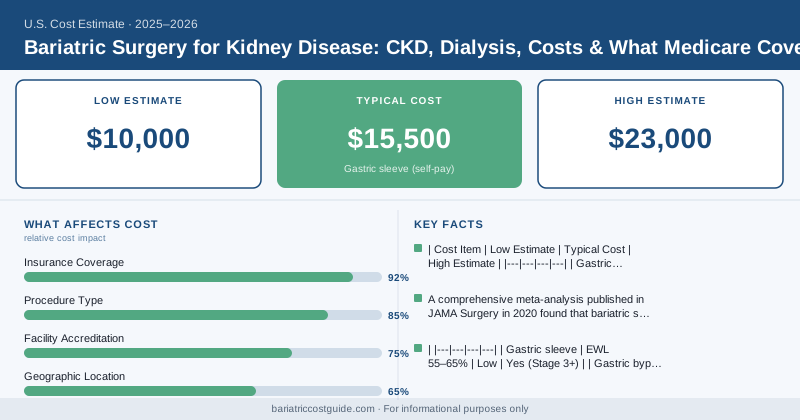
Bariatric Surgery for Kidney Disease: CKD, Dialysis, Costs & What Medicare Covers
{ if eq .Lang "zh" }{ else }{ end }Most people think of weight loss surgery as a diabetes or joint problem fix. But kidney disease — specifically chronic kidney disease (CKD) — has a quietly compelling relationship with bariatric surgery that affects hundreds of thousands of potential patients.
Here’s the hard truth about the numbers: roughly 40% of severe obesity patients have CKD stage 2 or higher. Obesity directly causes kidney damage through hypertension, diabetes, and direct glomerular hyperfiltration stress. And yet, many of these patients aren’t offered bariatric surgery — or don’t know it’s an option — because of concerns about surgical risk in compromised kidneys.
The picture is more nuanced than “CKD patients can’t have surgery.” Here’s what you need to know about costs, eligibility, and what nephrology clearance actually involves.
Cost Breakdown for CKD Patients
CKD adds a layer of pre-op evaluation and monitoring that increases total costs. The base surgery price is the same as for other patients, but the workup is more extensive.
| Cost Item | Low Estimate | Typical Cost | High Estimate |
|---|---|---|---|
| Gastric sleeve (self-pay) | $10,000 | $15,500 | $23,000 |
| Gastric bypass (self-pay) | $15,000 | $23,000 | $35,000 |
| Nephrology consultation (pre-op) | $250 | $450 | $800 |
| Comprehensive metabolic panel (CKD labs) | $100 | $250 | $500 |
| 24-hour urine protein (proteinuria check) | $80 | $200 | $400 |
| Renal ultrasound | $200 | $500 | $1,200 |
| Additional nephrology follow-up (Year 1) | $400 | $900 | $2,000 |
| Dialysis access evaluation (if applicable) | $500 | $1,200 | $3,000 |
CKD patients covered by Medicare receive important coverage protections. CMS covers bariatric surgery for Medicare beneficiaries with BMI ≥35 and at least one related comorbidity — and CKD qualifies as a comorbidity. If you’re on Medicare due to ESRD (end-stage renal disease), the picture is more complex and discussed below.
How CKD Stages Affect Surgical Eligibility
Not all CKD is the same, and your stage matters enormously for whether and when surgery is appropriate.
Stage 1–2 CKD (eGFR 60–89 or >90 with proteinuria): Bariatric surgery is generally well-tolerated and can actually slow CKD progression. The benefits of treating obesity outweigh the surgical risks. Most programs proceed without major modification to the standard workup.
Stage 3 CKD (eGFR 30–59): Surgery is offered at most accredited programs with nephrology clearance. Fluid management during and after surgery requires more precise calibration, and some anesthetic agents need dose adjustment. You’re a viable candidate — just a more carefully managed one.
Stage 4 CKD (eGFR 15–29): This is where opinions diverge. Many programs will still operate on Stage 4 patients with careful selection, particularly if the goal is to slow progression toward dialysis. But some programs decline Stage 4 patients due to elevated risk of acute kidney injury in the perioperative period. You need a bariatric program experienced with advanced CKD.
Stage 5 CKD / ESRD (eGFR <15 or on dialysis): Surgery is possible but highly specialized. Most centers won’t perform bariatric surgery on active dialysis patients due to the complex fluid, electrolyte, and nutritional management required. However, bariatric surgery before kidney transplant — to lower BMI to meet transplant eligibility criteria — is increasingly performed at specialized transplant centers.
Bariatric Surgery Before Kidney Transplant
Many transplant programs require BMI <35 or even <30 for eligibility. Patients who are obese and awaiting kidney transplant may be referred for bariatric surgery specifically to meet transplant criteria.
This is an emerging and important use case. A 2022 study in American Journal of Transplantation found that bariatric surgery before kidney transplant significantly improved post-transplant outcomes — including lower rejection rates and better graft survival — by improving metabolic health before the transplant immunosuppression regimen.
Transplant centers increasingly partner with bariatric programs to create a coordinated pathway. If this applies to you, ask your transplant nephrologist and your bariatric surgeon whether your center has a formal pre-transplant bariatric program.
How Bariatric Surgery Affects Kidney Function
The data here is genuinely encouraging. A comprehensive meta-analysis published in JAMA Surgery in 2020 found that bariatric surgery was associated with:
- Significant reduction in proteinuria — urinary protein excretion dropped by 40–60% in most studies, an important marker of kidney damage
- Stabilization or improvement in eGFR — particularly in Stage 2–3 patients where reversal of obesity-related hyperfiltration allows the kidneys to function more efficiently
- Lower rates of progression to ESRD — a landmark Swedish study found that surgery patients were 60% less likely to develop end-stage renal disease over a 20-year follow-up compared to matched controls
The mechanisms are the same as for diabetes and cardiovascular disease: dramatic reduction in blood pressure, improvement in insulin resistance, weight loss reducing the mechanical hyperfiltration stress, and resolution of sleep apnea (which independently stresses renal vasculature).
The Dialysis Question
Patients currently on hemodialysis or peritoneal dialysis are in a different situation. Bariatric surgery on active dialysis patients is performed at specialized centers — primarily large academic medical centers with transplant programs — and is not standard care.
The challenges are significant:
- Fluid management during surgery is extremely complex in dialysis-dependent patients
- Nutritional absorption is already compromised by the dialysis process and underlying renal disease
- The malabsorptive component of gastric bypass raises concerns about oxalate hyperabsorption, which can accelerate renal oxalate injury
- Insurance coverage for bariatric surgery in active ESRD patients is inconsistently defined
If you’re on dialysis and interested in bariatric surgery, the only appropriate pathway is through a bariatric-trained surgeon at a transplant center. Do not pursue this through a freestanding bariatric center.
Procedure Selection: Why Sleeve Is Often Preferred in CKD
For patients with CKD, gastric sleeve is more commonly chosen over gastric bypass for one specific reason: malabsorption.
Gastric bypass creates a degree of intestinal malabsorption that affects oxalate absorption. Excess oxalate then passes into the kidney — and in patients with compromised renal function, this can accelerate kidney damage (enteric hyperoxaluria). The gastric sleeve, which doesn’t reroute the intestine, avoids this risk.
For patients with Stage 3+ CKD, most nephrologists and bariatric surgeons prefer sleeve gastrectomy for this reason. The tradeoff is slightly less weight loss on average, but the renal protection is worth it.
| Procedure | Avg Excess Weight Loss | Oxalate Risk in CKD | Preferred for CKD? |
|---|---|---|---|
| Gastric sleeve | 55–65% EWL | Low | Yes (Stage 3+) |
| Gastric bypass | 65–80% EWL | Moderate | Caution in Stage 3+ |
| Duodenal switch | 70–85% EWL | High | Generally avoid in CKD |
| Lap-Band (rare) | 40–55% EWL | Minimal | Low efficacy, mostly discontinued |
What CMS (Medicare/Medicaid) Covers for CKD Patients
Medicare covers bariatric surgery for CKD patients under the same criteria as all Medicare bariatric coverage: BMI ≥35 with at least one qualifying comorbidity. CKD (documented by your nephrologist) qualifies.
Key Medicare rules:
- Surgery must be performed at an approved Medicare facility (Bariatric Surgery Center of Excellence or equivalent)
- A supervised weight loss program is not universally required by Medicare, but many programs still recommend it
- For ESRD patients on Medicare Part B, coverage determinations for bariatric surgery require individual review and are not automatically granted
Medicaid coverage varies by state — some states cover bariatric surgery broadly, others require additional criteria. If you have both CKD and Medicaid, check your state-specific policy.
Finding the Right Program
Not every bariatric program has experience with CKD patients. When evaluating programs, ask directly:
- How many patients with Stage 3+ CKD have you operated on in the past year?
- Do you have a nephrologist on your multidisciplinary team or a formal nephrology referral protocol?
- Is your program affiliated with a transplant center?
- What is your perioperative fluid management protocol for CKD patients?
For related cost comparisons, see gastric sleeve cost, gastric bypass cost, and the full guide to bariatric surgery insurance coverage.
{ if eq .Lang "zh" }Disclaimer: BariatricCostGuide provides cost data for educational purposes only. We are not a medical provider, insurance company, or financial advisor. All costs are estimates based on published data and vary by location, facility, surgeon, insurance plan, and individual health factors. Consult a board-certified bariatric surgeon and your insurance carrier for personalized medical and cost advice.