Bariatric Surgery for Heart Disease: Costs, Cardiac Clearance & Long-Term Savings
{ if eq .Lang "zh" }{ else }{ end }A 2021 study in the Journal of the American College of Cardiology found that bariatric surgery reduces major adverse cardiovascular events — heart attack, stroke, and cardiovascular death — by 39% compared to matched controls who didn’t have surgery. That’s not a modest improvement. That’s a near-halving of the events that kill more Americans than any other cause.
If you have obesity and heart disease, the financial question isn’t just what surgery costs. It’s what untreated severe obesity costs your heart over the next decade — in medications, hospitalizations, procedures, and years of life.
The Cost Picture: Surgery Plus Cardiac Clearance
Patients with cardiovascular disease require additional pre-op cardiac evaluation before any bariatric program will clear them for surgery. This is non-negotiable and adds real cost.
| Cost Item | Low Estimate | Typical Cost | High Estimate |
|---|---|---|---|
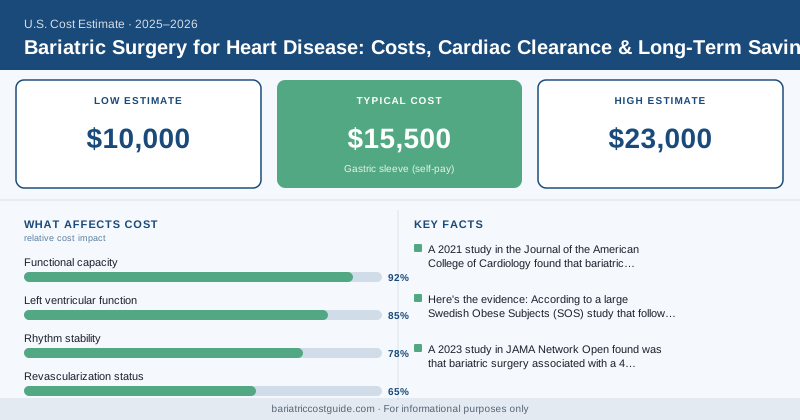
| Gastric sleeve (self-pay) | $10,000 | $15,500 | $23,000 |
| Gastric bypass (self-pay) | $15,000 | $23,000 | $35,000 |
| Cardiology consultation | $200 | $400 | $700 |
| Resting EKG | $50 | $150 | $300 |
| Echocardiogram | $400 | $1,200 | $2,500 |
| Stress test (exercise or nuclear) | $300 | $900 | $3,000 |
| Holter monitor (24–48 hour) | $200 | $500 | $1,200 |
| Total cardiac clearance workup | $500 | $1,200 | $4,000+ |
With insurance, most cardiac clearance testing is covered at your standard specialist copay rate. Self-pay patients — particularly those combining cardiac workup with self-pay surgery — should budget $1,000–$2,500 for the full pre-op cardiac evaluation.
What Cardiologists Actually Look For Pre-Op
Your bariatric program won’t clear you for surgery without a cardiologist’s sign-off if you have any of the following: known coronary artery disease, a prior heart attack, heart failure, arrhythmias, or significant valvular disease. Here’s what the workup assesses:
Functional capacity — Can you tolerate general anesthesia and the metabolic demands of surgery and recovery? Cardiologists typically want to know your METs (metabolic equivalents of task). If you can climb two flights of stairs without stopping, you’re generally above the 4-MET threshold that predicts adequate surgical tolerance.
Left ventricular function — An echocardiogram checks your ejection fraction (EF). An EF below 35% is a red flag that significantly elevates surgical risk. Many bariatric programs require EF ≥40% before proceeding.
Rhythm stability — Uncontrolled atrial fibrillation or other arrhythmias need to be rate-controlled or rhythm-controlled before elective surgery. Afib itself isn’t a contraindication — but unstable Afib is.
Revascularization status — If you’ve had a stent or bypass surgery, your cardiologist will assess whether your coronary disease is optimally treated before adding another surgical stress.
What 'Cardiac Clearance' Actually Means
Cardiac clearance doesn’t mean your cardiologist is guaranteeing the surgery is safe. It means they’ve assessed your cardiovascular risk, optimized what they can, and determined that the surgical and anesthetic risk is acceptable given the expected benefits.
Most cardiologists will issue clearance with conditions — for example, continuing all antiplatelet agents except aspirin, or requiring specific intraoperative monitoring. Your bariatric surgeon and anesthesiologist will work from that clearance letter to plan your case.
How Obesity Damages the Heart
Before discussing how surgery helps, it’s worth being specific about the damage. Obesity contributes to heart disease through multiple simultaneous pathways:
- Hypertension — Excess body mass increases blood volume, cardiac output demand, and arterial stiffness. The AHA reports that obesity accounts for approximately 65–75% of essential hypertension cases in US adults.
- Dyslipidemia — Elevated triglycerides, reduced HDL, and elevated small dense LDL are all obesity-related and directly atherogenic.
- Left ventricular hypertrophy — The heart literally enlarges to pump for a larger body. This increases arrhythmia risk and reduces long-term cardiac reserve.
- Sleep apnea — Obesity-related OSA causes intermittent hypoxia that damages endothelial function, raises pulmonary arterial pressure, and strains the right ventricle.
- Metabolic syndrome — The combination of abdominal obesity, insulin resistance, hypertension, and dyslipidemia creates a synergistic cardiovascular risk that’s greater than any single factor.
What Bariatric Surgery Does to Cardiovascular Risk
The effects are rapid and clinically significant. Within 30 days of surgery — before most of the weight is even lost — blood pressure starts dropping, triglycerides fall, and fasting insulin normalizes. Here’s the evidence:
According to a large Swedish Obese Subjects (SOS) study that followed patients for 20+ years, bariatric surgery reduced long-term cardiovascular mortality by 53% compared to matched controls managed with conventional treatment. Patients who had surgery had significantly fewer fatal myocardial infarctions and fewer strokes over two decades of follow-up.
A 2023 study in JAMA Network Open found that bariatric surgery was associated with a 41% reduction in heart failure hospitalization risk over 5 years among patients with pre-existing heart failure and obesity.
The medication savings that follow these risk reductions are substantial.
Long-Term Cardiac Medication Savings
This is where the financial calculation gets interesting. Patients with obesity-related heart disease are often on 3–5 chronic medications — antihypertensives, statins, antiplatelet agents, diabetes medications — each costing $50–$400/month. After significant weight loss, many of these can be reduced or eliminated.
| Medication Class | Typical Monthly Cost | % of Patients Reducing/Stopping Post-Surgery |
|---|---|---|
| Antihypertensives (1–2 agents) | $30 – $200 | 60–75% |
| Statins | $20 – $150 | 40–60% |
| Diabetes medications (oral) | $50 – $400 | 60–80% |
| GLP-1 agonists (if prescribed) | $800 – $1,500 | 70–85% |
| Diuretics | $10 – $50 | 50–70% |
A patient on $600/month in cardiac and metabolic medications who reduces that to $150/month after surgery saves $5,400/year. Over 10 years, that’s $54,000 — roughly 2–3x the cost of the surgery itself.
Timing Surgery When You Have Heart Disease
Timing matters. If you’ve had a recent cardiac event — a heart attack, stent placement, or new heart failure diagnosis — most guidelines recommend waiting at least 6–12 months before elective bariatric surgery. This isn’t bureaucratic caution; it’s based on data showing elevated perioperative risk in the early post-cardiac event window.
If you’re on dual antiplatelet therapy (aspirin + clopidogrel or ticagrelor), your cardiologist and bariatric surgeon need to collaborate on bridging strategy. Stopping antiplatelet therapy prematurely before a stent has fully endothelialized is dangerous. Continuing it risks surgical bleeding. The solution is a carefully coordinated plan — not something to improvise.
The Risk-Benefit Math
Yes, bariatric surgery carries cardiac risk in the perioperative period — especially for patients who already have heart disease. The 30-day mortality for bariatric surgery at accredited centers is approximately 0.1–0.3%, comparable to gallbladder surgery. For higher-risk cardiac patients, it may be slightly higher.
But the risk math has to be compared to the right baseline. A 50-year-old with severe obesity, hypertension, and early coronary artery disease who doesn’t have surgery has a 10-year cardiovascular event probability that the Framingham risk score puts at 15–25% or higher. The perioperative risk of surgery is orders of magnitude smaller than the decade of cardiovascular risk that surgery reduces.
For procedure cost comparisons, see gastric sleeve cost and gastric bypass cost. If your insurance hasn’t approved you yet, bariatric surgery insurance coverage covers how to use cardiovascular comorbidities to strengthen your approval case.
{ if eq .Lang "zh" }Disclaimer: BariatricCostGuide provides cost data for educational purposes only. We are not a medical provider, insurance company, or financial advisor. All costs are estimates based on published data and vary by location, facility, surgeon, insurance plan, and individual health factors. Consult a board-certified bariatric surgeon and your insurance carrier for personalized medical and cost advice.