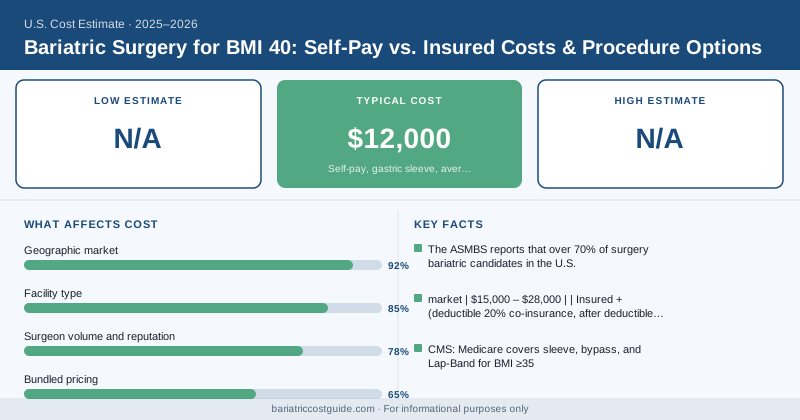
Bariatric Surgery for BMI 40: Self-Pay vs. Insured Costs & Procedure Options
{ if eq .Lang "zh" }{ else }{ end }BMI 40 is the sweet spot in bariatric surgery eligibility. You don’t need a documented comorbidity — the BMI alone clears the primary eligibility threshold. You’re the most common profile at every major bariatric center in the country. And because programs see so many patients like you, the insurance approval process is generally more straightforward than at lower BMI thresholds.
None of that means costs are automatic. Here’s what BMI 40 patients actually pay — and the factors that push your number up or down.
Who Is the BMI 40 Candidate?
A person who weighs 240 lbs at 5'5" has a BMI of 40. At 5'10", that’s 280 lbs. At 6'0", it’s 295 lbs. The actual weight varies by height — but the metabolic risk profile is consistent: significantly elevated risk of type 2 diabetes, hypertension, sleep apnea, joint degeneration, cardiovascular disease, and certain cancers compared to normal-BMI individuals.
The ASMBS reports that over 70% of bariatric surgery candidates in the U.S. fall in the BMI 35–50 range. BMI 40 is squarely in the most common patient profile.
Cost: Self-Pay vs. Insured
| Scenario | Typical Out-of-Pocket |
|---|---|
| Self-pay, gastric sleeve, average U.S. market | $12,000 – $23,000 |
| Self-pay, gastric bypass, average U.S. market | $15,000 – $28,000 |
| Insured (deductible + 20% co-insurance, after deductible met) | $2,000 – $7,000 |
| Insured, high-deductible plan ($6,000 deductible) | $6,000 – $9,000 |
| Medicare at 65+ | $1,600 – $5,000 |
| Medicaid (where covered) | $0 – $500 |
| Surgery in Mexico (self-pay) | $5,000 – $10,000 |
The Insurance Prior Auth Process at BMI 40
At BMI 40, you have the clearest-cut eligibility of any bariatric surgery candidate. The standard requirements:
BMI documentation: 3–5 years of weight history showing sustained BMI ≥ 40 at your current or prior height. Office weight records, lab reports with weight listed, prescription notes — any documented source works.
Supervised diet program: Most commercial insurers still require 3–6 months of medically supervised weight management documented by a physician.
Psychological evaluation: Required by virtually all insurers. One-time evaluation by a licensed psychologist or psychiatrist.
Medical clearance: Cardiopulmonary clearance from your primary care physician or internist.
Nutritional counseling: At least 1–3 visits with a registered dietitian documented pre-surgically.
Timeline: Plan 3–6 months from initial consultation to surgery date if your insurance has a supervised diet requirement. Programs that don’t require the diet program can sometimes move in 4–8 weeks.
Does BMI 40 Without Comorbidities Still Get Covered?
Yes — and this is worth being clear about, because some patients at BMI 40 have somehow avoided developing measurable comorbidities yet. The threshold is BMI ≥ 40 period, regardless of comorbidity status.
Insurers cannot deny a medically appropriate claim solely because a BMI 40 patient is otherwise metabolically healthy. If your insurer tries to deny for this reason, appeal with documentation of the ASMBS criteria and your plan’s stated coverage policy — most plans explicitly list BMI ≥ 40 as a standalone qualifying criterion.
Procedure Options: Which Is Best at BMI 40?
At BMI 40, all major bariatric procedures are appropriate. The choice depends on your specific circumstances:
Gastric sleeve (sleeve gastrectomy): Most commonly performed. No intestinal rerouting. Good weight loss (typically 60–70% excess weight loss at 1 year at BMI 40). Lower complexity than bypass. Good choice if you don’t have GERD or diabetes as primary concern.
Gastric bypass (RYGB): Higher efficacy for type 2 diabetes. Slightly higher total weight loss at 5+ years versus sleeve in most studies. More complex surgery with slightly higher nutritional monitoring requirements. Preferred by many surgeons for patients with GERD (sleeve can worsen reflux; bypass typically resolves it).
Gastric band (lap band): Still offered at some centers but increasingly uncommon — inferior long-term outcomes and high removal rate. Most experienced programs no longer recommend it as a first-line option.
Single anastomosis gastric bypass (SADI/OAGB): Offered at a growing number of centers. Less complex than traditional RYGB. Good early data, though longer-term outcomes vs. standard bypass still being established.
What Affects Your Self-Pay Price
If you’re paying out of pocket, these factors move the price more than your BMI:
- Geographic market: NYC, LA, Chicago, and Miami cost 30–60% more than mid-size markets
- Facility type: Hospital-based OR vs. accredited ambulatory surgery center — ASCs often save $3,000–$8,000
- Surgeon volume and reputation: High-volume MBSAQIP surgeons often charge more but have lower complication rates
- Bundled pricing: Some programs offer all-inclusive packages (surgery + pre-op + 1 year follow-up) that can actually be better value than fee-for-service billing
Financing at BMI 40 (Self-Pay)
Self-pay options:
- Medical financing (CareCredit, Alphaeon): 0% promotional periods of 12–18 months on amounts up to $25,000
- Personal loans: 8–15% APR for good credit; 15–25% for fair credit
- HSA/FSA: Pre-tax dollars; bariatric surgery qualifies as a qualified medical expense
- Payment plans: Many programs offer 6–12 month in-house plans, often 0% interest
- Mexico surgery: 60–70% of U.S. prices; accredited programs in Tijuana, Monterrey, and Guadalajara are available but require due diligence on MBSAQIP-equivalent accreditation and travel/recovery logistics
Disclaimer: BariatricCostGuide provides cost data for educational purposes only. We are not a medical provider, insurance company, or financial advisor. All costs are estimates based on published data and vary by location, facility, surgeon, insurance plan, and individual health factors. Consult a board-certified bariatric surgeon and your insurance carrier for personalized medical and cost advice.