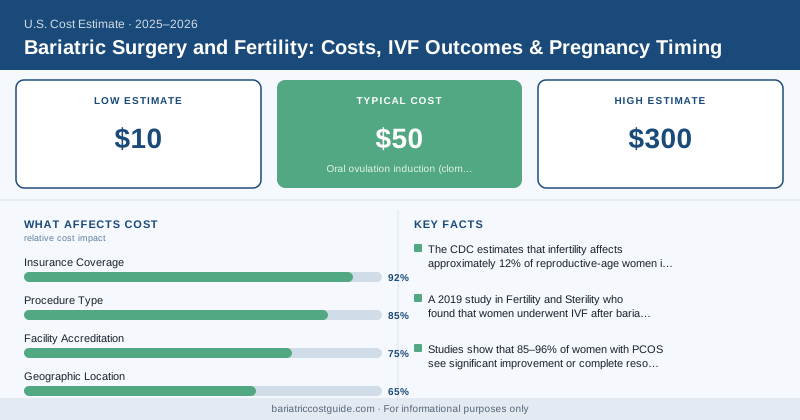
Bariatric Surgery and Fertility: Costs, IVF Outcomes & Pregnancy Timing
{ if eq .Lang "zh" }{ else }{ end }$15,000–$20,000 per IVF cycle. That’s the national average, and most women with obesity need multiple cycles. Some insurance plans cover it — most don’t. Meanwhile, bariatric surgery at $10,000–$20,000 out-of-pocket can restore natural ovulation in women who’ve been anovulatory for years, dramatically improve IVF success rates in those who still need assisted reproduction, and eliminate the obesity-related pregnancy complications that make getting pregnant — and staying pregnant — so much harder.
The fertility-bariatric cost calculation is one of the most compelling financial cases in all of weight loss medicine. Here’s how the numbers actually work.
How Obesity Impairs Fertility
Before comparing costs, you need to understand what obesity does to fertility — because the mechanism is specific, treatable, and largely reversible.
Excess adipose tissue produces estrogen. Too much circulating estrogen disrupts the hormonal feedback loop (hypothalamic-pituitary-ovarian axis) that regulates ovulation. The result: irregular or absent ovulation, luteal phase defects, and reduced endometrial receptivity. Add the insulin resistance of obesity — which directly impairs follicle development — and you have a multi-pathway fertility problem.
The CDC estimates that infertility affects approximately 12% of reproductive-age women in the US, with obesity being one of the most modifiable risk factors. Among women with PCOS — which affects 6–12% of women of reproductive age and is strongly associated with obesity — anovulation is the primary cause of infertility.
The Cost Comparison: Fertility Treatment Before vs. After Surgery
| Fertility Approach | Per-Cycle or Annual Cost | Success Rate (Live Birth) | Notes |
|---|---|---|---|
| Oral ovulation induction (clomiphene/letrozole) | $50 – $300/cycle | 10–20% per cycle | Often first-line; low cost but limited by obesity-related resistance |
| Injectable gonadotropins (IUI cycle) | $1,500 – $5,000/cycle | 15–25% per cycle | Requires monitoring; cost adds up over multiple cycles |
| IVF (standard cycle, no insurance) | $12,000 – $20,000/cycle | 25–40% per cycle (age-dependent) | Multiple cycles often needed |
| IVF in obese patients (BMI 35–45) | $12,000 – $20,000/cycle | 15–28% per cycle | Lower success rates at higher BMI |
| Bariatric surgery + natural conception | $10,000 – $25,000 total | Natural conception restored in 50–70% of anovulatory women post-surgery | One-time cost; also treats comorbidities |
| Bariatric surgery + IVF (after weight loss) | $10,000 – $25,000 surgery + $12,000 – $20,000 IVF | 35–50%+ per cycle post-surgery | Significantly better IVF outcomes after weight loss |
The math becomes clear when you model multiple IVF cycles. A woman who needs three IVF cycles at $15,000 each has spent $45,000 — more than the cost of bariatric surgery plus one IVF cycle with a significantly higher success rate.
What the Research Shows on IVF Outcomes After Weight Loss
The data on IVF after bariatric surgery is genuinely encouraging. A 2019 study in Fertility and Sterility found that women who underwent IVF after bariatric surgery had live birth rates of approximately 39% per transfer — compared to 24% for matched obese controls who had IVF without prior surgery. That’s a 60% relative improvement in success rate.
The improvement comes from multiple sources: better egg quality (oocyte quality is directly affected by metabolic environment), improved endometrial receptivity, lower early pregnancy loss rates, and reduced gestational complication rates.
A 2022 systematic review in Human Reproduction confirmed that bariatric surgery before assisted reproduction is associated with significantly better embryological and clinical outcomes — including higher fertilization rates, better blastocyst development, and lower miscarriage rates.
Natural Fertility Restoration After Bariatric Surgery
For women with PCOS-related anovulation, bariatric surgery often restores spontaneous ovulation without any fertility treatment at all.
Studies show that 85–96% of women with PCOS see significant improvement or complete resolution of PCOS symptoms after bariatric surgery. For many, this means natural menstrual cycles resuming within 3–6 months of surgery — and natural pregnancy becoming possible for the first time in years.
Important caveat: this improvement in ovulation means unintended pregnancy risk is significant post-surgery. You need reliable contraception for the 12–18 month recommended waiting period. Don’t assume you’re still infertile just because you were before surgery.
The 12–18 Month Waiting Period: Why It Matters
The American Society for Metabolic and Bariatric Surgery (ASMBS) and ACOG both recommend waiting at least 12–18 months after bariatric surgery before attempting conception. This window exists for real medical reasons:
- Rapid weight loss creates nutritional instability. Folate, iron, B12, and zinc deficiencies are common in the first year post-op and can cause neural tube defects and growth restriction in early pregnancy.
- The body is in a catabolic state during rapid weight loss — not an ideal metabolic environment for early fetal development.
- Weight is still changing rapidly, which makes dosing prenatal vitamins and managing gestational nutrition more complex.
For women using fertility treatments, this means: pursue bariatric surgery first, complete the waiting period, then start IVF or fertility workup. For women who need surgery but can’t wait (advanced maternal age, premature ovarian insufficiency), individual counseling with both a reproductive endocrinologist and a bariatric surgeon is essential.
Age and the Timing Tradeoff
The 12–18 month waiting period is the biggest complication for women over 37 or 38. At age 38, a year and a half of delay represents a meaningful reduction in ovarian reserve and egg quality. The fertility cost of waiting can exceed the fertility benefit of improved metabolic environment.
Here’s the general framework fertility specialists use:
Under 35: Full waiting period of 18 months is appropriate. You have time. The benefit of weight loss on egg quality and endometrial function will likely outweigh the cost of waiting.
35–37: Compressed 12-month waiting period may be appropriate. Consider doing a fertility workup (AMH, antral follicle count) before surgery to understand your ovarian reserve baseline.
38+: Individual decision requiring input from both your reproductive endocrinologist and bariatric surgeon. Some women in this group choose fertility treatment first, then bariatric surgery — or pursue surgery with a 12-month window only. IVF success drops significantly by age 40.
40+: In general, fertility treatment should not be delayed for bariatric surgery at this age. If surgery is still desired, it can follow fertility treatment.
Contraception in the Post-Surgery Window
This point can’t be overstated: improved fertility post-surgery catches women completely off guard.
Many women who’ve had irregular cycles for years — and have been trying to conceive unsuccessfully — find that bariatric surgery restores ovulation within months. They’re not expecting to need contraception during what they see as a “recovery period.” But pregnancy during the nutritional instability window is a real risk — to the fetus and to the mother.
Your bariatric program should discuss contraception as part of pre-op counseling. Standard recommendations:
- Oral contraceptive pills may be poorly absorbed after gastric bypass — not the preferred method
- IUDs (hormonal or copper) or arm implants (Nexplanon) are preferred — they don’t rely on gut absorption
- Barrier methods alone are insufficient for high-efficacy contraception
The Full Cost Comparison: Multiple IVF Cycles vs. Surgery + One Cycle
For a concrete example: a 34-year-old woman with BMI 42 and PCOS has been trying to conceive for 2 years. She needs IVF.
Path A: IVF without surgery (4 cycles needed at average success rate)
- 4 IVF cycles × $15,000 = $60,000
- Ongoing PCOS medication: $2,400/year × 3 years = $7,200
- Gestational diabetes management (elevated risk at BMI 42): $3,000
- Total estimated cost: $70,000+
Path B: Bariatric surgery first, then attempt natural conception or 1–2 IVF cycles
- Gastric sleeve (self-pay): $15,000
- 12-month waiting period: no fertility treatment costs
- Natural conception attempt (no cost) or 1–2 IVF cycles at improved success rate: $0 – $30,000
- Resolved PCOS, lower ongoing medication costs: saves $2,000+/year
- Total estimated cost: $15,000 – $45,000
The surgical pathway is financially superior in most scenarios involving multiple failed IVF cycles — and that’s before accounting for the improved pregnancy outcome quality (lower gestational diabetes, lower preeclampsia, lower cesarean delivery rates).
For women with PCOS, see the related guide on bariatric surgery for women. For procedure cost breakdowns, see gastric sleeve cost and gastric bypass cost. If GLP-1 medications are part of your obesity treatment, note that they’re contraindicated during pregnancy and should be stopped before attempting conception.
{ if eq .Lang "zh" }Disclaimer: BariatricCostGuide provides cost data for educational purposes only. We are not a medical provider, insurance company, or financial advisor. All costs are estimates based on published data and vary by location, facility, surgeon, insurance plan, and individual health factors. Consult a board-certified bariatric surgeon and your insurance carrier for personalized medical and cost advice.