Emotional Support and Therapy After Bariatric Surgery Cost
{ if eq .Lang "zh" }{ else }{ end }What if the surgery goes perfectly — and you still struggle?
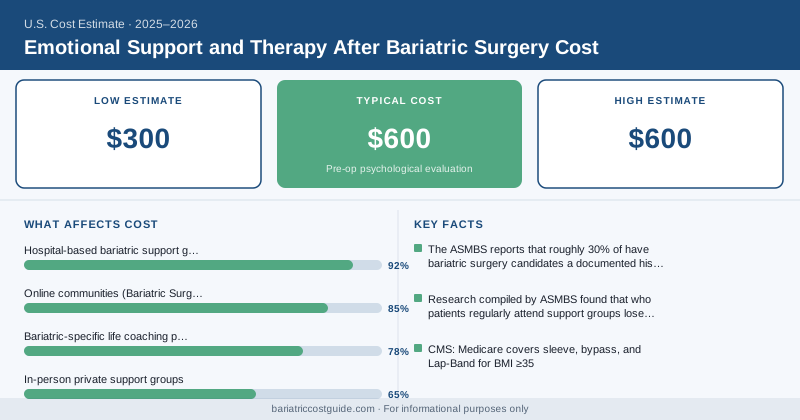
That’s not a hypothetical. It’s the experience of a significant number of patients who hit their weight loss goals but find themselves grappling with anxiety, depression, disordered eating, or relationship strain they didn’t anticipate. Bariatric surgery changes your body quickly. Your emotional life takes longer to catch up. The ASMBS reports that roughly 30% of bariatric surgery candidates have a documented history of depression, and psychiatric follow-up is associated with meaningfully better long-term outcomes. Knowing what psychological support costs — before and after surgery — is part of a complete financial plan.
The Required Pre-Op Psych Evaluation
Before insurance approves most bariatric procedures, you’ll need a psychological evaluation. This isn’t a box-checking exercise. It’s designed to identify conditions — untreated eating disorders, active substance abuse, severe untreated depression — that would undermine surgical success.
| Service | When | Self-Pay Cost |
|---|---|---|
| Pre-op psychological evaluation | Required pre-surgery | $300 – $600 |
| With insurance (most plans cover if required) | Pre-op | $0 – $150 copay |
| Psychiatric medication evaluation (if needed) | Pre-op or post-op | $200 – $500 initial |
Most major insurance plans cover the psychological evaluation as part of the bariatric surgery pre-authorization process when it’s ordered by the bariatric program. Self-pay patients should budget $300–$600 for this step.
Post-Op Therapy Costs
Individual therapy after surgery isn’t required, but the evidence is clear that it helps. ASMBS data shows patients who participate in psychological follow-up maintain better weight loss outcomes and report higher quality of life scores at five years post-op. For patients with a history of depression, anxiety, or trauma, ongoing therapy is particularly valuable.
| Therapy Type | Session Cost | Annual Estimate (Typical Use) |
|---|---|---|
| Individual therapy (general) | $100 – $250/session | $2,400 – $6,000 (monthly) |
| Therapist specializing in bariatric/eating issues | $150 – $300/session | $3,600 – $7,200 (monthly) |
| Eating disorder therapy (if applicable) | $150 – $300/session | $3,600 – $7,200 |
| Online therapy platforms (BetterHelp, Talkspace) | $65 – $100/week | $3,400 – $5,200/year |
| With insurance (in-network) | Copay $20 – $60 | $480 – $1,440 (monthly) |
Bariatric-specialized therapists — those who understand transfer addiction, body dysmorphia post-weight-loss, and eating patterns unique to pouch anatomy — tend to charge toward the higher end of the range. They’re also harder to find in-network. If you can’t find an in-network bariatric specialist, a general cognitive behavioral therapist familiar with chronic illness is a reasonable second choice.
Transfer Addiction: A Real Risk With Real Costs
Transfer addiction — shifting from food as a coping mechanism to alcohol, shopping, gambling, or other substances — affects an estimated 20% of post-bariatric patients. Alcohol is the most common and most dangerous: bariatric surgery, especially gastric bypass, significantly increases alcohol absorption speed and peak blood alcohol levels.
If you notice alcohol use increasing after surgery, don’t wait. Specialized addiction + bariatric therapy is more effective (and far cheaper) than treating alcohol use disorder once it’s established. Some bariatric programs screen for this at annual follow-ups; if yours doesn’t ask, bring it up yourself.
Support Groups: Often Free, Consistently Valuable
Peer support is one of the most cost-effective investments in your post-bariatric emotional health. Research compiled by ASMBS found that patients who regularly attend support groups lose 8–10% more excess body weight and maintain those results longer than non-attendees.
Hospital-based bariatric support groups: Most bariatric centers run free or low-cost groups, often monthly. These are run by the bariatric team (dietitian, social worker, or surgeon). Cost: free to $25/session.
Online communities (Bariatric Surgery Source, ObesityHelp): Free, asynchronous, available 24/7. Quality varies, but peer support is peer support.
Bariatric-specific life coaching programs: Structured online programs combining accountability coaching, educational modules, and community. Cost: $50–$200/month. Some programs are run by registered dietitians or licensed therapists and can substitute for some individual sessions.
In-person private support groups: Some therapists run group therapy sessions (not just peer support) for post-bariatric patients. Cost: $30–$75/session — cheaper than individual therapy, more structured than peer groups.
Estimating Your Annual Emotional Support Budget
| Scenario | Annual Cost |
|---|---|
| Pre-op psych eval only, free hospital support group | $300 – $600 |
| Pre-op eval + monthly individual therapy (insured) | $900 – $2,000 |
| Pre-op eval + biweekly therapy (self-pay) | $4,000 – $8,000 |
| Eating disorder therapy or transfer addiction treatment | $6,000 – $12,000 |
| Online therapy platform + coaching program | $3,500 – $6,000 |
Reducing Costs Without Sacrificing Support
You’ve got real options here — mental health doesn’t have to be the budget line that breaks you.
- Community mental health centers: Sliding-scale therapy based on income; sessions can be as low as $10–$30 for patients below certain income thresholds
- University training clinics: Graduate-level therapists supervised by licensed psychologists; typically $30–$75/session, often with therapists who are specifically studying behavioral medicine and chronic illness
- Employee Assistance Programs (EAP): Many employers offer 6–12 free therapy sessions annually through EAP — check with HR before paying out of pocket
- Insurance out-of-network reimbursement: Some plans reimburse 50–60% of out-of-network therapy after deductible. Get a “superbill” from your therapist and submit it — many patients don’t know this is an option
- Your bariatric program’s social worker: Most accredited bariatric programs have a social worker on staff. They can often provide supportive counseling at no additional charge and refer to appropriate lower-cost community resources
The pre-op evaluation is non-negotiable — insurance requires it. Everything after that is about finding the level of support that fits both your needs and your budget, then sticking with it long enough to matter.
{ if eq .Lang "zh" }Disclaimer: BariatricCostGuide provides cost data for educational purposes only. We are not a medical provider, insurance company, or financial advisor. All costs are estimates based on published data and vary by location, facility, surgeon, insurance plan, and individual health factors. Consult a board-certified bariatric surgeon and your insurance carrier for personalized medical and cost advice.