Depression and Bariatric Surgery: Psych Eval Costs, Approval Requirements & Mental Health Support
{ if eq .Lang "zh" }{ else }{ end }Depression doesn’t disqualify you from bariatric surgery. That’s the most important thing to say first, because many patients — aware that they struggle with depression and anxiety — self-screen out, assuming their mental health history will get them rejected. Most of the time, it won’t.
What depression does do is add a layer to the pre-op process, affect how you’re evaluated, potentially delay your surgery date, and — if not properly managed — create real risk in the months after surgery when mood can unexpectedly worsen. Understanding the cost implications and the process will help you navigate it.
What the Pre-Op Psychological Evaluation Costs
A psychological evaluation (or “psych eval”) is required by virtually every bariatric program in the United States before surgery approval. It’s not optional, and it’s not covered by all insurance plans.
| Mental Health Cost Item | Low Estimate | Typical Cost | High Estimate |
|---|---|---|---|
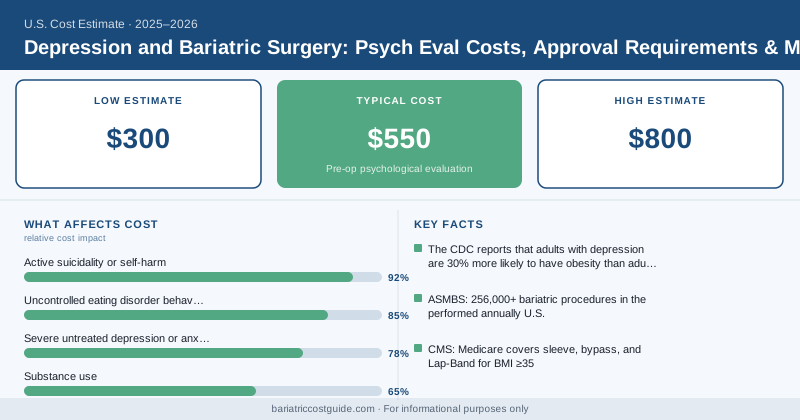
| Pre-op psychological evaluation | $300 | $550 | $800 |
| Additional evaluation session (if initial is inconclusive) | $150 | $300 | $600 |
| Pre-op psychiatric consultation (if required) | $250 | $450 | $900 |
| Pre-op therapy (required by some programs) | $100/session | $175/session | $300/session |
| Post-op individual therapy (Year 1) | $1,200/year | $2,400/year | $5,200/year |
| Group support program (in-person or virtual) | $0 (many are free) | $600/year | $2,400/year |
| Psychiatric medication adjustment visits (Year 1) | $300 | $700 | $2,000 |
Whether your insurance covers the pre-op psychological evaluation varies. Most plans that cover bariatric surgery also cover the required psych eval as part of the pre-authorization process. Check with your insurer before scheduling — some cover it under behavioral health benefits, others under medical, and a minority don’t cover it at all, leaving you with a $300–$800 out-of-pocket expense.
What the Psychological Evaluation Actually Tests
The purpose of the pre-op evaluation is not to exclude depressed patients. It’s to identify psychological factors that significantly increase the risk of poor post-surgical outcomes — and to ensure those factors are addressed before you go under anesthesia.
Evaluators — typically licensed psychologists or clinical social workers — assess:
Active suicidality or self-harm — This is the primary exclusion criterion. Active suicidal ideation is a hard stop. If you’re in a current suicidal crisis, bariatric surgery must wait. This is patient safety, not gatekeeping.
Uncontrolled eating disorder behaviors — Active binge eating disorder, purging behaviors (bulimia), or severe restriction/orthorexia patterns predict poor post-surgical outcomes. These need targeted treatment, not avoidance.
Severe untreated depression or anxiety — Depression or anxiety that’s been diagnosed but not meaningfully treated (no therapy, no medication, no engagement with care) signals that the post-op stress of surgery and rapid life change will be unsupported. Programs typically want to see engaged, treated mental health conditions — not pristine mental health.
Substance use — Active alcohol use disorder is a significant risk factor post-bypass specifically (alcohol use disorder risk increases dramatically after bypass due to faster absorption and altered reward pathways). A clean period of 6–12 months is typically required.
Understanding and expectations — Evaluators check whether you have realistic expectations for surgery. Patients expecting surgery to solve relationship problems, career issues, or depression directly often have worse outcomes.
What 'Psychological Clearance' Actually Means
Clearance doesn’t mean you have perfect mental health. It means your mental health is stable enough and supported enough to handle:
- The physical stress of surgery and recovery
- The emotional experience of rapid body change
- The behavioral demands of a radically restricted diet
- The potential for post-op mood volatility
Depression, anxiety, and trauma history that are being actively treated with therapy or medication are typically clearable. Untreated, ignored, or severe conditions usually require a treatment period before clearance.
If you’re denied clearance, it’s almost always conditional — not permanent. “Come back in 6 months with documented therapy and medication compliance” is the typical outcome, not “you can never have this surgery.”
Depression and Bariatric Surgery: The Science
Depression and obesity are bidirectional. Obesity increases depression risk — through inflammation, hormonal disruption, social stigma, and functional limitation. Depression increases obesity risk — through reduced activity, disrupted appetite regulation, and the weight-promoting effects of many antidepressant medications.
The CDC reports that adults with depression are 30% more likely to have obesity than adults without depression. For bariatric surgical candidates, depression prevalence is approximately 30–40% — far above the general population rate of 8–10%.
After surgery, the trajectory is mixed in ways that surprise many patients.
Short-term (6–18 months post-surgery): Most patients experience significant improvement in depressive symptoms. Weight loss, improved mobility, resolution of comorbidities, and positive social feedback create a period of psychological well-being that’s often the best patients have felt in years.
Medium-term (18 months to 3 years): For a subset of patients, depression resurfaces or worsens. Weight regain, unfulfilled expectations, relationship changes, and the loss of food as an emotional coping mechanism can all contribute.
Long-term (3+ years): A 2019 study published in JAMA Surgery found that suicide rates in bariatric surgery patients are approximately 3 times higher than in matched non-surgical controls, with the elevated risk concentrated in the 1–4 year post-surgery window. This is a sobering statistic that requires context: patients who have surgery often have higher pre-surgical psychiatric comorbidity than the general population, which partially explains the elevated risk. But it also means that post-op mental health monitoring is not optional.
Antidepressants After Bariatric Surgery
If you’re on antidepressant medication, surgery doesn’t end that. But it changes how your medication behaves — and how your body metabolizes it.
Absorption issues: After gastric bypass, extended-release formulations of medications may not dissolve and absorb properly. This affects time-release versions of buproprion (Wellbutrin XL), venlafaxine (Effexor XR), and others. Your prescribing provider may need to switch you to immediate-release versions or different formulations.
Dosing changes: As you lose weight, the effective dose of many medications changes. This is true for antidepressants, thyroid medications, blood pressure medications, and diabetes medications. Expect to have your psychiatric medications reviewed at 3, 6, and 12 months post-surgery.
The serotonin angle: Bariatric surgery affects gut serotonin production — roughly 90% of the body’s serotonin is produced in the gut. Changes to gut anatomy can alter serotonin availability, which is relevant both to mood and to how SSRIs function. This is an active area of research.
What Post-Op Mental Health Support Costs
The ASMBS recommends ongoing psychological support as part of post-bariatric care — not just for patients with pre-op mental health conditions, but for all patients. Despite this, insurance coverage for post-op mental health care is inconsistent.
Individual therapy: $100–$300/session depending on provider type and location. A patient in therapy every 2 weeks pays $2,400–$7,800/year. This is significant, and it’s often not covered at 100% by insurance — a $30–$60 copay per session adds up.
Bariatric support groups: Many hospital-based bariatric programs offer free or low-cost support groups — monthly meetings with other patients and a social worker or psychologist. These are underutilized and valuable. Ask your program what they offer.
Online therapy platforms: Betterhelp, Talkspace, and similar platforms offer therapy at $200–$400/month, which is often cheaper than traditional outpatient therapy. Some insurance plans cover these platforms.
Finding the Right Evaluator
Most bariatric programs have a preferred psychologist or social worker who performs evaluations on a routine basis. This is often the most convenient option. But if you have a complex mental health history — trauma, prior hospitalizations, eating disorder history — you may want an evaluator with specific bariatric experience rather than a generalist.
Questions to ask the evaluator before scheduling:
- How many bariatric pre-op evaluations do you conduct per year?
- Do you have experience with patients who have eating disorder history?
- What is your typical timeline from evaluation to submitting your report to the bariatric program?
- If I don’t receive clearance, what does the process look like to reapply?
The evaluation itself typically takes 60–90 minutes and involves standardized psychological instruments (often the BES for binge eating, PHQ-9 for depression, GAD-7 for anxiety), a clinical interview, and a review of your mental health history.
The Bottom Line
Depression doesn’t close the door to bariatric surgery. What it does require is honesty — with your evaluator, with your bariatric program, and with yourself about your support systems. Budget $300–$800 for the pre-op evaluation, plan for ongoing mental health support costs of $1,200–$3,600/year post-surgery (whether or not you had pre-op mental health concerns), and understand that the post-op emotional journey is real and variable.
For related cost guides, see bariatric surgery complications cost and bariatric surgery insurance coverage. If you’re weighing surgery against GLP-1 medications, note that GLP-1 medications also have emerging data on mood and depression — worth discussing with your provider.
{ if eq .Lang "zh" }Disclaimer: BariatricCostGuide provides cost data for educational purposes only. We are not a medical provider, insurance company, or financial advisor. All costs are estimates based on published data and vary by location, facility, surgeon, insurance plan, and individual health factors. Consult a board-certified bariatric surgeon and your insurance carrier for personalized medical and cost advice.