Bariatric Surgery Cost Comparison: Every Procedure Side by Side
{ if eq .Lang "zh" }{ else }{ end }In 2022, ASMBS reported that over 256,000 bariatric surgeries were performed in the United States. Patients paid anywhere from $4,000 for a Mexican gastric sleeve to $40,000 for a U.S. hospital duodenal switch. Here’s how to make sense of that range.
The right bariatric procedure depends on your BMI, comorbidities, insurance, and risk tolerance — not just price. But cost is a real factor. This comparison gives you the full picture: what each procedure costs, what it delivers, and what it costs you over time.
Full Procedure Cost Comparison
| Procedure | Self-Pay (U.S.) | Out-of-Pocket (Insured) | Avg. Excess Weight Loss | Reversible? |
|---|---|---|---|---|
| Gastric balloon (Orbera) | $7,000 – $12,000 | Rarely covered | 25–35% | Yes (temporary) |
| Endoscopic sleeve (ESG) | $10,000 – $20,000 | Rarely covered | 45–55% | Theoretically |
| Gastric sleeve | $10,000 – $23,000 | $2,000 – $6,000 | 60–70% | No |
| Gastric bypass (RYGB) | $15,000 – $35,000 | $2,500 – $8,000 | 65–80% | Technically |
| SADI-S / Duodenal switch | $18,000 – $40,000 | $3,000 – $10,000 | 70–85% | No |
| Surgery in Mexico (sleeve) | $4,000 – $8,000 | N/A (out of pocket) | 60–70% | No |
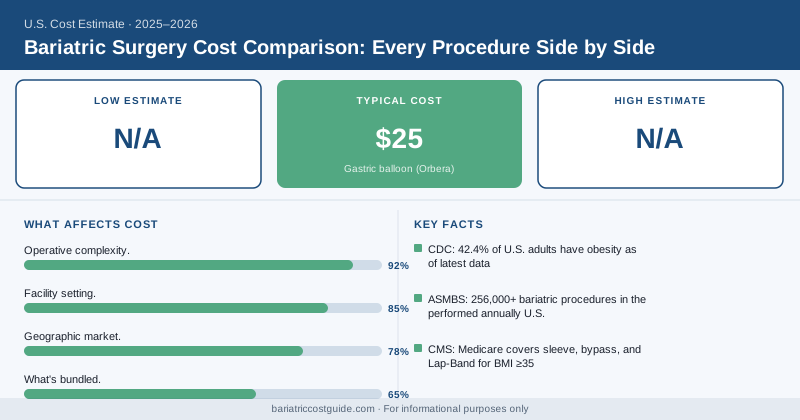
What Drives the Price Differences
Price differences between procedures aren’t random. They reflect:
Operative complexity. More complex procedures cost more in OR time and surgeon skill. Duodenal switch takes 3–5 hours; gastric balloon takes 20 minutes. That difference directly translates to cost.
Facility setting. Hospital-based procedures are 30–60% more expensive than the same procedure at an ambulatory surgery center. Academic medical centers are often more expensive still, though they typically have lower complication rates for complex cases.
Geographic market. A gastric sleeve in rural Tennessee costs roughly 40% less than the same procedure at a major urban hospital in Boston or LA.
What’s bundled. “All-inclusive” packages from high-volume centers include pre-op labs, psychological evaluation, nutritional counseling, and 1–2 years of follow-up. Unbundled pricing shows a lower surgery quote but adds costs separately.
5-Year Total Cost of Ownership
Surgery cost is just the beginning. Here’s the full 5-year picture:
| Procedure | Surgery Cost | 5-Year Vitamins/Supplements | 5-Year Follow-Up | Estimated 5-Year Total |
|---|---|---|---|---|
| Gastric sleeve (self-pay) | $15,000 | $3,000 – $5,000 | $2,000 | $20,000 – $22,000 |
| Gastric bypass (self-pay) | $22,000 | $4,000 – $7,500 | $2,500 | $28,500 – $32,000 |
| Duodenal switch (self-pay) | $30,000 | $7,500 – $12,500 | $3,000 | $40,500 – $45,500 |
| GLP-1 medication (Wegovy) | $0 up-front | $78,000 – $96,000 | $2,000 | $80,000 – $98,000 |
That last row is the comparison that’s reshaping bariatric medicine right now. GLP-1 medications work — but at $1,300–$1,600/month indefinitely, their lifetime cost dwarfs any surgical option.
Which Procedure Delivers the Best Value?
This depends entirely on your situation:
Best value for average bariatric candidate (BMI 40–50, no major comorbidities): Gastric sleeve. It costs less than bypass, delivers similar weight loss in most cases, and carries lower complication risk and lower long-term supplement burden.
Best value for type 2 diabetes or severe GERD: Gastric bypass. The additional cost is justified by demonstrably better diabetes remission (60–80% vs. 45–60% for sleeve) and GERD resolution.
Best value for super-obesity (BMI ≥ 50): Duodenal switch or SADI-S. Sleeve and bypass often produce inadequate results at very high BMIs. DS/SADI-S costs more upfront but may be more cost-effective over time by achieving adequate weight loss on the first attempt.
Best value for patients outside surgical BMI range (BMI 30–40): ESG or gastric balloon, depending on how much weight loss is needed and for how long.
Best value for patients who can’t afford U.S. pricing: Sleeve or bypass in Mexico ($4,000–$10,000) at an accredited facility with U.S.-board-certified surgeons and solid follow-up coordination stateside.
The Insurance Coverage Question Changes Everything
If your employer plan covers bariatric surgery, the cost differential between procedures narrows dramatically. You’re comparing your $3,000 deductible and 20% coinsurance on bypass vs. sleeve — not $22,000 vs. $15,000. In that case, let clinical factors (not price) drive your procedure choice.
If you’re self-pay, price matters much more and the sleeve’s cost advantage is real.
The Bottom Line
Bariatric surgery costs range from $6,000 (gastric balloon) to $40,000 (duodenal switch) in the U.S., with the sweet spot — gastric sleeve or bypass — running $10,000–$35,000 self-pay or $2,000–$8,000 with insurance. Over a 5-year horizon, surgical options are dramatically more cost-effective than GLP-1 medications, which can cost $80,000+ over the same period. Choose based on your clinical profile, insurance coverage, and access to a high-volume accredited surgeon — not based on which quote is lowest.
{ if eq .Lang "zh" }Disclaimer: BariatricCostGuide provides cost data for educational purposes only. We are not a medical provider, insurance company, or financial advisor. All costs are estimates based on published data and vary by location, facility, surgeon, insurance plan, and individual health factors. Consult a board-certified bariatric surgeon and your insurance carrier for personalized medical and cost advice.