How to Calculate Your Real Bariatric Surgery Cost: A Step-by-Step Guide
{ if eq .Lang "zh" }{ else }{ end }Most people calculate their bariatric surgery cost wrong. They take the sticker price the hospital quotes, apply their coinsurance percentage, and land on a number that’s often thousands of dollars higher than what they’ll actually owe — because that sticker price usually isn’t what insurance actually pays.
Here’s the step-by-step way to calculate a number you can trust.
Step 1: Find Your Remaining Deductible
Check your insurance portal or last Explanation of Benefits (EOB) for how much of your annual deductible you’ve already met. If your deductible is $2,000 and you’ve paid $600 toward it this year, you owe the remaining $1,400 before coinsurance even kicks in.
Step 2: Get the Negotiated Rate, Not the Billed Rate
| Rate Type | Typical Gastric Sleeve Example |
|---|---|
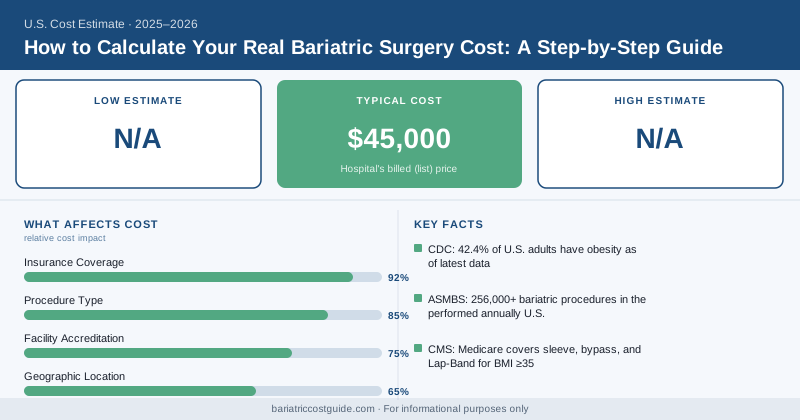
| Hospital’s billed (list) price | $45,000 – $60,000 |
| Insurer’s negotiated rate | $14,000 – $22,000 |
| Your coinsurance basis (should be negotiated rate) | $14,000 – $22,000 |
This is the single biggest source of miscalculation. Call your insurer’s member services line and ask specifically: “What is the negotiated rate for CPT code 43775 (laparoscopic gastric sleeve) at [your specific hospital]?” Under federal price transparency rules, this information must be available to you.
Step 3: Apply Your Coinsurance Percentage
Once you have the negotiated rate, multiply by your coinsurance percentage (commonly 10-30%) for the portion after your deductible is met.
| Negotiated Rate (After Deductible) | 20% Coinsurance | 30% Coinsurance |
|---|---|---|
| $15,000 | $3,000 | $4,500 |
| $20,000 | $4,000 | $6,000 |
Step 4: Cap It at Your Out-of-Pocket Maximum
Whatever number you calculate, it cannot exceed your plan’s annual out-of-pocket maximum — the legally mandated ceiling on your total cost-sharing for the year. If your deductible plus coinsurance calculation exceeds that cap, your real cost is the cap, not the calculated total. See our full out-of-pocket max guide for how this works in detail.
Request a Pre-Determination Before Surgery
Step 5: Add Non-Covered and Pre/Post Costs
| Item | Typical Additional Cost |
|---|---|
| Required pre-op labs/imaging (if not fully covered) | $200 – $800 |
| Bariatric vitamins (rarely covered) | $1,000 – $2,500/year |
| Post-op dietitian visits beyond bundled amount | $75 – $200/visit |
| Travel/lodging (if traveling for surgery) | $0 – $2,000 |
These items sit outside your deductible/coinsurance math entirely since most aren’t billed as medical claims in the same way — but they’re real costs that belong in your total budget.
Putting It All Together
Your realistic total = (remaining deductible) + (coinsurance on the negotiated rate, capped at your out-of-pocket max) + (non-covered items). For most insured patients, this lands between $1,500 and $6,000 — a meaningfully different number than the $15,000-$28,000 self-pay figure quoted for uninsured patients. Run these numbers before you schedule, not after.
{ if eq .Lang "zh" }Disclaimer: BariatricCostGuide provides cost data for educational purposes only. We are not a medical provider, insurance company, or financial advisor. All costs are estimates based on published data and vary by location, facility, surgeon, insurance plan, and individual health factors. Consult a board-certified bariatric surgeon and your insurance carrier for personalized medical and cost advice.