Bariatric Surgery Cost by State: Highest vs. Lowest in 2025–2026
{ if eq .Lang "zh" }{ else }{ end }A gastric sleeve in Manhattan costs more than twice what the same procedure costs in San Antonio. That’s not an anomaly — it’s the predictable result of hospital labor markets, real estate costs, and state insurance regulations stacking up very differently depending on where you live.
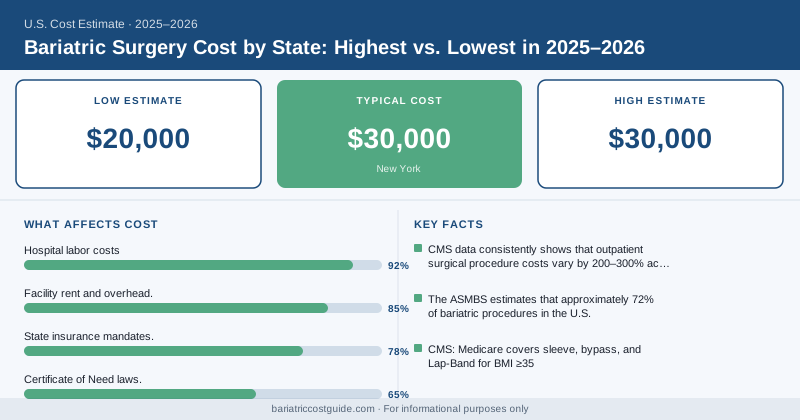
CMS data consistently shows that outpatient surgical procedure costs vary by 200–300% across U.S. states. Bariatric surgery is no exception. Here’s what the geography looks like and why.
State-by-State Cost Overview: Gastric Sleeve (Self-Pay)
| State | Self-Pay Range (Gastric Sleeve) | Relative Cost |
|---|---|---|
| New York | $20,000 – $30,000 | Highest |
| California | $18,000 – $28,000 | Highest |
| Massachusetts | $18,000 – $26,000 | High |
| New Jersey | $17,000 – $25,000 | High |
| Illinois (Chicago market) | $16,000 – $24,000 | Above average |
| Washington | $15,000 – $22,000 | Above average |
| Colorado | $13,000 – $20,000 | Average |
| Georgia | $12,000 – $18,000 | Below average |
| Texas | $10,000 – $17,000 | Low |
| Florida | $11,000 – $17,000 | Low |
| Oklahoma | $9,000 – $14,000 | Lowest |
| Arkansas | $9,000 – $13,500 | Lowest |
Note: These ranges reflect all-inclusive self-pay packages at accredited bariatric centers. Unbundled pricing — where labs, anesthesia, and follow-up are billed separately — can push totals higher.
Why Prices Vary So Much by State
Hospital labor costs are the biggest driver. Registered nurse wages in California average roughly 60% more than in Oklahoma. Surgical technician wages, anesthesiologist compensation, and OR staff costs all track with regional labor markets — and they all flow directly into the facility fee.
Facility rent and overhead. A hospital-based bariatric surgery center in New York City pays millions annually in facility costs that a free-standing ambulatory surgery center in Texas simply doesn’t carry. Those overhead differences are embedded in every surgical quote.
State insurance mandates. States that mandate insurance coverage for bariatric surgery — including California, New York, Virginia, and others — have more patients using insurance for these procedures. That creates upward price pressure on list prices (since hospitals can negotiate those rates with insurers), which also inflates the self-pay baseline. States without mandates tend to have more competitive self-pay pricing since cash patients are a larger segment of the market.
Certificate of Need laws. Some states require hospitals to get government approval before opening new surgical facilities. These CON laws reduce competition and tend to sustain higher prices.
States with Bariatric Surgery Insurance Mandates
As of 2025, states that mandate coverage for bariatric surgery (for qualifying patients) include:
- California
- New York
- Virginia
- Maryland
- New Mexico
- Montana
- Louisiana
- Oregon
If you live in a mandate state and your employer’s plan is fully insured (not self-funded), your insurer must cover bariatric surgery for eligible patients. Self-funded ERISA plans are exempt from state mandates — check with your HR department to find out which type of plan you have.
Medical Tourism Within the U.S.: Is It Worth It?
If you’re in a high-cost state and paying cash, traveling to a lower-cost state for surgery can save $8,000–$15,000. Texas and Florida in particular have built robust self-pay bariatric markets with bundled packages designed for out-of-state patients.
What to factor in when considering domestic travel for surgery:
- Travel and lodging: 1–3 nights pre-op, 1–2 nights post-op, ideally with a companion. Budget $1,000–$3,000 total.
- Follow-up care: You’ll need post-op care at home. Confirm your local surgeon or PCP will handle complications and adjustments before booking out of state.
- Accreditation: Verify the facility holds MBSAQIP accreditation regardless of state. Accreditation status doesn’t vary by state — it’s a national standard.
| Travel Scenario | Surgery Savings | Travel Cost | Net Savings |
|---|---|---|---|
| NY/CA patient travels to TX | $10,000 – $15,000 | $1,500 – $3,000 | $7,000 – $13,500 |
| Midwest patient travels to FL | $4,000 – $8,000 | $1,000 – $2,000 | $3,000 – $6,000 |
Insurance Changes Everything — But Not Equally by State
With insurance, state-level variation in out-of-pocket costs narrows significantly but doesn’t disappear. Your deductible, out-of-pocket maximum, and coinsurance rates determine what you pay — and those are set by your employer’s plan, not your state.
The ASMBS estimates that approximately 72% of bariatric procedures in the U.S. are covered by some form of health insurance. But “covered” still means patients pay their deductible (often $2,000–$5,000) plus coinsurance, which can mean $3,000–$8,000 out of pocket even with a good plan.
The Bottom Line
Where you live has a massive impact on what you’ll pay for bariatric surgery — up to a 2.5x difference between the highest and lowest cost states. New York and California patients consistently pay the most. Texas, Florida, and smaller southern states offer the most competitive self-pay pricing. If you’re uninsured or have a high-deductible plan, the geography of bariatric surgery pricing is worth taking seriously before you book.
Disclaimer: BariatricCostGuide provides cost data for educational purposes only. We are not a medical provider, insurance company, or financial advisor. All costs are estimates based on published data and vary by location, facility, surgeon, insurance plan, and individual health factors. Consult a board-certified bariatric surgeon and your insurance carrier for personalized medical and cost advice.