Bariatric Surgery in Rural Alabama: Access, Travel Costs & Telehealth Options (2026)
{ if eq .Lang "zh" }{ else }{ end }A family in Alabama’s Black Belt region drives two and a half hours each way to Birmingham for a bariatric consultation — then does it again for the psych evaluation, again for nutritional counseling, and again for the pre-op physical. By the time surgery day arrives, they’ve made the trip six or seven times. That travel burden is a real, under-discussed cost of bariatric surgery for rural Alabama residents, separate from the price of the procedure itself.
Our companion guide to bariatric surgery costs across Alabama covers self-pay pricing by metro area. This guide focuses specifically on what rural access actually looks like — and how to reduce its burden.
Where Alabama’s Bariatric Surgery Capacity Actually Sits
Nearly all of Alabama’s MBSAQIP-accredited bariatric programs are concentrated in four metro areas: Birmingham (UAB Medicine, Baptist Health), Huntsville (Huntsville Hospital), Mobile (Ascension Providence, University of South Alabama), and to a lesser extent Montgomery. Alabama’s rural counties — much of the Black Belt, the Wiregrass region, and parts of west Alabama — have no local accredited bariatric surgical capacity at all.
| Rural Region | Nearest Accredited Program | Typical One-Way Drive |
|---|---|---|
| Black Belt (Selma, Demopolis area) | UAB Medicine (Birmingham) | 1.5 – 2.5 hours |
| Wiregrass (Dothan area) | Baptist Health / Montgomery programs | 1.5 – 2 hours |
| West Alabama (Livingston, Tuscaloosa-adjacent) | UAB Medicine or Baptist Health (Birmingham) | 1 – 2 hours |
| Northeast Alabama (Fort Payne, Scottsboro) | Huntsville Hospital | 1 – 1.5 hours |
The Real Cost of Rural Access
The CDC reports Alabama’s adult obesity rate at 39.9% — one of the highest in the country — and rural Alabama counties consistently post even higher rates than the state’s urban centers, according to state health department data. That means the population with the greatest medical need for bariatric surgery often faces the largest access barrier to actually getting it.
Beyond the procedure cost itself, rural patients should budget for:
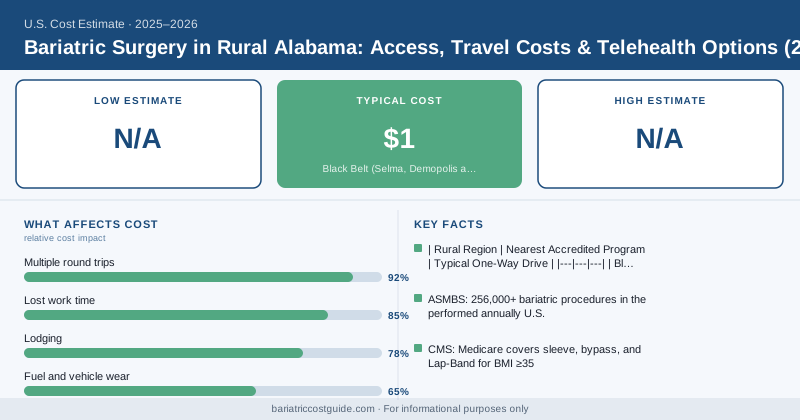
- Multiple round trips: Most bariatric programs require 4-6 in-person visits before surgery (initial consultation, psych evaluation, nutritional counseling, pre-op physical, final surgical consultation, and surgery day itself)
- Lost work time: A 5-hour round trip effectively costs a full workday, repeated multiple times
- Lodging: Patients traveling 2+ hours for early-morning surgery appointments often need to stay overnight, adding $100-$200 per trip
- Fuel and vehicle wear: A 5-hour round trip several times over months adds real transportation cost, often overlooked in surgery budgeting
Telehealth Is Reducing — Not Eliminating — the Trip Count
Alabama Medicaid Transportation Benefits
Alabama Medicaid offers non-emergency medical transportation (NEMT) as a covered benefit for eligible members, which can offset — though rarely fully eliminate — the travel burden:
- Must typically be scheduled in advance through your managed care plan, not arranged same-day
- May be limited to specific ride types (rideshare, medical transport van, or mileage reimbursement for a personal vehicle)
- Does not typically cover overnight lodging, only the transportation itself
Ask your Alabama Medicaid managed care plan specifically about NEMT benefits for bariatric surgery appointments — this benefit is underused simply because many patients don’t know to ask for it.
Practical Strategies for Rural Alabama Patients
- Ask about combining appointments — some programs can schedule nutritional counseling and psych evaluation on the same day to reduce total trips
- Request the full appointment schedule upfront — knowing all required visits in advance lets you plan time off work and transportation well ahead
- Explore Huntsville vs. Birmingham — patients in northeast Alabama counties may find Huntsville Hospital meaningfully closer than Birmingham programs, even though Birmingham has more program options overall
- Confirm telehealth eligibility early — don’t assume; ask your specific program which visits qualify
Bottom Line
Rural Alabama’s bariatric surgery access gap is real, distinct from — and in some ways more significant than — the procedure’s dollar cost. Patients in the Black Belt, Wiregrass, and west Alabama regions should plan for multiple long-distance trips, explore Medicaid NEMT benefits early, and ask every prospective program directly which appointments can be handled via telehealth before committing to a surgery timeline.
{ if eq .Lang "zh" }Disclaimer: BariatricCostGuide provides cost data for educational purposes only. We are not a medical provider, insurance company, or financial advisor. All costs are estimates based on published data and vary by location, facility, surgeon, insurance plan, and individual health factors. Consult a board-certified bariatric surgeon and your insurance carrier for personalized medical and cost advice.