Bariatric Surgery Complication Costs: Leaks, DVT, and Readmission in 2025–2026
{ if eq .Lang "zh" }{ else }{ end }The 30-day complication rate for bariatric surgery at MBSAQIP-accredited centers is approximately 3–5%. That’s a remarkably low number for major abdominal surgery. But when complications do happen, the costs are severe.
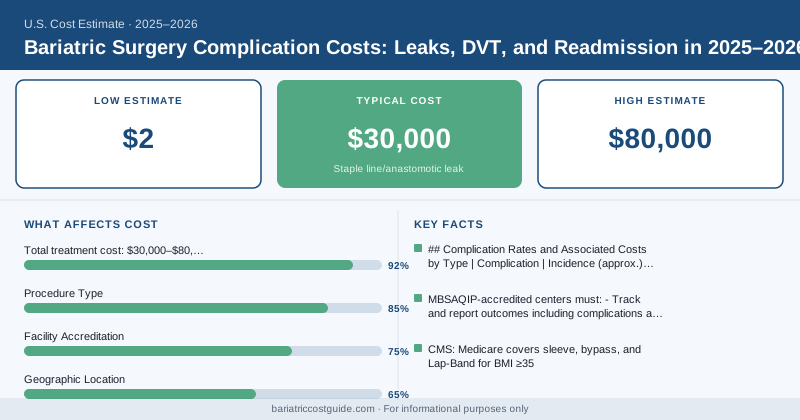
A gastric staple line leak — the most feared bariatric complication — generates $30,000–$80,000 in additional medical costs. A pulmonary embolism can exceed $100,000 in total treatment expense. Here’s the full picture of what bariatric complications cost and how to think about them in your risk calculation.
Complication Rates and Associated Costs by Type
| Complication | Incidence (approx.) | Additional Cost to Treat |
|---|---|---|
| Staple line/anastomotic leak | 0.5–2% | $30,000 – $80,000+ |
| Deep vein thrombosis (DVT) | 0.2–0.5% | $5,000 – $15,000 |
| Pulmonary embolism | 0.1–0.3% | $20,000 – $100,000+ |
| Anastomotic stricture (bypass) | 1–5% | $5,000 – $20,000 |
| GERD progression (sleeve) | 5–20% long-term | $3,000 – $20,000 |
| Marginal ulcer (bypass) | 1–3% | $3,000 – $10,000 |
| Nutritional deficiency (severe) | 1–5% | $2,000 – $8,000 |
| 30-day readmission | 3–7% | $8,000 – $25,000 |
The ASMBS Metabolic and Bariatric Surgery Accreditation and Quality Improvement Program (MBSAQIP) reported in 2022 that the overall 30-day serious complication rate at accredited centers is approximately 3.0% — comparable to cholecystectomy and lower than many other common elective procedures.
Gastric Leaks: The Most Costly Complication
A staple line or anastomotic leak occurs when the surgical connection in your stomach or intestine doesn’t heal properly, allowing stomach contents to leak into the abdominal cavity. It’s a surgical emergency.
Treatment typically involves:
- Emergent return to the operating room
- Drainage procedures (often IR-guided at first, then surgical)
- ICU admission (often 5–14 days)
- Extended NPO status with TPN (IV nutrition)
- IV antibiotics
- Potential repeat operations
- Extended hospital stay of 7–30+ days
Total treatment cost: $30,000–$80,000 above the original surgery cost. At high BMI or with delayed diagnosis, this can climb higher.
Leak rates vary by procedure and surgeon volume. MBSAQIP data shows:
- Gastric sleeve leak rate: 0.5–1.5%
- Roux-en-Y bypass leak rate: 1–3%
- Duodenal switch leak rate: 2–4%
Higher-volume surgeons have significantly lower leak rates. This is one of the clearest arguments for choosing an MBSAQIP-accredited high-volume center.
DVT and Pulmonary Embolism
Bariatric patients are at elevated risk for blood clots due to obesity, prolonged surgery time, and reduced mobility during recovery. Modern prevention protocols — including low-molecular-weight heparin starting before surgery, sequential compression devices, and early ambulation — have reduced this risk substantially.
| Clot-Related Complication | Treatment | Typical Cost |
|---|---|---|
| DVT (treated as outpatient) | Anticoagulation 3–6 months | $1,000 – $4,000 |
| DVT requiring hospitalization | Anticoagulation + monitoring | $8,000 – $15,000 |
| Pulmonary embolism (stable) | Hospitalization + anticoagulation | $20,000 – $40,000 |
| Pulmonary embolism (massive) | ICU, thrombolytics, or embolectomy | $60,000 – $150,000+ |
Pulmonary embolism is the leading cause of death after bariatric surgery. It’s rare — approximately 0.1–0.3% incidence at accredited centers — but the financial and human cost makes chemoprophylaxis and early mobilization non-negotiable.
Stricture: A Common Bypass Complication
Anastomotic stricture — a narrowing at the surgical connection that causes difficulty swallowing, nausea, and food intolerance — occurs in 1–5% of Roux-en-Y gastric bypass patients. It’s typically treated with endoscopic balloon dilation, which costs $2,000–$5,000 per procedure. Some patients require multiple dilations.
Sleeve gastrectomy patients can develop stricture at the sleeve itself, particularly if the sleeve is constructed too narrow. Treatment is similar — endoscopic balloon dilation — with surgery (conversion to bypass) as a last resort.
GERD After Sleeve Gastrectomy
Gastroesophageal reflux is common after sleeve gastrectomy and can worsen over time in 15–25% of patients. For some, it’s mild and managed with medication. For others, it progresses to require conversion to Roux-en-Y bypass — the only definitive surgical treatment for sleeve-induced GERD.
| GERD Management After Sleeve | Cost |
|---|---|
| PPI medication (omeprazole, pantoprazole) daily | $300 – $800/year |
| Endoscopy for Barrett’s monitoring | $1,500 – $3,000 |
| Conversion to Roux-en-Y bypass for refractory GERD | $15,000 – $30,000 |
How MBSAQIP Accreditation Reduces Your Complication Risk
Choosing an MBSAQIP-accredited bariatric center matters for safety, not just quality optics. MBSAQIP-accredited centers must:
- Track and report outcomes including complications and readmissions
- Meet minimum procedural volume requirements
- Have a dedicated bariatric program with coordinated multi-disciplinary care
- Follow evidence-based clinical protocols for DVT prophylaxis, early mobilization, and nutrition
- Have 24/7 coverage for post-operative complications
Research consistently shows that patients treated at accredited centers have complication rates 30–50% lower than unaccredited facilities. Find accredited centers at asmbs.org/bariatric-surgery-centers.
Insurance Coverage of Complications
If your bariatric surgery is covered by insurance, complications are generally also covered under your medical benefit — though they generate additional out-of-pocket costs against your deductible and out-of-pocket maximum. Complications requiring extended hospitalization typically push patients to their annual out-of-pocket maximum quickly.
Self-pay patients face a more difficult situation. A $15,000 self-pay surgery package doesn’t include a $50,000 leak treatment. Some bariatric centers offer complication insurance or carry additional coverage — ask specifically before signing a self-pay agreement.
The Bottom Line
Bariatric surgery complication costs range from $5,000 for a DVT treated outpatient to $80,000+ for a complex gastric leak. The overall serious complication rate at MBSAQIP-accredited centers is approximately 3–5%, which is low for major abdominal surgery — but the financial consequences when they do occur are significant. Choosing a high-volume accredited center is the single most impactful decision you can make to reduce both your complication risk and the cost exposure that comes with it.
{ if eq .Lang "zh" }Disclaimer: BariatricCostGuide provides cost data for educational purposes only. We are not a medical provider, insurance company, or financial advisor. All costs are estimates based on published data and vary by location, facility, surgeon, insurance plan, and individual health factors. Consult a board-certified bariatric surgeon and your insurance carrier for personalized medical and cost advice.