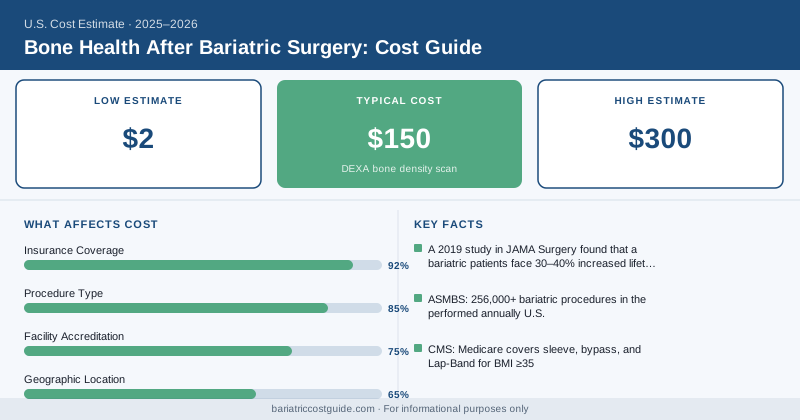
Bone Health After Bariatric Surgery: Cost Guide
{ if eq .Lang "zh" }{ else }{ end }The $3,200 hip replacement quote is the wrong number to be afraid of. The right number is 10–15 — as in the percentage of bone density gastric bypass patients lose in their first two years post-op, according to NIH research. That’s not a scare tactic. That’s a clinical reality that shapes what you need to budget for long-term bone care after bariatric surgery.
Bone loss accelerates most in years one through three after surgery, then slows. But the damage doesn’t undo itself. The ASMBS 2022 guidelines are explicit: every bariatric surgery patient should take calcium citrate and vitamin D for life, and bone density monitoring is a non-negotiable part of long-term follow-up. Understanding what that monitoring and protection costs helps you plan — before your bones tell you how much neglect costs.
Why Bariatric Surgery Stresses Your Skeleton
There are three main mechanisms driving post-bariatric bone loss:
- Reduced calcium absorption — The duodenum and proximal jejunum (where calcium is absorbed) are bypassed in gastric bypass and duodenal switch procedures
- Lower vitamin D levels — Fat-soluble D depends on bile salts and intestinal surface area; both are compromised post-op
- Secondary hyperparathyroidism — When calcium absorption drops, parathyroid hormone (PTH) rises to pull calcium from bone
Gastric sleeve patients lose less bone — roughly 5–8% in the first two years — because there’s no bypass component. But they’re not immune. Lower food volume means less dietary calcium regardless of anatomy.
Bone Density Monitoring Costs
A DEXA scan (dual-energy X-ray absorptiometry) is the standard tool for measuring bone density. The ASMBS recommends one at two years post-op and every two to three years thereafter, or more frequently if bone loss is documented.
| Service | Frequency | Self-Pay Cost |
|---|---|---|
| DEXA bone density scan | Every 2–3 years post-op | $150 – $300 |
| Endocrinology or metabolic bone consult | As needed | $200 – $400 |
| PTH, calcium, vitamin D labs | Every 12 months | $80 – $200 |
| With insurance (after deductible) | Per scan | $0 – $75 copay |
Most insurance plans cover DEXA scans for patients with documented bariatric surgery history, especially when paired with the appropriate ICD-10 code. Self-pay DEXA at independent imaging centers or via programs like Life Line Screening can run as low as $75–$100 — worth knowing if you’re uninsured.
Supplement Costs: The Daily Foundation
This is where most of your ongoing bone-health budget goes. Calcium citrate — not calcium carbonate — is the required form after bariatric surgery. Carbonate needs stomach acid to dissolve; bariatric patients don’t have enough. Citrate absorbs without acid.
| Supplement | Daily Target | Monthly Cost |
|---|---|---|
| Calcium citrate | 1,200–1,500 mg/day (split doses) | $20 – $60 |
| Vitamin D3 | 3,000–5,000 IU/day | $10 – $25 |
| Magnesium (if deficient) | 200–400 mg/day | $10 – $20 |
| Monthly supplement total | — | $40 – $105 |
Annual cost: $480–$1,260 for core bone-support supplements. If you’re buying bariatric-specific formulations (Celebrate, Bariatric Advantage, ProCare), costs run toward the higher end. Generic calcium citrate and D3 from Costco or Amazon can keep you closer to the low end without sacrificing efficacy.
Split Your Calcium Doses — Absorption Depends on It
When Bone Loss Progresses to Osteoporosis
Not everyone will need osteoporosis medication after bariatric surgery, but it’s a meaningful subset. A 2019 study in JAMA Surgery found that bariatric patients face a 30–40% increased lifetime risk of hip fracture compared to non-operated patients, with the risk concentrated in those who don’t comply with supplementation and monitoring.
When DEXA results fall into the osteopenia or osteoporosis range, a metabolic bone specialist (often an endocrinologist) may recommend prescription medication:
| Medication | Type | Monthly Cost (Generic) |
|---|---|---|
| Alendronate (Fosamax) | Oral bisphosphonate | $10 – $40 |
| Risedronate (Actonel) | Oral bisphosphonate | $15 – $60 |
| Zoledronic acid (Reclast) | Annual IV infusion | $200 – $800/year self-pay |
| Denosumab (Prolia) | Injection, 2x/year | $400 – $1,200/injection self-pay |
| With insurance (prior auth) | — | $5 – $100 copay |
Oral bisphosphonates are tricky post-bariatric. They must be taken with a full glass of water while remaining upright for 30–60 minutes — and some patients with smaller pouches absorb them inconsistently. Many metabolic bone specialists prefer IV zoledronic acid or Prolia injections for bariatric patients, bypassing the absorption issue entirely. Both are typically covered when osteoporosis is documented.
Putting It Together: Annual Bone Health Budget
- Prevention only (supplements + annual labs + DEXA every 2–3 years): $700–$1,600/year
- Osteopenia diagnosed, on oral bisphosphonate: $900–$1,900/year
- Osteoporosis, on IV or injectable treatment: $1,500–$3,500/year
Reducing Your Out-of-Pocket Costs
- Use your FSA or HSA — Calcium citrate, vitamin D, and prescribed bone medications all qualify as medical expenses payable with pre-tax dollars
- Ask your bariatric program about bundled labs — Many programs include the PTH/calcium/vitamin D panel in the standard annual bariatric follow-up visit, billed as one claim
- Get DEXA coded correctly — Ensure your provider uses the post-bariatric Z-code (Z98.84) on DEXA orders; this often determines whether insurance covers it as indicated vs. screening
- Generic bisphosphonates are clinically equivalent — Alendronate generic costs $10–$15/month; brand-name Fosamax is $100+. Same molecule.
Disclaimer: BariatricCostGuide provides cost data for educational purposes only. We are not a medical provider, insurance company, or financial advisor. All costs are estimates based on published data and vary by location, facility, surgeon, insurance plan, and individual health factors. Consult a board-certified bariatric surgeon and your insurance carrier for personalized medical and cost advice.