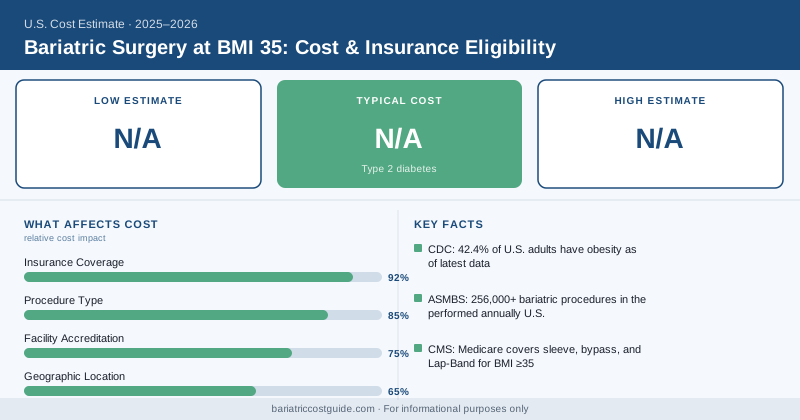
Bariatric Surgery at BMI 35: Cost & Insurance Eligibility
{ if eq .Lang "zh" }{ else }{ end }A BMI of 35 is the tipping point where insurance suddenly starts paying attention — but only if you bring the right paperwork.
Under the original 1991 NIH Consensus Statement, still the backbone of most insurer policy today, BMI 35-39.9 qualifies for bariatric surgery coverage only alongside a documented obesity-related comorbidity. Cross into BMI 40+, and that requirement disappears. Sit at BMI 35 without a qualifying condition, and you may be self-pay only.
What Counts as a Qualifying Comorbidity
| Comorbidity | Typically Accepted by Insurers |
|---|---|
| Type 2 diabetes | Yes |
| Hypertension (medicated) | Yes |
| Obstructive sleep apnea (diagnosed by sleep study) | Yes |
| Hyperlipidemia | Yes |
| Non-alcoholic fatty liver disease (NAFLD/NASH) | Yes, with documentation |
| Osteoarthritis (weight-bearing joints) | Often, case-by-case |
| GERD alone | Rarely sufficient on its own |
The key word is “documented.” A comorbidity you mention verbally to your surgeon doesn’t count — insurers want lab values, a formal diagnosis code, medication records, or a sleep study report in your chart.
What Surgery Costs at This BMI
| Cost Component | Self-Pay Range |
|---|---|
| Gastric sleeve, all-in | $15,000 – $22,000 |
| Gastric bypass, all-in | $18,000 – $28,000 |
| Pre-op evaluation & required diet program | $1,500 – $4,000 |
| Insured patient out-of-pocket (if approved) | $1,500 – $6,000 |
The procedure cost itself doesn’t change based on your BMI — a gastric sleeve costs roughly the same whether you’re at BMI 35 or BMI 50. What changes dramatically is whether insurance pays for it at all.
Building Your Case at BMI 35
- Get comorbidities formally diagnosed — not just noted in passing, but coded and documented with supporting labs or tests
- Complete the required supervised diet program — most insurers require 3-6 months of documented, physician-supervised weight management before considering surgery
- Get a psychological evaluation done early — most programs require this regardless of BMI, and scheduling delays are common
- Ask your surgeon’s office to request pre-determination — a non-binding check with your insurer before you invest time in the full workup
One Comorbidity Is Usually Enough
What If You Don’t Have a Qualifying Comorbidity?
Some patients at BMI 35 without comorbidities are healthy by lab values but still struggling with mobility, quality of life, or the trajectory their weight is heading. For these patients, self-pay surgery or medical tourism options become more relevant, since insurance approval is unlikely without a documented comorbidity.
The Bottom Line
BMI 35 sits in a gray zone where your comorbidity documentation matters more than your weight number. Compare this to BMI 40, where no comorbidity is required at all — a meaningful difference in how much paperwork stands between you and approval.
{ if eq .Lang "zh" }Disclaimer: BariatricCostGuide provides cost data for educational purposes only. We are not a medical provider, insurance company, or financial advisor. All costs are estimates based on published data and vary by location, facility, surgeon, insurance plan, and individual health factors. Consult a board-certified bariatric surgeon and your insurance carrier for personalized medical and cost advice.