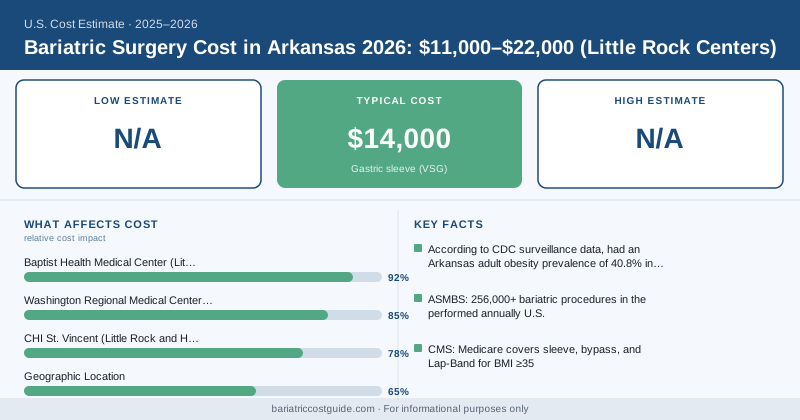
Bariatric Surgery Cost in Arkansas 2026: $11,000–$22,000 (Little Rock Centers)
{ if eq .Lang "zh" }{ else }{ end }Sarah, 38, from Jonesboro, got a gastric bypass quote of $28,000 from a hospital in Memphis. A Little Rock program quoted her $17,500 for the same procedure — same accreditation, similar outcomes data. She drove 130 miles instead of 70, and saved over $10,000. That price gap is real. Arkansas’s bariatric surgery costs are among the lower tier in the South, and patients in neighboring states (Tennessee, Mississippi, Missouri) are increasingly crossing state lines to take advantage of it.
According to CDC surveillance data, Arkansas had an adult obesity prevalence of 40.8% in 2023 — one of the highest rates in the nation. The demand for bariatric care has grown in response. So has the capacity. Here’s what you’ll actually pay.
Arkansas Bariatric Surgery Costs (2026)
| Procedure | Little Rock | Fort Smith / NW Arkansas | Smaller Regional Centers | National Average |
|---|---|---|---|---|
| Gastric sleeve (VSG) | $11,000 – $17,000 | $10,500 – $16,500 | $10,000 – $15,500 | $14,000 – $23,000 |
| Gastric bypass (RYGB) | $14,000 – $22,000 | $13,500 – $20,500 | $13,000 – $19,000 | $18,000 – $28,000 |
| Duodenal switch | $19,000 – $29,000 | $18,000 – $27,000 | $17,500 – $26,000 | $22,000 – $35,000 |
| Revision surgery | $17,000 – $30,000 | $16,000 – $28,000 | $15,500 – $27,000 | $20,000 – $35,000 |
Northwest Arkansas — Fayetteville, Bentonville, Rogers — has seen significant growth in medical infrastructure driven by Walmart’s corporate campus and the corporate campuses of hundreds of supplier companies. That has brought better-funded health systems and more competitive pricing to a region that was historically underserved. For patients in that corridor, going to Little Rock isn’t always necessary.
Major Bariatric Programs in Arkansas
Baptist Health Medical Center (Little Rock) Baptist Health’s weight loss surgery program at its Main Campus in Little Rock is the highest-volume MBSAQIP-accredited program in the state. It’s in-network with most major Arkansas commercial insurers — Arkansas Blue Cross Blue Shield, QualChoice, Cigna, UnitedHealthcare. Self-pay pricing for gastric sleeve runs approximately $12,000–$17,000 all-inclusive, making Baptist the go-to option for both insured and self-pay patients seeking an established high-volume program. Baptist has active partnerships with CareCredit and offers in-house payment plan options.
UAMS (University of Arkansas for Medical Sciences, Little Rock) UAMS is Arkansas’s only academic medical center and handles the state’s most complex bariatric cases — revisions, high-BMI patients with multiple serious comorbidities, and cases requiring multidisciplinary management. As an academic program, UAMS pricing runs somewhat higher than Baptist — sleeve at $14,000–$20,000 self-pay — but the scope of pre-op evaluation is broader. For straightforward first-time procedures, Baptist is the better value. For complex or revision cases, UAMS’s academic resources justify the additional cost.
Washington Regional Medical Center (Fayetteville) Washington Regional is the major health system in northwest Arkansas and operates an accredited bariatric program at its Fayetteville campus. Pricing is competitive — sleeve at $11,000–$16,500 self-pay. For patients in the Fayetteville, Bentonville, and Rogers corridor, Washington Regional is the logical primary option. It’s in-network with most insurers in the Walmart corporate supply chain ecosystem, which covers a significant portion of northwest Arkansas’s employed population.
CHI St. Vincent (Little Rock and Hot Springs) CHI St. Vincent operates bariatric programs at its Little Rock and Hot Springs campuses. Pricing is broadly comparable to Baptist Health — $11,500–$17,000 for sleeve self-pay. St. Vincent’s Hot Springs location serves patients from central and west Arkansas who want to avoid the Little Rock traffic. It’s a reasonable option for patients in that geographic range.
Out-of-State Patients Coming to Arkansas
Arkansas Medicaid Coverage: The Honest Picture
This is where Arkansas differs meaningfully from many states. Arkansas Medicaid (ARHOME) does not explicitly list bariatric surgery as a standard covered benefit for most adults. Coverage exists on a case-by-case basis through individual managed care plans — Arkansas Total Care, Summit Community Care, and others — and requires:
- Documentation of severe, refractory obesity with documented treatment failures
- BMI ≥ 40 with serious comorbidities in most approved cases
- Physician documentation that medical management has been tried and failed
- Prior authorization approval from the managed care plan’s medical director
In practice, Arkansas Medicaid approvals for bariatric surgery are uncommon and require significant advocacy. If you’re on ARHOME and pursuing coverage, you need a bariatric coordinator who has experience navigating Arkansas Medicaid authorization specifically — not just general insurance authorization experience. Ask Baptist Health’s or UAMS’s coordinator team about their Arkansas Medicaid approval track record before investing time in the process.
Commercial Insurance in Arkansas
Arkansas Blue Cross Blue Shield (ARBCBS) is the dominant commercial insurer in the state and covers bariatric surgery under standard medical necessity criteria — BMI ≥ 40 or BMI ≥ 35 with comorbidities, documented supervised weight management, psychological evaluation, and prior authorization. ARBCBS is broadly accepted at Baptist Health, UAMS, and Washington Regional.
QualChoice Health Insurance is an Arkansas-specific plan with significant enrollment in the Little Rock market. QualChoice covers bariatric surgery with criteria similar to ARBCBS. Cigna and UnitedHealthcare serve larger employers in the state and apply their standard national bariatric policies.
Financing for Self-Pay Patients
Arkansas’s lower price point makes financing viable for many self-pay patients. At $13,000 for a gastric sleeve, a 48-month financing plan through CareCredit runs approximately $270–$310/month at promotional rates. Baptist Health and CHI St. Vincent both have established financing partnerships. United Medical Credit and Prosper Healthcare Lending are additional options for patients who don’t qualify for CareCredit’s promotional terms.
For patients well below the poverty line who don’t qualify for Medicaid, ask each hospital system about their charity care and financial assistance programs. UAMS, as an academic public institution, has an explicit financial assistance policy for low-income patients. Baptist Health’s financial counseling team can also assess charity care eligibility.
Bottom Line
Arkansas is one of the more affordable states in the South for bariatric surgery. Self-pay prices for gastric sleeve run $10,000–$17,000 depending on facility and location — well below national average. Baptist Health Little Rock is the strongest overall option for most patients: high volume, MBSAQIP-accredited, competitive pricing. UAMS is the right choice for complex cases. Northwest Arkansas patients should look at Washington Regional before making the Little Rock trip. On the Medicaid side, coverage is limited and inconsistent — get written confirmation from your managed care plan before investing in pre-op requirements.
{ if eq .Lang "zh" }Disclaimer: BariatricCostGuide provides cost data for educational purposes only. We are not a medical provider, insurance company, or financial advisor. All costs are estimates based on published data and vary by location, facility, surgeon, insurance plan, and individual health factors. Consult a board-certified bariatric surgeon and your insurance carrier for personalized medical and cost advice.