Bariatric Surgery Anesthesia Cost: What You'll Pay in 2025–2026
{ if eq .Lang "zh" }{ else }{ end }Most people budgeting for bariatric surgery remember the surgeon and the hospital. They forget that anesthesia is a separate bill from a separate provider — one that may or may not be in-network with their insurance.
Anesthesia for bariatric surgery runs $800–$2,500 in out-of-pocket costs for most patients. But the variables here can surprise you. Here’s what drives the cost.
Anesthesia Cost Breakdown
| Scenario | Estimated Anesthesia Cost |
|---|---|
| In-network anesthesiologist, insured patient (OOP after plan) | $400 – $1,200 |
| Out-of-network anesthesiologist, insured patient | $1,000 – $3,500 |
| CRNA (Certified Registered Nurse Anesthetist), in-network | $300 – $900 |
| Self-pay patient, negotiated cash rate | $800 – $2,500 |
| BMI surcharge (if applicable) | $200 – $600 additional |
How Anesthesia Billing Works
Anesthesiologists bill separately from hospitals and surgeons. They use a unit-based billing system:
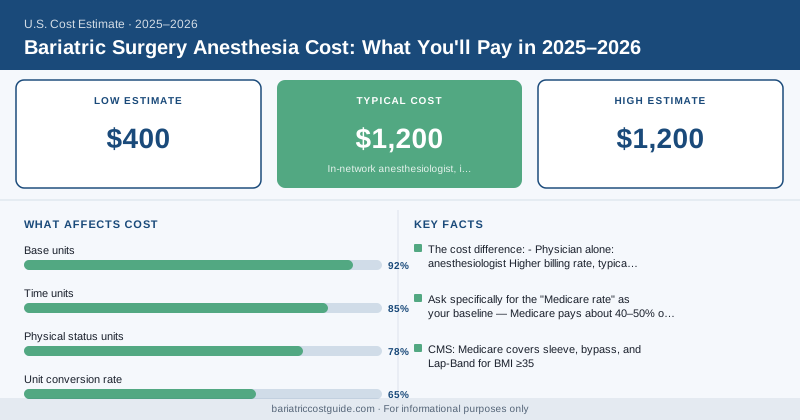
- Base units: Assigned based on procedure complexity. A gastric sleeve is typically 7–10 base units; gastric bypass is 8–12 base units.
- Time units: One unit per 15 minutes of anesthesia time. A 90-minute sleeve adds 6 time units.
- Physical status units: Higher units for ASA physical status III or IV (complex patients, which most bariatric candidates qualify as).
- Unit conversion rate: The dollar value per unit varies by carrier and geographic market — typically $70–$110 per unit.
Example: A gastric sleeve with 8 base units + 6 time units + 2 physical status units = 16 units × $85 = $1,360 total anesthesia charge.
The Out-of-Network Anesthesiologist Problem
This is one of the most common sources of surprise medical bills in bariatric surgery. You choose an in-network hospital and an in-network surgeon — but the anesthesiologist who shows up in the OR is employed by a separate group that is out-of-network with your insurer.
The No Surprises Act (effective 2022) provides significant protection here: for scheduled procedures at in-network facilities, you generally can’t be billed more than your in-network cost-sharing amount for out-of-network providers who weren’t your choice. If you receive an out-of-network anesthesia bill from a scheduled procedure at an in-network hospital, dispute it — you have federal law behind you.
To protect yourself:
- Ask your surgeon which anesthesia group covers their cases
- Call that group and verify they’re in-network with your specific insurance plan
- Get written confirmation before your surgery date
What to Ask About Anesthesia Before Surgery
Questions to ask your surgical coordinator and anesthesia group:
- Which anesthesia group will cover my case?
- Is that group in-network with my insurance plan?
- Will I see the anesthesiologist before surgery for a pre-op evaluation, or only on the day of?
- Will I be billed separately for the pre-op anesthesia evaluation (some groups bill this separately)?
- Is there a BMI surcharge that applies to my procedure?
- What is the expected anesthesia time for my procedure?
Anesthesiologist vs. CRNA: Does It Matter?
Bariatric surgery is typically performed with a physician anesthesiologist (MD/DO) or a CRNA (Certified Registered Nurse Anesthetist), sometimes working under physician supervision. The cost difference:
- Physician anesthesiologist alone: Higher billing rate, typically the same billing structure as described above
- CRNA only (no physician supervision): Lower cost — CRNAs bill at roughly 85% of physician rates under Medicare; commercial rates vary
- Physician supervising multiple CRNAs (care team model): Common at high-volume centers; cost is intermediate
For high-BMI patients (BMI ≥ 50, or with severe comorbidities like severe OSA or cardiac disease), a physician anesthesiologist — rather than CRNA-only care — is generally preferred due to the complexity of airway and hemodynamic management. This is worth asking about if you’re in that category.
BMI Surcharges in Anesthesia Billing
Some anesthesia groups explicitly add a surcharge for patients with BMI ≥ 40 or ≥ 50, citing the increased complexity of airway management, positioning, and physiologic monitoring in larger patients. These surcharges typically run $200–$600 and may or may not be covered by insurance depending on your plan’s fee schedule.
If you see a “bariatric surcharge” or “obesity modifier” on your anesthesia bill, call the anesthesia group and your insurer to understand whether it’s covered before paying.
What If You’re Self-Pay?
Self-pay patients can negotiate anesthesia fees directly with the anesthesia group. Most groups will offer a discount of 25–40% for cash payment in advance. Ask specifically for the “Medicare rate” as your baseline — Medicare pays about 40–50% of commercial list rates for anesthesia, and most groups will come close to that for cash-pay patients.
Some all-inclusive bariatric packages (common at ambulatory surgery centers) bundle anesthesia into the total price. If you see a bundled package price that explicitly states anesthesia is included, that’s simpler — but verify in writing.
The Bottom Line
Bariatric surgery anesthesia costs $800–$2,500 out of pocket for most patients. The biggest risk is an out-of-network anesthesiologist billing you at full price despite your in-network facility and surgeon — a situation now addressed by the No Surprises Act for scheduled procedures. Verify your anesthesia group’s network status before surgery, ask about BMI surcharges, and if you’re self-pay, negotiate directly with the anesthesia group for a cash discount.
{ if eq .Lang "zh" }Disclaimer: BariatricCostGuide provides cost data for educational purposes only. We are not a medical provider, insurance company, or financial advisor. All costs are estimates based on published data and vary by location, facility, surgeon, insurance plan, and individual health factors. Consult a board-certified bariatric surgeon and your insurance carrier for personalized medical and cost advice.