Bariatric Surgery Age Requirements & Cost Differences by Age Group
{ if eq .Lang "zh" }{ else }{ end }There’s no single answer to “what’s the age requirement for bariatric surgery?” — and that’s actually the point. The criteria shift meaningfully by decade of life, and the cost implications shift with them. A 16-year-old at a pediatric center and a 68-year-old on Medicare are both having bariatric surgery in America today. What they’re paying — and what clinical guidelines say about their eligibility — is very different.
Standard Adult Eligibility Criteria (Ages 18–64)
The baseline criteria from ASMBS and the NIH 1991 consensus guidelines that most insurers follow:
- BMI ≥ 40 (no comorbidity required)
- BMI ≥ 35 with at least one obesity-related comorbidity: type 2 diabetes, hypertension, obstructive sleep apnea, GERD, hyperlipidemia, joint disease
- Documented failure of non-surgical weight management attempts
- Psychological evaluation clearance
- No active substance use disorder
- Commitment to post-surgical lifestyle modification
For BMI 30–34.9, some programs offer surgery for patients with poorly controlled type 2 diabetes or metabolic syndrome — but coverage is inconsistent and usually requires exceptional documentation.
Pediatric and Adolescent Eligibility (Ages 13–17)
The 2022 American Academy of Pediatrics (AAP) guidelines significantly updated recommendations for adolescent obesity intervention, and the ASMBS pediatric committee has parallel guidance. The thresholds:
- BMI ≥ 35 with significant comorbidity (type 2 diabetes, moderate-severe sleep apnea, NASH, pseudotumor cerebri)
- BMI ≥ 40 with minor comorbidity (hypertension, dyslipidemia, impaired quality of life)
- Skeletal maturity considered (most programs require Tanner stage IV or V, typically around age 13–14 for girls, 14–15 for boys)
- Comprehensive multidisciplinary evaluation: pediatric bariatric surgeon, pediatric psychologist, pediatric dietitian, pediatric endocrinologist
| Age Group | Eligibility BMI Threshold | Typical Procedure Cost Range |
|---|---|---|
| Adolescent (13–17) | ≥35 with comorbidity, or ≥40 | $18,000 – $32,000 |
| Standard adult (18–64) | ≥35 with comorbidity, or ≥40 | $12,000 – $25,000 |
| Medicare patient (65+) | ≥35 with comorbidity, or ≥40 | $0 – $5,000 (after deductibles) |
Why Pediatric Bariatric Surgery Costs More
Adolescent bariatric surgery carries a cost premium for several legitimate reasons:
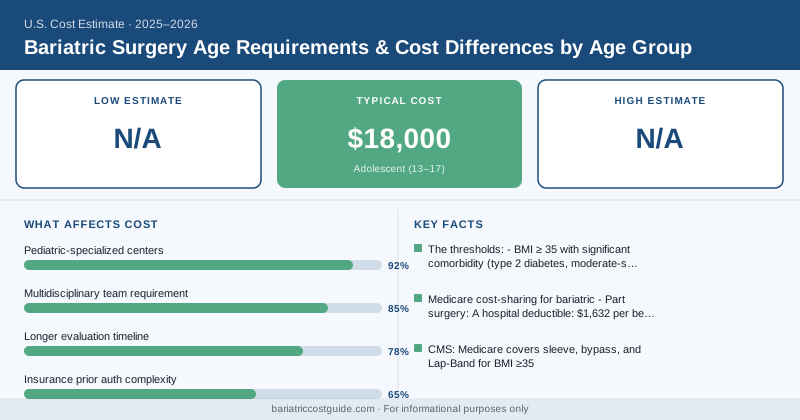
Pediatric-specialized centers: Only centers with specific pediatric bariatric accreditation (MBSAQIP pediatric designation) perform adolescent surgery. Fewer facilities means less price competition.
Multidisciplinary team requirement: Pediatric programs require pediatric-specific specialists (not just adult specialists seeing a teen). Each specialist has separate billing.
Longer evaluation timeline: Most programs require 3–6 months of structured behavioral intervention before approval. More appointments = more cost.
Insurance prior auth complexity: Pediatric bariatric coverage is more contested than adult coverage. More appeals, more documentation, more delays.
The premium for adolescent surgery at an accredited pediatric center typically runs $3,000–$8,000 more than the same procedure at an adult program.
Pediatric Bariatric Surgery and Insurance Coverage
Most major insurers cover adolescent bariatric surgery when ASMBS pediatric criteria are met — but “coverage” doesn’t mean “easy.” Expect:
- 90–180 day prior authorization process
- Requirement for behavioral health program participation (3–6 months minimum at many plans)
- Second opinion requirements at some plans
- Higher likelihood of initial denial than adult cases
Medicaid coverage for adolescent bariatric surgery varies enormously by state — some states cover it readily, others have explicit exclusions. Check your state’s Medicaid managed care plan guidelines before assuming coverage.
Older Adults: Age 65 and Beyond
There’s no hard upper age cutoff for bariatric surgery in U.S. guidelines. The ASMBS position statement explicitly states that age alone should not be a contraindication. What matters is physiological fitness, not chronological age.
Practical reality: most programs carefully evaluate patients over 65 with detailed cardiac, pulmonary, and functional assessment. Patients over 70 with good functional status do have surgery — but complication rates are modestly higher, and the risk-benefit conversation is more nuanced.
Medicare coverage (65+): Medicare covers bariatric surgery for beneficiaries who meet standard criteria (BMI ≥ 35 + comorbidity, or BMI ≥ 40) at MBSAQIP-accredited centers. This is significant — Medicare is actually one of the better-coverage payers for bariatric surgery.
Medicare cost-sharing for bariatric surgery:
- Part A hospital deductible: $1,632 per benefit period (2024)
- Part B: 20% after annual deductible ($240 in 2024)
- With Medicare Supplement (Medigap): may reduce out-of-pocket to near zero
The BMI Threshold Question: Is Lower BMI Surgery Possible?
Some centers are increasingly offering metabolic surgery to patients with BMI 30–34.9 who have well-documented metabolic disease — particularly type 2 diabetes. The American Diabetes Association (ADA) 2023 standards include metabolic surgery as a treatment option for adults with type 2 diabetes and BMI ≥ 30.
Cost implication: Surgery at BMI 30–34.9 is rarely covered by commercial insurance or Medicare currently. It’s almost always self-pay — and without the volume discounts that come from insured cases, these are among the higher-cost scenarios: $18,000–$28,000 for a gastric bypass or sleeve.
{ if eq .Lang "zh" }Disclaimer: BariatricCostGuide provides cost data for educational purposes only. We are not a medical provider, insurance company, or financial advisor. All costs are estimates based on published data and vary by location, facility, surgeon, insurance plan, and individual health factors. Consult a board-certified bariatric surgeon and your insurance carrier for personalized medical and cost advice.