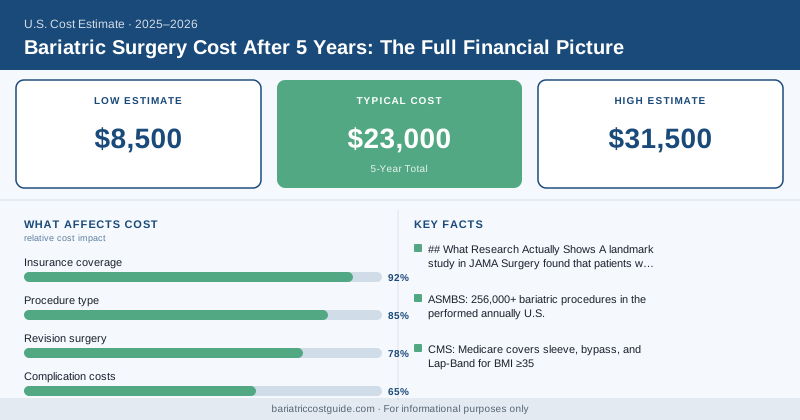
Bariatric Surgery Cost After 5 Years: The Full Financial Picture
{ if eq .Lang "zh" }{ else }{ end }42% of U.S. adults have obesity, according to the CDC’s most recent National Health and Nutrition Examination Survey data. The lifetime cost of treating obesity-related conditions — type 2 diabetes, heart disease, sleep apnea, joint replacement, cancer — runs into the hundreds of thousands for many patients. Bariatric surgery is expensive upfront. But is it cheaper than the alternative over five years?
The math is more nuanced than either surgeons or skeptics typically present. Here’s the honest five-year financial picture.
Year-by-Year Cumulative Cost
Starting with a self-pay surgery cost of $23,000 (sleeve gastrectomy, mid-range US pricing), here’s what the five-year total looks like when you add ongoing annual costs.
| Year | Surgery / Procedure Cost | Annual Ongoing Costs | Cumulative Total |
|---|---|---|---|
| Year 1 (surgery) | $23,000 | $2,500 | $25,500 |
| Year 2 | $0 | $1,800 | $27,300 |
| Year 3 | $0 | $1,500 | $28,800 |
| Year 4 | $0 | $1,400 | $30,200 |
| Year 5 | $0 | $1,300 | $31,500 |
| 5-Year Total | $23,000 | $8,500 | $31,500 |
With insurance covering the surgery, the five-year out-of-pocket drops dramatically — typically $3,000–$8,000 surgery OOP plus $8,500 in ongoing costs = $11,500–$16,500 total over 5 years.
What Obesity Costs Without Surgery
This is the comparison most financial analyses skip. Let’s look at what a patient with obesity, type 2 diabetes, hypertension, and sleep apnea spends annually managing those conditions without surgical intervention.
| Obesity-Related Annual Cost (Without Surgery) | Low | Typical | High |
|---|---|---|---|
| Diabetes medications (metformin + GLP-1 if needed) | $600 | $2,400 | $8,000+ |
| Blood pressure medications | $200 | $600 | $1,500 |
| CPAP supplies and maintenance | $250 | $500 | $900 |
| Additional primary care/specialist visits | $300 | $800 | $2,000 |
| Knee/joint pain treatment (injections, PT) | $0 | $600 | $3,000 |
| Total annual obesity treatment cost | $1,350 | $4,900 | $15,400 |
A patient spending $4,900/year on obesity-related treatment would accumulate $24,500 in 5 years — roughly equal to the surgery cost itself, before factoring in any savings from medication reduction or avoided hospitalizations.
What Research Actually Shows
A landmark study in JAMA Surgery found that patients who underwent gastric bypass saved an average of $2,571 per year in total healthcare costs compared to matched non-surgical controls, beginning in year 2 post-surgery. Over 5 years, that’s roughly $12,000 in cumulative healthcare savings — enough to nearly offset the surgery cost for insured patients.
A 2020 analysis in the New England Journal of Medicine found that among patients with type 2 diabetes, those who had bariatric surgery had significantly lower rates of cardiovascular events, kidney disease progression, and insulin dependence at 5 years compared to matched medical-therapy patients. Those avoided treatments carry major cost implications.
The GLP-1 Wild Card
The Variables That Change the Math
Not every patient will see the same financial outcome. Here’s what drives the variation:
Insurance coverage: If your insurer covers bariatric surgery with standard cost-sharing, your year-1 cost drops from $23,000 to $3,000–$8,000. The 5-year ROI calculation improves dramatically.
Procedure type: Gastric bypass costs $5,000–$10,000 more than sleeve upfront but achieves stronger diabetes remission rates — potentially eliminating more medications and reducing long-term treatment costs. For diabetic patients, bypass may pay for itself faster.
Revision surgery: Approximately 8–15% of sleeve patients eventually seek revision to bypass or another procedure within 10 years. A revision adds $15,000–$30,000 to the cumulative cost. If you’re on the fence between sleeve and bypass, this probabilistic cost is worth discussing with your surgeon.
Complication costs: A major complication — post-op leak, gallbladder removal, hospitalization — adds $10,000–$50,000 to year-1 costs. These events affect a minority of patients but can meaningfully alter the 5-year financial picture.
Does Insurance Breakeven Ever Happen?
For insured patients, the financial breakeven — where cumulative savings in obesity-related healthcare exceed cumulative surgery out-of-pocket costs — typically occurs at year 2–4, according to several health economics analyses. That’s earlier than most patients expect.
For self-pay patients who paid full price, breakeven usually occurs at year 5–8, depending on how many obesity-related medications they were able to discontinue and how well surgical outcomes held.
Planning the 5-Year Budget
If you’re deciding whether to pursue bariatric surgery, build a realistic 5-year forecast:
- Estimate your surgery OOP cost — call your insurance’s preauthorization line and get a benefits estimate
- Add $1,000–$2,500/year in ongoing annual costs for vitamins, labs, and follow-up
- Subtract expected medication savings — work with your PCP to list which medications might be reduced or eliminated post-surgery
- Factor in recovery costs — lost wages, OTC supplies, caregiver help
- Build a complication reserve of $5,000–$10,000 — this is a real surgery with real risks
The five-year total for most insured patients runs $15,000–$25,000 all-in. For a patient who resolves type 2 diabetes, drops their CPAP, and gets off three blood pressure medications, that’s not just a health investment — it’s a financial one too.
{ if eq .Lang "zh" }Disclaimer: BariatricCostGuide provides cost data for educational purposes only. We are not a medical provider, insurance company, or financial advisor. All costs are estimates based on published data and vary by location, facility, surgeon, insurance plan, and individual health factors. Consult a board-certified bariatric surgeon and your insurance carrier for personalized medical and cost advice.