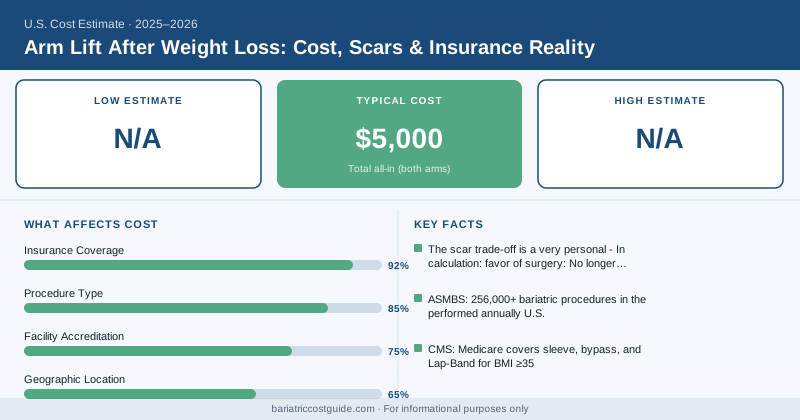
Arm Lift After Weight Loss: Cost, Scars & Insurance Reality
{ if eq .Lang "zh" }{ else }{ end }42% of post-bariatric patients who’ve lost 100+ pounds cite arm skin as one of their top body image concerns — and yet insurance denials for arm lift surgery run near 95%. That gap between what patients need and what insurers will pay for is exactly why this procedure deserves a clear-eyed cost conversation before you book a consultation.
Brachioplasty — the clinical name for an arm lift — removes excess skin and fat from the inner upper arm, from the axilla (armpit) down toward the elbow. After significant weight loss, that hanging skin doesn’t snap back, and it doesn’t respond to strength training. The only fix is surgical excision.
What Arm Lift Surgery Costs in 2025–2026
| Cost Component | Typical Range |
|---|---|
| Surgeon fee | $3,000 – $6,500 |
| Anesthesia | $800 – $1,800 |
| Facility fee (ASC or hospital) | $1,200 – $3,500 |
| Compression garments + supplies | $100 – $300 |
| Pre-op labs and clearances | $200 – $600 |
| Total all-in (both arms) | $5,000 – $10,000 |
Prices on the lower end ($5,000–$6,500) typically reflect ambulatory surgery centers (ASCs) in lower cost-of-living markets. Prices on the higher end ($8,000–$10,000) reflect hospital-based ORs in major metro areas with highly experienced post-bariatric specialists.
Why Insurance Almost Always Says No
The core problem is classification. Insurance companies categorize brachioplasty as a cosmetic procedure. Without documented functional impairment — and hanging arm skin rarely causes the kind of recurrent infections or mobility limitations that insurance looks for — coverage is rarely approved.
The criteria insurers typically require (which arm skin almost never meets):
- Recurrent intertrigo or bacterial infections specifically in the arm fold
- Documented interference with activities of daily living (ADLs)
- Failure of conservative treatment
- Stable weight for 12–18 months
Contrast this with panniculectomy, where an abdominal pannus hanging over the pubic area frequently causes documented fungal infections and hygiene issues. The arm doesn’t generate the same medical paper trail.
When Insurance Might Pay (Rare Cases)
Some patients have succeeded in getting partial arm lift coverage by documenting:
- Recurrent skin infections in the axillary fold (armpit)
- Lymphedema-related complications
- Nerve compression from excess skin
These cases are exceptions, not the rule. If you have any of these conditions, get documentation from your dermatologist or primary care physician well before your plastic surgery consultation.
Understanding the Scar Trade-Off
This is the conversation most surgeons don’t lead with, but patients need to hear it up front: a full brachioplasty leaves a visible scar running along the inner upper arm from the armpit to the elbow. It doesn’t disappear. It fades over 12–18 months from red/pink to a lighter silvery line, but it’s permanent.
The scar trade-off is a very personal calculation:
- In favor of surgery: No longer self-conscious about sleeveless clothing due to hanging skin; improved comfort during exercise; better hygiene in the skin fold
- Against surgery: Visible scar visible in certain arm positions; potential for hypertrophic scarring or keloid formation in some patients
The ASPS 2022 statistics show brachioplasty increased 5,000% over 20 years — from about 300 procedures in 2000 to over 17,000 in 2022 — almost entirely driven by post-bariatric patients. The scar trade-off hasn’t stopped demand.
Mini Arm Lift vs. Full Brachioplasty
Not all arm lifts are the same scope:
Mini brachioplasty: Incision limited to the armpit; works for mild skin excess concentrated near the axilla. Cost is typically $1,000–$2,000 less than full. The scar is hidden in the armpit crease.
Full brachioplasty: Long incision along the entire inner arm. Required for moderate-to-severe skin excess extending toward the elbow.
Extended brachioplasty: Incision extends onto the lateral chest wall. For patients with significant underarm and lateral back skin excess, often combined with a back lift.
Post-bariatric patients who’ve lost 80+ pounds typically need a full or extended brachioplasty. The mini version doesn’t remove enough skin.
Choosing a Surgeon: What to Ask
Arm lift results vary considerably by surgeon technique. Key questions:
- What incision pattern do you use? (T-shaped vs. linear inner arm vs. axillary)
- How many post-bariatric brachioplasties do you perform annually?
- What’s your approach to scar management post-operatively?
- Do you perform liposuction in the same session? (Some surgeons do; others prefer to stage it)
Recovery Costs to Budget For
Beyond the surgical fee:
- 2–3 weeks off work (sedentary jobs); 4–6 weeks for physical jobs
- Compression garments worn 6–8 weeks: $50–$150
- Follow-up visits: typically 3–5 included in surgical fee, but confirm
- Scar treatment: silicone sheets or gel, $30–$80/month for 3–6 months
The total post-op cost adds another $200–$600 on top of the surgical fee — budget for it upfront.
{ if eq .Lang "zh" }Disclaimer: BariatricCostGuide provides cost data for educational purposes only. We are not a medical provider, insurance company, or financial advisor. All costs are estimates based on published data and vary by location, facility, surgeon, insurance plan, and individual health factors. Consult a board-certified bariatric surgeon and your insurance carrier for personalized medical and cost advice.