Aetna Bariatric Surgery Coverage: Criteria, Prior Auth & What to Expect
{ if eq .Lang "zh" }{ else }{ end }Aetna covers bariatric surgery — but “covers” is doing a lot of work in that sentence. Whether you’re approved depends on your specific plan, your BMI, your documented comorbidities, and whether you jump through a set of pre-approval hoops that can take two to four months to clear. Let’s unpack exactly what Aetna requires.
Aetna’s Standard Medical Criteria
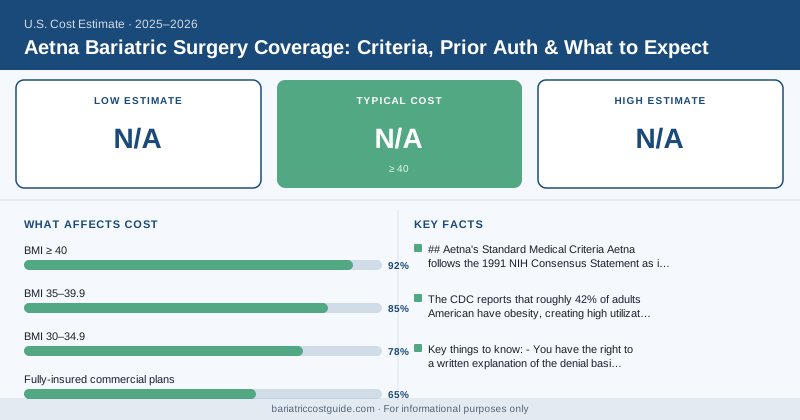
Aetna follows the 1991 NIH Consensus Statement as its baseline, with a few additional layers built on top:
- BMI ≥ 40 (no comorbidity required)
- BMI 35–39.9 with at least one obesity-related comorbidity: type 2 diabetes, hypertension, sleep apnea, osteoarthritis, heart disease, or hyperlipidemia
- BMI 30–34.9 — Aetna sometimes approves this range for patients with type 2 diabetes or metabolic syndrome, but only under specific clinical plans and only for select procedure types
According to the American Society for Metabolic and Bariatric Surgery (ASMBS), surgery candidates with a BMI ≥ 35 and comorbidities see diabetes remission rates of 60–80% after gastric bypass — a fact that increasingly supports insurer coverage of lower-BMI patients.
| BMI Threshold | Aetna Coverage Possibility |
|---|---|
| ≥ 40 | Covered if plan includes bariatric benefit |
| 35–39.9 + comorbidity | Covered with documentation |
| 30–34.9 + metabolic disease | Conditional — check specific plan |
| < 30 | Generally not covered |
Which Aetna Plans Include Bariatric Coverage?
Not every Aetna plan is the same. Here’s how coverage typically breaks down:
Fully-insured commercial plans — If your employer bought a standard Aetna commercial plan, bariatric surgery coverage depends on whether they opted in to the bariatric benefit rider. Many small and mid-size employers skip it to reduce premiums.
Self-funded employer plans (ERISA) — Large employers who self-insure but use Aetna as their administrator set their own benefit rules. Aetna administers the plan but the employer decides what’s covered. Always check your Summary Plan Description, not just Aetna’s general website.
Aetna Medicare Advantage — Coverage for bariatric surgery in Medicare Advantage plans varies by plan year and region. Original Medicare covers gastric bypass, gastric sleeve, and adjustable gastric band when criteria are met, and many Aetna MA plans mirror that benefit.
Aetna Medicaid (managed Medicaid) — Aetna administers Medicaid in several states. Coverage mirrors the state Medicaid program’s rules, which vary significantly.
The 6-Month Supervised Diet Requirement
Aetna often requires a documented, physician-supervised weight management program — typically three to six months — before approving surgery. This is one of the most commonly cited reasons for delayed approvals.
What qualifies:
- Monthly visits with a primary care physician or specialist documenting weight, BMI, dietary compliance
- Structured program through a registered dietitian
- Medically supervised programs through bariatric program offices
What doesn’t qualify:
- Weight Watchers or commercial programs without physician oversight
- Gym memberships
- Self-reported dieting without medical documentation
Documentation Tip
Prior Authorization: How Aetna’s Process Works
Bariatric surgery is almost always a prior authorization requirement under Aetna. Here’s the general flow:
- Your surgeon’s office initiates the PA request — They submit your chart notes, BMI history, comorbidity documentation, and any supervised diet records
- Aetna reviews against their clinical policy bulletin — Aetna publishes Clinical Policy Bulletins (CPBs) online; the one for bariatric surgery is publicly available and worth reading before you start
- Aetna may request additional records — This is common; respond quickly to avoid losing your place in the queue
- Decision issued — Approval, denial, or a request for peer-to-peer review
- Peer-to-peer (if needed) — Your surgeon can call Aetna’s reviewing physician directly; this step has a meaningful approval lift
The full timeline typically runs two to eight weeks from submission to decision.
Aetna’s Managed Care Nuances
Aetna operates as both a managed care organization and a TPA (third-party administrator). A few things this means in practice:
Network matters a lot. Aetna’s in-network bariatric surgeons have negotiated rates. Going out-of-network — even for a surgeon Aetna has technically “approved” — can result in dramatically higher cost-sharing. The CDC reports that roughly 42% of American adults have obesity, creating high utilization pressure on in-network bariatric programs at major health systems.
Center of Excellence programs. Aetna recognizes Metabolic and Bariatric Surgery Accreditation and Quality Improvement Program (MBSAQIP) designated Centers of Excellence. Some Aetna plans require you use a COE facility. Check your plan documents explicitly.
Concurrent review. Even after prior auth is approved, Aetna may conduct concurrent review after your procedure to ensure appropriateness. This is mostly relevant for longer inpatient stays or complications.
What Aetna Covers (and Doesn’t)
| Service | Typically Covered | Notes |
|---|---|---|
| Gastric sleeve (VSG) | Yes | Most common approved procedure |
| Gastric bypass (RYGB) | Yes | Standard covered procedure |
| Adjustable gastric band | Sometimes | Coverage declining; many plans exclude |
| Duodenal switch (BPD/DS) | Varies | May require stronger medical necessity documentation |
| Revisional surgery | Varies | Often requires demonstrated prior complications |
| Pre-op psych eval | Yes | Usually required, usually covered |
| Nutritional counseling | Yes | Pre-op and post-op usually covered |
| Bariatric vitamins | No | HSA/FSA eligible but not covered by most plans |
When Aetna Denies a Claim
Denial isn’t the end. Aetna’s internal appeals process gives you a formal second look. Key things to know:
- You have the right to a written explanation of the denial basis
- Your physician can submit a peer-to-peer review request within the window specified in the denial letter
- External appeals through your state insurance commissioner are available if internal appeal fails
- A well-written medical necessity letter from your surgeon addressing each denial reason specifically can flip decisions
Studies have found that roughly 45% of denied bariatric surgery claims that go through appeal are eventually approved — don’t just accept a denial at face value. Read more in our guide to bariatric surgery insurance denial appeals.
How to Check Your Specific Aetna Coverage
- Log in to your Aetna member portal at aetna.com
- Look up your plan’s Evidence of Coverage or Summary of Benefits
- Search for “bariatric surgery” or “weight loss surgery” in the document
- Call the Member Services number on your insurance card and specifically ask: “Does my plan include a bariatric surgery benefit, and if so, what are the medical criteria and required pre-authorization steps?”
- Ask your bariatric surgery program’s insurance coordinator to run a benefits verification — they do this routinely and know the right questions to ask
The bottom line: Aetna is one of the more coverage-friendly major insurers for bariatric surgery, but “coverage” always means your specific plan, your specific BMI, and your documented medical necessity. Do the homework before you schedule anything.
{ if eq .Lang "zh" }Disclaimer: BariatricCostGuide provides cost data for educational purposes only. We are not a medical provider, insurance company, or financial advisor. All costs are estimates based on published data and vary by location, facility, surgeon, insurance plan, and individual health factors. Consult a board-certified bariatric surgeon and your insurance carrier for personalized medical and cost advice.